

Medically reviewed by the ER of Watauga Clinical Team
| CALL 911 IMMEDIATELY IF Your child has blue lips or fingernails, is struggling hard to breathe, cannot speak or cry due to breathing effort, or has stridor (a high-pitched sound) while at rest. These signs mean the airway is dangerously narrowed. Don’t wait to see if it passes. |
It’s 2 a.m. Your toddler wakes up making a strange, seal-like cough you’ve never heard before. Their breathing sounds harsh, like they’re pulling air through a straw. You freeze, wondering: is this something you can wait out, or do you need to be at the ER right now?
The croup symptoms children ER teams see most often follow this exact pattern. Croup is one of the most common pediatric respiratory conditions, and most cases can be managed at home. But some cross into emergency territory fast, and recognizing which is which matters.
Here’s how to tell an ordinary croup episode from a breathing emergency, and exactly what to do at each level.
What Croup Actually Is
Croup is a viral infection that causes swelling of the voice box (larynx) and windpipe (trachea). The swelling narrows the airway, which produces the two hallmark sounds: a barky, seal-like cough and a harsh, raspy sound when breathing in.
It most often affects children between 6 months and 5 years old. Younger children have narrower airways, so the same amount of swelling causes more breathing difficulty.
Croup tends to strike suddenly at night. A child who seemed fine at bedtime may wake a few hours later with the classic barking cough, sometimes paired with a low-grade fever from the underlying viral infection.
The Barking Cough in a Child: What It Sounds Like

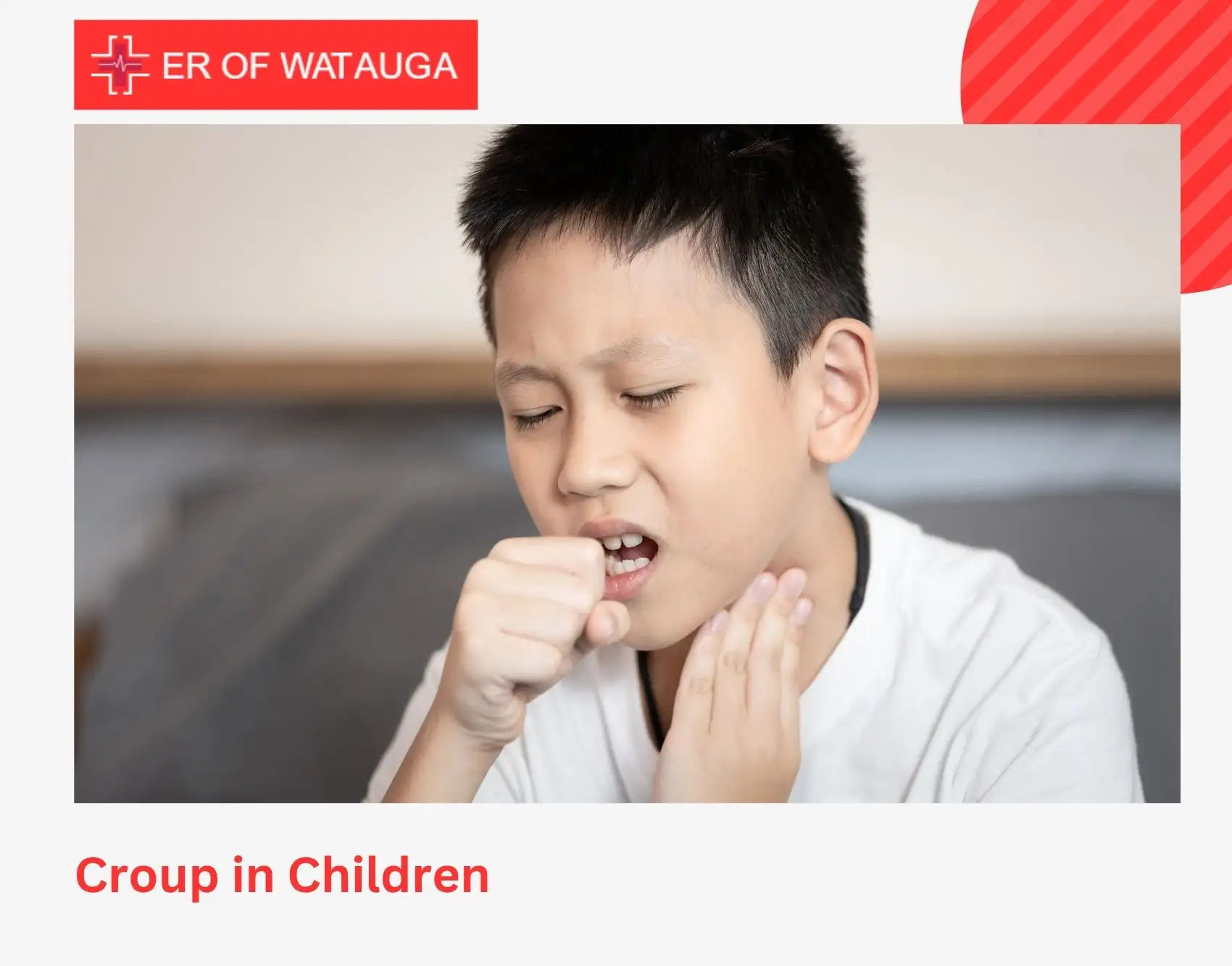
A barking cough in a child is the single most recognizable sign of croup. Once you’ve heard it, you won’t mistake it for a regular cough. Parents commonly describe it as a seal’s bark or a dog’s cough.
Other symptoms that appear alongside the barking cough:
- Hoarse voice or cry
- A harsh, high-pitched sound when breathing in (stridor)
- Low-grade fever (though some children have no fever)
- Runny nose or mild cold symptoms for a day or two before
- Worse symptoms at night
- Increased distress when crying or upset
A barking cough in a child by itself, without breathing difficulty, is usually not an emergency. What changes the picture is stridor, especially stridor that persists while the child is calm and resting.
Croup Severity: Mild, Moderate, or Severe
Not every croup episode needs the same response. Pediatric emergency teams categorize croup by severity to guide the level of care needed.
Here’s how the levels differ:
| Severity | What You’ll See | What to Do |
|---|---|---|
| Mild | Barking cough only, no stridor at rest, alert and drinking well | Manage at home, watch closely |
| Moderate | Stridor at rest, mild chest retractions, alert but distressed | Come to the ER for evaluation |
| Severe | Marked stridor at rest, significant chest retractions, pale or bluish, drowsy or agitated, poor air movement | Call 911 immediately |
According to the American Academy of Pediatrics, stridor at rest is the single clearest sign that croup has moved into moderate or severe territory. Stridor only when a child cries or is agitated is far less concerning than stridor while they’re calm and still.¹
If your child’s symptoms match the moderate or severe columns above, walk into ER of Watauga any time. Our pediatric-trained emergency team can begin treatment within minutes of arrival.
When to Go to the ER for Croup

Knowing when to go to the ER for croup is what separates a routine at-home viral illness from a preventable breathing crisis. Most parents underestimate croup at first, then panic when it worsens. The middle ground is knowing the red flags in advance.
Bring your child to the ER right away if:
- Stridor is present while your child is resting (not just crying)
- You can see the skin pulling in around the ribs, collarbone, or neck when they breathe
- Your child is drooling more than usual or refusing to swallow
- Skin color is pale, gray, or bluish (especially around the lips)
- Your child seems unusually drowsy, floppy, or difficult to rouse
- Breathing is fast and labored even when at rest
- Your child can’t speak or cry more than a few words at a time
- Symptoms have gotten worse quickly over minutes to an hour
- You’ve tried cool air or a steamy bathroom and it hasn’t helped after 15 to 20 minutes
The National Institutes of Health notes that severe croup can progress from mild breathing difficulty to critical airway obstruction over a short period, which is why persistent stridor at rest is treated as an emergency evaluation, not a wait-and-see symptom.²
If your child’s breathing difficulty started suddenly after eating a new food, a bee sting, or contact with an allergen, this may not be croup. Our allergic reaction and anaphylaxis guide covers the signs of a life-threatening allergic response and how it differs from viral croup.
What to Do at Home for Mild Croup
Mild croup, meaning a barking cough without stridor at rest, can usually be managed at home while your child recovers. The main goals are keeping your child calm and helping the airway open up.
Try these steps in order:
- Stay calm and hold your child close.
Crying makes croup worse. Sit them upright on your lap and speak softly.
- Try cool night air.
Wrap them in a blanket and take them outside for a few minutes if the weather is cool. Cool air often eases airway swelling within minutes.
- Or try warm, humid air.
Sit with your child in a bathroom filled with steam from a hot shower for 10 to 15 minutes. Do not use hot water directly, and never leave a child unattended near hot water.
- Keep them hydrated.
Offer sips of water, breast milk, or clear liquids. Dehydration makes airway swelling worse.
- Watch closely for changes.
Check for stridor at rest, chest retractions, or worsening color. If any appear, head to the ER.
If your child also has a high fever alongside croup, our high fever emergency guide covers when a childhood fever crosses the line from routine to emergency evaluation.
What ER of Watauga Does for Croup

When you arrive with the croup symptoms children ER visits are made for, our team acts fast. The goal is to reduce airway swelling quickly and observe until the child is safely breathing on their own.
A typical visit for moderate or severe croup includes:
- Rapid assessment of breathing, oxygen levels, and severity
- Positioning to keep the child calm and upright (crying worsens airway narrowing)
- Nebulized treatment to shrink airway swelling within minutes
- A single dose of steroid treatment to prevent symptoms from returning
- Continuous monitoring for at least 3 to 4 hours after treatment
- Chest imaging or additional workup if the diagnosis is unclear
- Coordination with a pediatric specialist or hospital transfer for the most severe cases
Most children with moderate croup improve significantly during the visit and go home the same day with clear return precautions.
For another common pediatric ER situation, our burn treatment emergency room guide walks through the decision framework for when a burn needs immediate care versus when it can be handled at home.
Frequently Asked Questions
How long does croup usually last?
Most croup episodes resolve within 3 to 5 days. Symptoms are typically worst on the second night, then improve. The barking cough may linger for a week even after breathing has returned to normal.
Why does croup always get worse at night?
Lying flat and cooler airway temperatures at night both contribute to increased swelling. Cortisol levels, which help reduce inflammation, are also naturally lower at night, which is why symptoms often peak between midnight and early morning.
Is croup contagious?
Yes. The viruses that cause croup spread through coughing, sneezing, and shared surfaces. Frequent handwashing and keeping a sick child home while they have fever or active symptoms helps prevent spread to siblings and classmates.
Can adults get croup?
Very rarely. The same viruses that cause croup in children usually produce a mild cold or laryngitis in adults, because the adult airway is wide enough that the swelling doesn’t cause significant breathing difficulty.
Trust the Warning Signs
Most croup episodes look scary but pass safely with calm home care. The croup symptoms children ER teams treat urgently come with recognizable warning signs: stridor at rest, retractions, color changes, drowsiness.
If any of those appear, don’t wait. Walk into ER of Watauga or call 911 for severe distress.
External References Links :
1. American Academy of Pediatrics
2. National Institutes of Health
Open 24/7. No appointment needed.
| Call: (817) 945-5500 Visit: 5401 Basswood Blvd, Fort Worth, TX 76137 Hours: Open 24/7 |


