

Hypertensive Crisis Emergency Room and Same-Visit Diagnosis in Watauga, TX
Not every high blood pressure reading is the same emergency, and treating them all the same wastes time in the cases that need it most. A hypertensive crisis is any reading of 180/120 or higher, but whether it is an urgency or a true emergency depends on one question: has it already started damaging an organ?
Visit ER of Watauga now for chest pain, sudden vision loss, slurred speech, or one-sided weakness with a high reading. Our hypertensive crisis emergency room checks the organs at risk with onsite labs, imaging, and EKG, every hour of every day.
Call Now: (817) 945-5500
Hours: 24/7/365
Walk-In: 5401 Basswood Blvd, Fort Worth, TX 76137, United States
When High Blood Pressure Becomes an Emergency
A blood pressure reading of 180/120 or higher is a hypertensive crisis, full stop. What that number means for you, and whether it needs a hypertensive crisis emergency room tonight, depends on what comes with it. A reading that high with no other symptoms still needs same-day evaluation. A reading that high with certain symptoms needs immediate treatment, because it means an organ is actively being damaged right now.
Get to the ER immediately for a high reading paired with any of these:
- Chest pain, pressure, or a sensation like the chest is being squeezed
- Sudden severe headache, described as the worst of your life
- Vision changes, blurred vision, or sudden vision loss
- Slurred speech, facial drooping, or weakness on one side of the body
- Confusion, difficulty staying awake, or trouble forming words
- Shortness of breath or difficulty breathing while at rest
- Nausea or vomiting alongside a severe headache
A reading of 180/120 with no symptoms at all is still not something to wait out overnight. Recheck it in five minutes while resting quietly. If it stays elevated, come in. The absence of symptoms today does not guarantee the absence of damage; some organ injury from a hypertensive crisis produces no pain at all until it is advanced.

Hypertensive Urgency or Hypertensive Emergency? The Difference Decides What Happens Next

Emergency medicine splits a hypertensive crisis into two categories, and the split is not academic, it changes the entire treatment path. A hypertensive urgency is a reading of 180/120 or higher with no evidence of organ damage. A hypertensive emergency is the same reading with proof that an organ is already being harmed, the heart, the brain, the kidneys, or the eyes.
Telling the two apart is the actual job of a hypertensive crisis emergency room visit, and it happens through testing, not guesswork:
- An EKG, checking the heart’s electrical activity for strain or an active cardiac event
- Blood work, including kidney function tests, since the kidneys are often the first organ to show injury
- A CT scan of the head, when neurological symptoms raise concern for bleeding or stroke
- A focused neurological exam, checking for the weakness, speech changes, or confusion that separate a hypertensive emergency from urgency
- A repeat blood pressure reading after rest, since a single elevated number in a stressed or anxious patient is not automatically a crisis
An urgency is often treated with oral medication and close follow-up, sometimes without an overnight stay. An emergency requires immediate IV treatment and, frequently, hospital coordination for a higher level of monitoring. Getting that classification right at a hypertensive crisis emergency room is what the visit is actually for.
The Four Organs We Check When Blood Pressure Spikes
A hypertensive crisis does not damage the body in one place. It threatens four organ systems at once, and a proper workup checks all four rather than stopping at the first clue.
The heart works harder against higher pressure with every beat, which can trigger chest pain, strain visible on an EKG, or in severe cases a heart attack. The brain depends on a steady, regulated blood supply, and a sudden spike can cause bleeding, a stroke, or a swelling-related condition called hypertensive encephalopathy that produces confusion and severe headache.
The kidneys filter blood under pressure, and a crisis can push them into acute injury, sometimes with no symptoms beyond what blood work reveals. The eyes carry small vessels that are especially vulnerable to sudden pressure spikes, producing blurred or lost vision when affected.
Checking all four is why a single blood pressure cuff reading was never going to be the whole answer. It tells you the pressure is high. It does not tell you what the pressure has already done.

What Happens at Our Hypertensive Crisis Emergency Room in Watauga

Most patients have a clear plan within the hour. Here is the sequence from the door forward:
- Immediate triage. Blood pressure taken and rechecked, along with heart rate, oxygen saturation, and a quick read on how you look and feel.
- Focused history. Current medications, whether any doses were missed, and any symptoms that came with the spike.
- IV access and labs. Kidney function, electrolytes, and additional testing based on symptoms.
- Targeted testing. EKG for everyone, a CT scan when neurological symptoms are present, chosen from what the exam points toward.
- Treatment and reassessment. Blood pressure lowered carefully and gradually, then rechecked to confirm the response before any decision about discharge or transfer.
Blood pressure is never dropped too quickly here. A controlled, gradual reduction protects organs that adjusted to operating under pressure, since a crash in the number can be its own kind of harm.
How We Treat a Hypertensive Crisis
Treatment depends entirely on which category applies once testing is complete.
Hypertensive urgency: Oral blood pressure medication, a monitored observation period to confirm the reading is trending down, and a clear follow-up plan with a primary care doctor or cardiologist. Many patients go home the same visit.
Hypertensive emergency: IV blood pressure medication with continuous monitoring, since the goal is a controlled reduction over hours, not minutes. Organ-specific treatment follows from what testing finds, fluid management for kidney involvement, close neurological monitoring when the brain is affected.
Finding the trigger: Missed medication doses are the most common cause we see. Others include kidney disease, certain hormone disorders, and interactions with other medications. Identifying the trigger matters as much as lowering the number, since the crisis returns without it.
Coordination when it is needed: A confirmed stroke, a heart attack, or an emergency requiring ICU-level blood pressure management goes to a partner hospital by direct transfer, stabilized here first and handed off with a full workup already complete.

Why Choose ER of Watauga
- Onsite labs, EKG, and imaging: Kidney function, cardiac status, and CT imaging happen in the same building, during the same visit.
- Board-certified emergency physicians, every hour: The physician classifying your reading at 3 a.m. is the same caliber as the one at 3 p.m.
- We check all four organ systems: Not just the number on the cuff, the heart, brain, kidneys, and vision are evaluated together.
- Careful, gradual treatment: Blood pressure is lowered in a controlled way that protects organs already under strain, never rushed.
- Wait times measured in minutes: Anyone searching for an emergency room for high blood pressure near me needs the workup to start immediately, not after hours in a waiting room.
- Care that fits your budget: We accept most major insurance plans and offer flexible payment plans for uninsured patients.
Emergency Room for High Blood Pressure Near You in Watauga
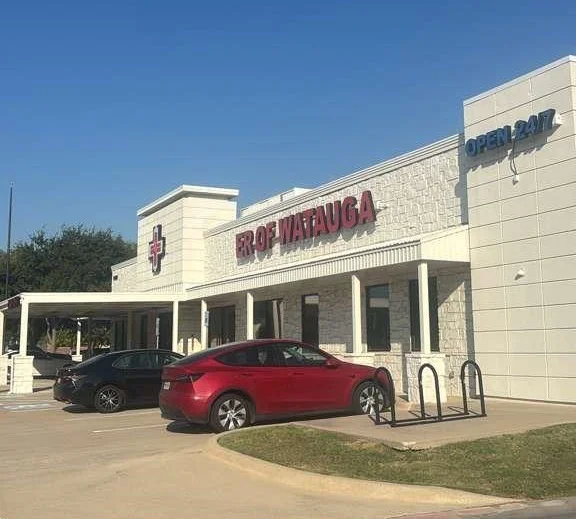
Searching for an emergency room for high blood pressure near me is not the moment to drive across town. Our hypertensive crisis emergency room sits on Basswood Boulevard, open every hour, holidays included, with no appointment required. Hypertensive crisis treatment in Fort Worth reaches families across:
- Watauga
- North Richland Hills
- Haltom City
- Fort Worth
- Keller
- Saginaw
- Colleyville
- Hurst
- Bedford

Open Every Hour a Reading Spikes
A hypertensive crisis does not wait for a weekday appointment. It happens overnight, on holidays, and in the middle of ordinary errands, and the difference between urgency and emergency is decided by the hours that follow, not the days.
ER of Watauga is open all the time, day and night to treat low and high blood pressure emergencies. Walk in, or call ahead and we will be ready before you arrive.
Call Now: (817) 945-5500
Hours: 24/7/365
Walk-In: 5401 Basswood Blvd, Fort Worth, TX 76137, United States
Frequently Asked Questions
A reading of 180/120 mmHg or higher is a hypertensive crisis. Whether it becomes an emergency requiring immediate treatment or an urgency treated with oral medication depends on whether there is evidence of organ damage, which only testing can confirm.
Yes. The kidneys can sustain real injury during a hypertensive crisis with no pain and no obvious warning sign. Blood work is often the only way to catch it, which is why lab testing is part of every hypertensive crisis emergency room visit, symptomatic or not.
Not automatically. A reading that high with no other symptoms is a hypertensive urgency and needs same-day evaluation, but it may not require IV treatment. The same reading with chest pain, vision changes, confusion, or weakness is a hypertensive emergency and needs immediate care.
Yes, temporarily. Stress, pain, and anxiety can push a reading above 180/120 without a true crisis underlying it. That is why we recheck blood pressure after a few minutes of rest before deciding on treatment, rather than reacting to a single number.
Expect an EKG, blood work checking kidney function, a focused exam, and a CT scan if neurological symptoms are present. Based on those results, treatment is either oral medication with observation or IV medication with continuous monitoring, depending on whether organ damage is found.
Missing doses of blood pressure medication is the most common trigger we see. Kidney disease, certain hormone disorders, and interactions between medications are other common causes. Identifying the trigger is part of the visit, since treating the number without addressing the cause invites a repeat.
Yes. Walk in any hour without an appointment. We accept most major insurance plans and offer flexible payment plans through Sunbit. Hypertensive crisis treatment in Fort Worth at our facility is billed as emergency care under Texas law, which protects you from surprise out-of-network balances.