

Irregular Heartbeat Emergency Room and Same-Visit EKG in Watauga, TX
Heart skipping a beat, flip-flopping, or heart racing for no reason is one of the most common reasons people search for an irregular heartbeat emergency room. Most causes are harmless. Some are not, and the two can feel identical from the inside.
Visit ER of Watauga if you’re experiencing an irregular heartbeat with chest pain, fainting, or severe shortness of breath. Our irregular heartbeat emergency room captures what is happening on an EKG and works out why, every hour of every day.
Call Now: (817) 945-5500
Hours: 24/7/365
Walk-In: 5401 Basswood Blvd, Fort Worth, TX 76137, United States
When an Irregular Heartbeat Is an Emergency
A heart that pounds, flutters, or does the occasional heart skipping a beat after climbing stairs is usually nothing dangerous. An irregular heartbeat becomes an emergency when it comes with symptoms that suggest the heart is struggling to keep up, or when it simply will not stop.
Come in immediately for an irregular heartbeat paired with any of these:
- Chest pain, pressure, or tightness
- Fainting, or feeling like you are about to pass out
- Severe shortness of breath, especially at rest
- Heart racing for no reason that lasts more than a few minutes and will not settle
- Sudden weakness, confusion, or trouble speaking
- A known heart condition and a new or different pattern than usual
The detail people most often talk themselves out of mentioning is duration. A single skipped beat that resolves in seconds is a different situation than heart palpitations that keep going for twenty minutes. If it is still happening when you arrive, that timing works in your favor. An EKG can only capture an irregular rhythm while it is actually occurring.

Your Watch Says Irregular Heartbeat. Now What?

An irregular rhythm notification from a smartwatch has changed how this visit usually starts. The watch flagged something real: an irregularity in your heart’s timing. What it cannot do is tell you why, whether it is dangerous, or what to do next, and that gap is exactly what an irregular heartbeat emergency room like ours exists to close.
A wearable alert is a screening tool, not a diagnosis. Here is what our irregular heartbeat emergency room adds that the watch cannot:
- A 12-lead EKG, which reads the heart’s electrical activity in far more detail than a wrist sensor ever could
- Blood work checking thyroid function and electrolytes, since both can throw off heart rhythm and neither shows up on a watch
- Continuous cardiac monitoring, catching the rhythm again if it recurs during your visit
- A physician’s read of the pattern, distinguishing a benign extra beat from one that needs urgent treatment
A watch notification with no symptoms still deserves a same-day evaluation, not a shrug. A watch notification with chest pain, fainting, or severe shortness of breath is a 911 call or immediate ER visit. The alert already told you something; the symptoms tell you how urgent it is.
When It Happens Is a Clue
Context matters as much as the sensation itself. The situation an irregular heartbeat shows up in often points toward the cause before a single test result comes back.
Lying down at night: Heart palpitations that appear only when lying down, particularly on the left side, are common and often benign, caused by the heart’s position shifting against the chest wall. Persistent nighttime episodes still deserve evaluation, especially if they interrupt sleep repeatedly.
Standing up quickly: Heart racing for no reason right after standing can be the body correcting a brief drop in blood pressure, more common with dehydration or certain medications. It usually settles within a minute; if it does not, that is worth mentioning.
After cutting caffeine or alcohol: Stopping a stimulant abruptly, or the day after heavy drinking, is a recognized trigger for a heart that suddenly feels like it is flip-flopping.
During stress or anxiety: A racing heart tied closely to a stressful moment, and settling once the moment passes, points toward anxiety rather than a rhythm disorder, though the two can be difficult to tell apart without an EKG.
During exercise versus at rest: An irregular heartbeat that only appears during exertion is evaluated differently than one that strikes while sitting still doing nothing at all.
None of these patterns replace testing. They shape what we test for first.

What Happens at Our Irregular Heartbeat Emergency Room

Most patients leave with a clear answer within the hour. Here is the sequence from the door forward:
- Immediate triage. Heart rate, blood pressure, and oxygen saturation, plus a same-visit EKG whether or not you are still feeling symptoms.
- Focused history. When it started, what it felt like, how long it lasted, and anything that might have triggered it, including watch data if you have it.
- Blood work. Electrolytes, thyroid function, and additional testing based on what the history suggests.
- Continuous monitoring. If the irregularity is intermittent, monitoring gives us the chance to capture it again during your visit.
- A clear read. What the rhythm was, what likely caused it, and whether it needs treatment now, follow-up with a cardiologist, or nothing at all.
Most irregular heartbeats are diagnosed and explained in a single visit. When the rhythm suggests something requiring ongoing cardiac care, we coordinate a direct referral or transfer, diagnosed and handed off with the workup already complete.
How We Treat an Irregular Heartbeat
Treatment depends entirely on what the EKG and labs show.
Rhythm confirmed benign: Extra beats and brief, self-limited irregularities that show no dangerous pattern are explained, reassurance is given with the actual evidence behind it, and a follow-up plan is set if needed.
Rhythm requiring correction: Rhythm-control medication or other in-ER treatment when a true arrhythmia is caught, aimed at restoring a normal pattern or controlling the rate until it does.
Treating the trigger: Electrolyte replacement when levels are off, thyroid follow-up when hormone levels point that direction, and fluids when dehydration is the likely driver.
Coordination when it is needed: A rhythm that requires ongoing cardiology care, a pacemaker evaluation, or specialist procedures is referred or transferred directly, stabilized here first and handed to a team already expecting the results.

Why Choose ER of Watauga
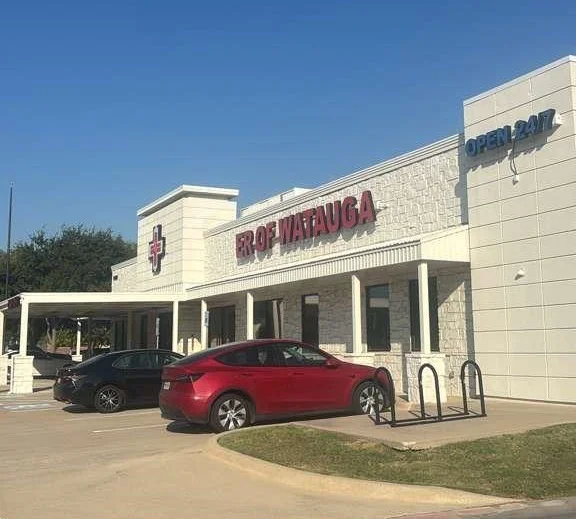
- Same-visit EKG, every time: At our irregular heartbeat emergency room, whether you are still symptomatic or not, we capture the rhythm and read it before you leave.
- Board-certified emergency physicians, every hour: The physician reading your EKG at 3 a.m. is the same caliber as the one at 3 p.m.
- We explain the wearable data too: Bring your watch history, and we factor it into the read rather than starting from zero.
- Trigger-hunting, not just rhythm-reading: Thyroid, electrolytes, dehydration, and medication effects are checked alongside the heart itself.
- Wait times measured in minutes: Anyone searching for an emergency room for heart palpitations near me needs the EKG to happen while the rhythm is still catchable, not after a long wait.
- Care that fits your budget: We accept most major insurance plans and offer flexible payment plans through Sunbit.
For more info on billing, contact our team at:
Phone: (817) 785-8000
Email: info@aimbillingsolutions.com
Emergency Room for Heart Palpitations Near You in Watauga
Searching for an emergency room for heart palpitations near me at any hour is not the moment to drive across town. Our irregular heartbeat emergency room sits on Basswood Boulevard, open every hour, holidays included, with no appointment required. Irregular heartbeat treatment in Fort Worth reaches families across:
- Watauga
- North Richland Hills
- Fort Worth
- Haltom City
- Keller
- Hurst
- Saginaw
- Colleyville
- Bedford

ER of Watauga Is Open Right Now
An irregular heartbeat rarely announces itself in advance. It shows up overnight, mid-workday, or in the middle of a run, and catching it on an EKG depends on getting seen while it is still happening or fresh enough to explain.
Our doors are open right now. Walk in, or call ahead and we will be ready before you arrive.
Call Now: (817) 945-5500
Hours: 24/7/365
Walk-In: 5401 Basswood Blvd, Fort Worth, TX 76137, United States
Frequently Asked Questions
Yes, occasionally. A single skipped beat or brief flutter, especially tied to caffeine, stress, or exercise, is common and usually harmless. Skipped beats that happen frequently, last more than a few minutes, or come with chest pain or dizziness deserve an evaluation rather than being written off.
It is rarely truly for “no reason,” even when the cause is not obvious. Dehydration, caffeine, anxiety, thyroid changes, and electrolyte shifts are common, ordinary triggers. An EKG and basic blood work usually identify the cause quickly at an irregular heartbeat emergency room.
It means the watch detected a pattern in your heart’s timing worth a closer look, not a diagnosis by itself. Watches cannot tell you why the rhythm changed or whether it is dangerous. That distinction is what a 12-lead EKG and physician evaluation are built to answer.
Yes, and it is one of the most common causes we see. Anxiety-driven palpitations usually rise and fall with the anxious moment itself. Because anxiety and a true arrhythmia can feel nearly identical from the inside, an EKG is still the only reliable way to tell them apart.
Yes. Dehydration shifts electrolyte levels that the heart depends on for a steady rhythm, and it can trigger a racing or irregular heartbeat, particularly after standing up quickly. Rehydration often resolves it, but the underlying electrolyte picture is worth checking with blood work.
Worry less about the sensation itself and more about what comes with it. Palpitations with chest pain, fainting, severe shortness of breath, or a pattern that will not settle after several minutes warrant immediate care. Palpitations that pass quickly with no other symptoms are usually not an emergency, but still worth mentioning at your next visit.
Yes. Walk in any hour without an appointment. We accept most major insurance plans and offer flexible payment plans through Sunbit. Irregular heartbeat treatment in Fort Worth at our facility is billed as emergency care under Texas law, which protects you from surprise out-of-network balances.