

Diabetic Emergency Room in Watauga, TX
A diabetic emergency does not always look like a diabetes problem. Confusion can look like a stroke. Vomiting and stomach pain in a teenager can look like a stomach bug. Slurred speech can look like intoxication.
At ER of Watauga, a finger-stick blood sugar reading takes seconds and rules this in or out before anything else is assumed. Board-certified physicians then treat what the number and your symptoms actually show, with on-site labs and IV therapy ready the moment you walk in.
Call Now: (817) 945-5500
Hours: Open 24/7, walk-ins welcome
Walk-In: 5401 Basswood Blvd, Fort Worth, TX 76137, United States
When Is High or Low Blood Sugar a Diabetic Emergency?
Recognizing diabetic emergency symptoms starts with knowing which direction blood sugar is moving, since a dangerous low and a dangerous high can look almost identical from the outside. A low blood sugar emergency can develop within minutes; a high one usually builds over hours. Both threaten consciousness and organ function once they go far enough, and neither is safe to guess at.
Call 911 or come to the ER immediately if someone is unconscious, having a seizure, or unable to swallow safely. Do not give food or drink to someone who cannot respond normally. Paramedics can start treatment before you reach us.
Walk-in evaluation at ER of Watauga is appropriate for:
- Shakiness, sweating, or confusion that does not improve after eating or drinking sugar
- Extreme thirst and frequent urination alongside nausea or stomach pain
- Breath with a fruity or acetone-like smell
- Rapid, deep breathing that feels labored
- Unusual drowsiness or trouble staying alert in someone with diabetes
- A blood sugar reading far outside normal that will not correct at home
Knowing when to go to the ER for high blood sugar comes down to symptoms like these, not the number by itself. Confusion and weakness show up on both ends of the scale, which is exactly why checking the actual reading matters more than guessing which direction it went.

When It Looks Like Something Else Entirely

The emergencies that get missed are the ones that do not announce themselves. Severe hypoglycemia can cause slurred speech, one-sided weakness, or sudden confusion, symptoms that read as a stroke to anyone watching. A panic attack and a dropping blood sugar can both bring on shaking, a racing heart, and a sense of dread, which is why a low blood sugar emergency sometimes gets treated as anxiety before anyone checks a meter.
Diabetic ketoacidosis tells a different kind of misleading story. It often starts with vomiting, abdominal pain, and a loss of appetite, symptoms that point toward a stomach virus long before anyone thinks to check blood sugar. In a person whose speech is slurred and balance is off, a severe low can be mistaken for intoxication, sometimes with serious consequences if that assumption delays treatment.
A glucose check takes under a minute and settles the question immediately, which is why it belongs near the start of the visit, not after ruling out everything else first.
The Emergency That Comes Before the Diagnosis
Some diabetic emergencies happen to people who do not yet know they have diabetes. New-onset type 1 diabetes in a child or teenager often shows up first as an emergency room visit, not a diagnosis at a pediatrician’s office.
The pattern is easy to miss because the early symptoms feel ordinary: increased thirst, frequent bathroom trips, unexplained weight loss, and fatigue. By the time vomiting, abdominal pain, and rapid breathing appear, DKA may already be underway. In adults, undiagnosed type 2 diabetes can progress silently until a severe illness or infection pushes blood sugar into the range of hyperosmolar hyperglycemic state, a slower-building but equally dangerous emergency more common in older adults with very high readings and no ketones.
Neither of these patients walks in expecting a diabetes diagnosis. Both need the same blood sugar check that finds it, and both leave with a plan that treats the new diagnosis as seriously as the emergency itself.

What Happens When You Arrive

A workup at ER of Watauga starts with the one number that answers the most urgent question.
- Finger-stick glucose check. Blood sugar is measured within minutes of arrival, before anything else is decided.
- Vitals and symptom review. Heart rate, breathing, and mental status are checked alongside how the symptoms started.
- Lab work. Electrolytes, kidney function, and ketone levels confirm whether DKA or HHS is developing and how severe it is.
- IV access and fluids. Dehydration is common with both high and low blood sugar emergencies and gets corrected early.
- Targeted treatment. Glucose, insulin therapy, or electrolyte correction, depending on which direction the emergency is running.
- Monitoring and a clear plan. Blood sugar is rechecked until stable, with a plan for admission or safe discharge and follow-up care.
Most low blood sugar emergencies resolve within the visit. DKA and HHS need closer monitoring, and that care starts immediately rather than waiting on a transfer to begin it.
How We Treat DKA, HHS, and Low Blood Sugar
Treatment depends entirely on which direction the emergency runs, since the two are opposites and require different first steps.
- Severe hypoglycemia gets fast-acting glucose, given orally if you can swallow safely or through an IV if you cannot.
- Diabetic ketoacidosis gets IV fluids, insulin therapy, and electrolyte correction together, since correcting only one piece can worsen the others.
- Hyperosmolar hyperglycemic state gets slow, careful IV fluid replacement first, because correcting severely high blood sugar too fast carries its own risk.
- Every case gets electrolyte monitoring throughout treatment, since insulin and fluids both shift potassium levels that need close tracking.
If your case started with an infection, dehydration, or a missed medication dose, we look for that trigger too, so the plan you leave with addresses more than just the number on the meter.
Why Choose ER of Watauga for Diabetic Emergency
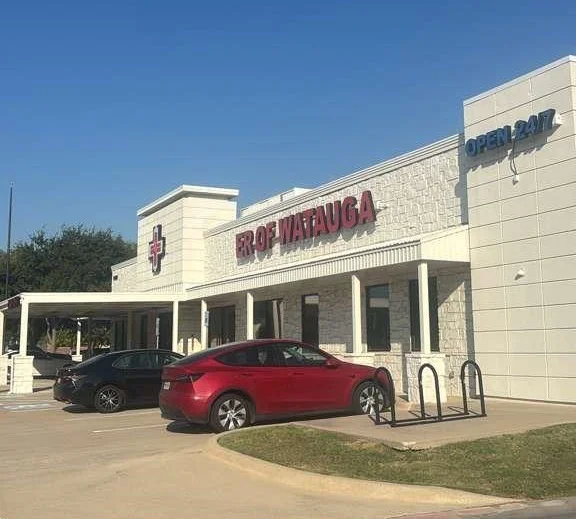
- Board-certified emergency physicians check blood sugar within minutes of arrival, before assumptions get made.
- On-site labs confirm DKA, HHS, or electrolyte imbalance during the same visit, not after a send-out result days later.
- No long waits. As a freestanding emergency room in Watauga, most patients are in a treatment room within minutes.
- Adults, teens, and children, including a first emergency that has not been diagnosed yet.
- Care that fits your budget. We accept most major insurance plans and follow a no-surprise-billing policy. Moreover, we offer flexible payment plans for self-pay or uninsured patients.
An emergency room in Fort Worth that checks the number first, rather than the symptoms that number can imitate, is what keeps this from being mistaken for something else entirely.
Questions about billing? Contact our billing department at:
Phone: (817) 785-8000
Email: info@aimbillingsolutions.com
Diabetic Emergency Care Near You in Fort Worth
Searching for an emergency room near me for a diabetic emergency? ER of Watauga sits on Basswood Boulevard and stays open 24 hours a day, every day of the year, including holidays. As the emergency room in Fort Worth’s northeast corridor closest to Watauga, North Richland Hills, and Haltom City, we’re minutes away for most of the communities we serve.
If an emergency room near me search brought you here while blood sugar will not correct at home, walk in now without an appointment. We also treat patients from Keller, Saginaw, and Richland Hills.
A Number Worth Checking, Not Guessing At

Shakiness, confusion, nausea, and fatigue point in a dozen directions at once. In someone with diabetes, or someone whose diabetes has not been found yet, they can also point to an emergency that a glucose check confirms in under a minute.
ER of Watauga runs that check the moment you walk in, 24 hours a day, so this gets treated as what it actually is instead of mistaken for a stroke, a stomach bug, or something else entirely.
Call Now: (817) 945-5500
Hours: Open 24/7, walk-ins welcome
Walk-In: 5401 Basswood Blvd, Fort Worth, TX 76137, United States
FAQs
Low blood sugar causes shakiness, sweating, confusion, and a fast heartbeat that usually improves with sugar within fifteen minutes. High blood sugar emergencies build more slowly, with extreme thirst, frequent urination, nausea, fruity-smelling breath, and labored breathing. Either extreme can cause confusion severe enough to be mistaken for something else.
Knowing when to go to the ER for high blood sugar means watching for nausea, vomiting, abdominal pain, fruity breath, or rapid breathing alongside a very high reading, even without a diagnosis. Those symptoms suggest diabetic ketoacidosis or a hyperosmolar emergency, and both need same-day evaluation and treatment.
Yes. A low blood sugar emergency severe enough to cause slurred speech, one-sided weakness, and confusion can closely resemble stroke symptoms from the outside. A glucose check takes under a minute and is often one of the first tests run for exactly this reason, before assuming the worst.
DKA involves acidic ketones building up in the blood, usually with type 1 diabetes, and can develop over several hours. HHS involves very high blood sugar without ketones, usually with type 2 diabetes, and tends to build more slowly over a day or two before symptoms become obvious.
Yes. New-onset type 1 diabetes in children often first appears as DKA, sometimes mistaken for a stomach virus until vomiting, rapid breathing, and fruity breath point elsewhere. A finger-stick glucose check at the first sign of these symptoms confirms it in minutes, not days.
No. Walk in any hour, day or night, without an appointment. ER of Watauga is open 24/7, including weekends and holidays, and we accept most major insurance plans with a no-surprise-billing policy, so a blood sugar emergency never has to wait for a scheduled visit.