

Seizure Emergency Room in Watauga, TX
Not every seizure means epilepsy. What caused it, not the seizure itself, determines what happens next, and that’s the question a seizure emergency room is built to answer. If a seizure lasts more than five minutes, or another one starts before the person wakes up, call 911. Otherwise, ER of Watauga evaluates seizures fast, with on-site lab testing, CT imaging when it’s warranted, and a board-certified physician working through the cause while you’re still in the room.
Call Now: (817) 945-5500
Hours: 24/7/365
Walk-In: 5401 Basswood Blvd, Fort Worth, TX 76137, United States
What Should You Do During a Seizure?

Ease the person to the floor, turn them onto their side, and clear away anything hard or sharp. Don’t hold them down or put anything in their mouth. Time the seizure. Anything longer than five minutes is a medical emergency, call 911.
- Seizure lasting more than five minutes: call 911, don’t wait to see if it stops
- A second seizure before full recovery: this needs 911, not a wait-and-see approach
- First-time seizure: needs same-day evaluation at any age, even if it seems to resolve completely
- Fever with a seizure in a young child: usually a febrile seizure, still needs evaluation the same day
- Difficulty breathing or turning blue: call 911 immediately
- Injury during the seizure: needs evaluation regardless of the seizure itself
- Known epilepsy with a change in seizure pattern: a change from what’s usual is worth a same-day check, not assumption
A first-time seizure is more common than most people expect, and it doesn’t automatically mean a lifelong condition. What it does mean is that today isn’t the day to guess. Same-day evaluation, not next week’s appointment, is what actually answers the question.
A Seizure and an Epilepsy Diagnosis Are Not the Same Thing
Does a seizure mean epilepsy? Not automatically. A seizure is an event. Epilepsy is a diagnosis, and the two aren’t automatically the same thing. Roughly a third of first-time seizures turn out to be provoked, meaning something specific triggered it: a fever, a head injury, a dangerously low blood sugar, alcohol withdrawal, or a missed dose of medication someone’s already taking. Provoked seizures carry a meaningfully lower risk of happening again once the trigger is treated.
Unprovoked seizures, ones without an identifiable immediate cause, are treated differently than a provoked seizure, because they carry a higher chance of representing the start of a seizure disorder. Neither category is determined by how the seizure looked. It’s determined by what we find when we look for a cause, which is exactly what a same-day evaluation is for.

The History You Give Matters More Than the Seizure Itself

By the time a physician sees you, the seizure itself is usually over. What’s left is the history: when it started, what happened right before, whether anything like this happened before and simply wasn’t recognized as a seizure, what medications are involved, and whether there’s been recent illness, injury, or alcohol use. This history often matters more than anything visible on an exam.
It’s also more common than people expect to learn that a first seizure wasn’t actually first. Careful history sometimes uncovers smaller, easy-to-miss events, a blank stare, a moment of confusion, that happened earlier and went unrecognized. None of this is about assigning blame. It’s about giving the evaluation the full picture, because the full picture is what determines whether this looks provoked, unprovoked, or still unclear.
What Happens When You Arrive at ER of Watauga
Immediate Triage
A nurse checks vitals, breathing, and current alertness within minutes of arrival.
Detailed History
We ask what the seizure looked like, how long it lasted, what came before it, and whether anything similar has happened before, this is often the most important part of the visit.
Blood Work
Our in-house lab checks glucose, sodium, and other levels that commonly trigger seizures, along with a fever workup in children.
CT Imaging When It's Warranted
For a first-time seizure, a head injury during the event, or certain risk factors, a CT scan rules out bleeding or a structural cause.
Continuous Monitoring
Breathing, heart rhythm, and neurological status are tracked while results come back.
Physician Evaluation & Next Steps
A board-certified physician explains what was found, whether the seizure appears provoked or unprovoked, and coordinates neurology follow-up when it's needed.
How We Evaluate a Seizure
Cause-Hunting Comes First
Low blood sugar, sodium imbalance, fever, alcohol withdrawal, and missed anti-seizure medication are the most common triggers we check for, because identifying a provoked cause changes the entire conversation about what happens next.
Honest About What We Don't Do Here
A freestanding ER doesn't have on-site EEG or MRI. What we do is rule out the causes that need immediate treatment, run the CT and labs that answer today's question, and identify who should manage any further workup, often a neurologist, from here.
Medication & History Matter
If someone with known epilepsy has missed doses or changed medications, that context often explains the event without needing extensive additional testing.
Coordination When It's Needed
If imaging or labs point to something beyond stabilization, we arrange direct transfer to a facility equipped for the next step, briefed on the case before the patient arrives.
Why Choose ER of Watauga for Seizure Care
If you’re comparing where to go for a seizure emergency room in Watauga, here’s what sets ER of Watauga apart:
Results in Minutes
On-site labs and CT results in minutes, so a seizure workup never waits on an off-site facility.
Clear Explanations
Board-certified emergency physicians explain what was found and what it means, provoked or unprovoked, not just a discharge sheet.
Pediatric & Adult Evaluation
Including febrile seizures, on the same visit.
No Triage Delays
For a seizure, active or resolved, walk in and get seen immediately.
Neurology Coordination
Honest coordination with neurology when ongoing management is needed.
Care That Fits Your Budget
We accept most major insurance plans and offer flexible payment plans for uninsured patients.
For billing queries, contact our billing department at:
Phone: (817) 785-8000
Email: info@aimbillingsolutions.com
Seizure Care Near You in Watauga
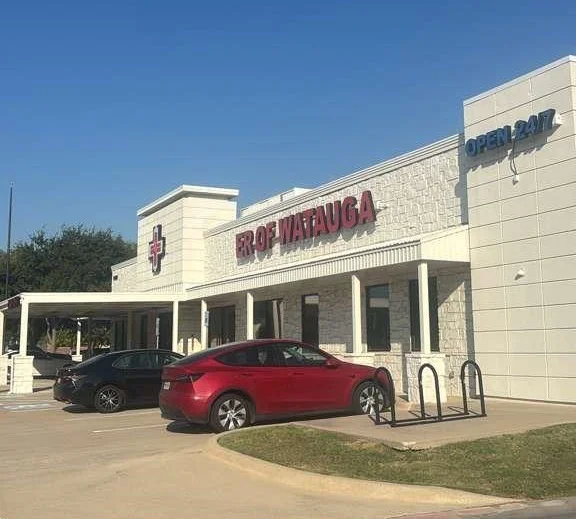
Searching for seizure care near me in Watauga? ER of Watauga is located centrally, minutes from Watauga, North Richland Hills, Haltom City, Keller, Saginaw, Fort Worth, Bedford, Hurst, and Richland Hills, with parking right outside the door.
We’re open 24 hours a day, 7 days a week, including every holiday, with on-site labs and imaging ready the moment you walk in. Whether your seizure care near me search is for a child’s first febrile seizure or a change in a known seizure pattern, no appointment or referral is needed.

One Seizure Isn't a Life Sentence, But It Is a Same-Day Visit
A single seizure doesn’t automatically mean epilepsy, and most first seizures don’t turn into a lifelong pattern. But that reassurance only holds up after an actual evaluation, not before one.
ER of Watauga is open right now, every hour of every day, ready to find out what caused it and what, if anything, it means going forward.
Call Now: (817) 945-5500
Hours: 24/7/365
Walk-In: 5401 Basswood Blvd, Fort Worth, TX 76137, United States
Frequently Asked Questions
Does a seizure mean epilepsy?
Not necessarily. Roughly a third of first seizures are provoked by an identifiable, often treatable cause, like fever, low blood sugar, or alcohol withdrawal, and carry a lower risk of happening again. Epilepsy is a diagnosis based on the pattern and cause, not on having had one seizure.
What causes a provoked seizure?
Common causes include fever, especially in young children, low blood sugar, sodium imbalance, alcohol or medication withdrawal, head injury, and missed doses of anti-seizure medication in someone who already takes it. Identifying the cause is a major part of the ER evaluation.
Do all first seizures need a CT scan?
Not automatically, but a CT scan is commonly done for a first-time seizure, especially with a head injury, focal symptoms, or certain risk factors, to rule out bleeding or a structural cause that needs immediate attention.
What should I do if someone is having a seizure?
Ease them to the floor, turn them onto their side, and clear away anything hard or sharp. Don’t hold them down or put anything in their mouth. Time the seizure, and call 911 if it lasts more than five minutes.
Are febrile seizures in children dangerous?
Most febrile seizures are brief and don’t cause lasting harm, even though they’re frightening to watch happen to your child. Same-day evaluation still matters, to confirm the cause of the fever, rule out anything more serious, and give you a clear plan for what to watch for at home.
Can urgent care evaluate a seizure?
No. Urgent care clinics don’t have the lab testing or imaging needed to evaluate a seizure safely or identify whether it was provoked. Any seizure, first-time or known, needs a seizure emergency room evaluation, not a same-day clinic visit.
Do you accept insurance for seizure emergency room visits?
Yes. Walk in any hour without an appointment. We accept most major insurance plans and offer flexible payment plans through Sunbit for seizure emergency room visits and any other emergency care you need.