

The most dangerous part of dengue often begins right when the fever breaks and a person thinks the worst is over. Dengue fever symptoms usually look like a severe flu, but in a small share of cases the illness slips into a critical phase that can turn life-threatening within hours.
In the continental United States, most dengue cases occur in travelers, so a high fever after a trip is the cue that matters. Knowing the warning signs is what keeps a recoverable illness from becoming an emergency.
What Is Dengue Fever and How Do You Get It?
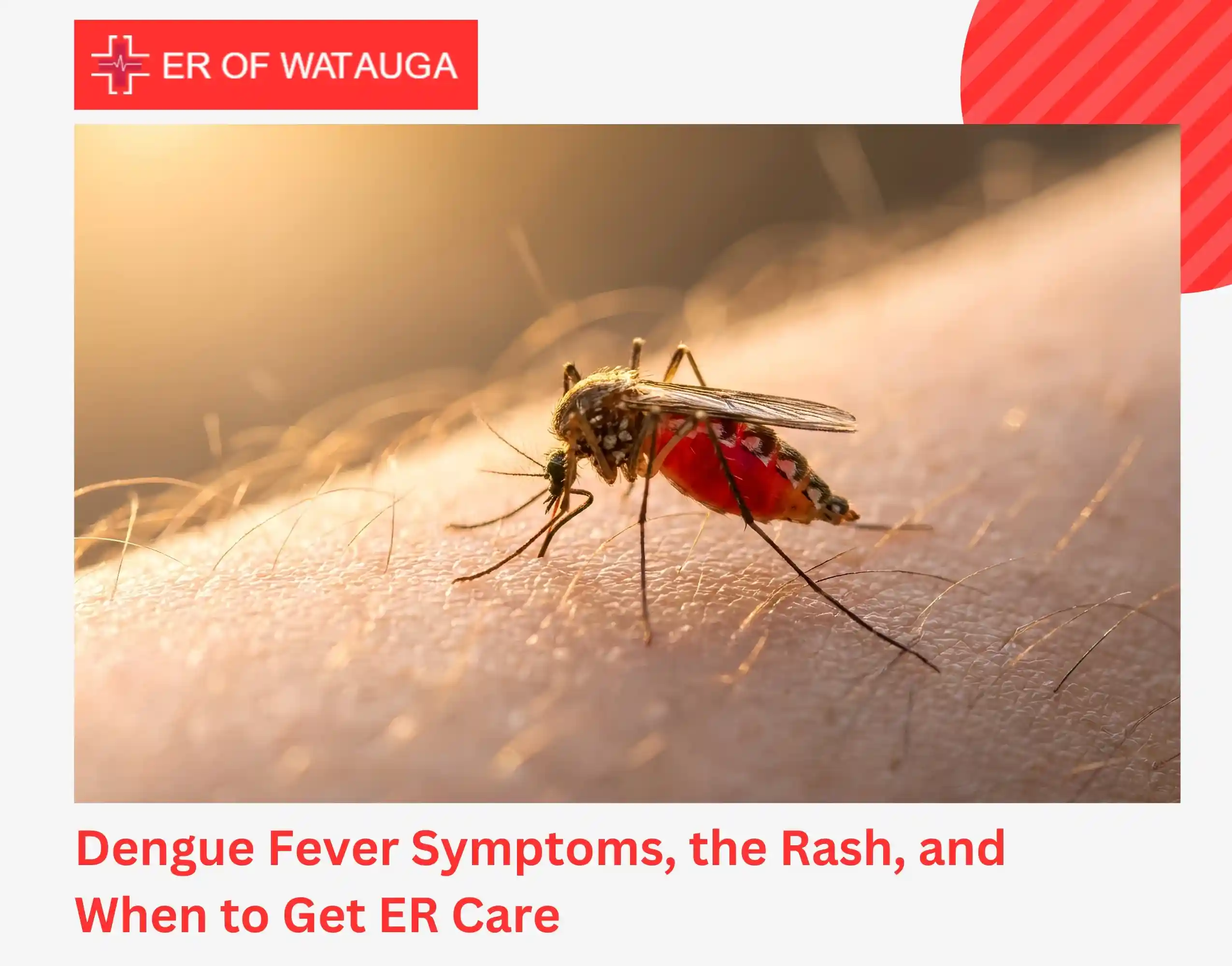
Dengue fever is a mosquito-borne disease spread by Aedes mosquitoes, the same daytime biters that carry Zika. You cannot catch it from another person through normal contact. A mosquito-borne disease like dengue is common across the tropics, and in Texas it shows up almost entirely in people returning from travel, though limited local spread has occurred in Texas, Florida, and Hawaii.
Only some infections make people sick. About 1 in 4 people infected with dengue actually develop symptoms, and those range from mild to severe. The virus comes in four types, which matters later, because a second infection with a different type raises the risk of serious illness. The same bite prevention that guards against Zika virus and West Nile virus works here too: repellent, long sleeves, and clearing standing water.
What Are the Symptoms of Dengue Fever?

Dengue fever symptoms come on suddenly, 3 to 14 days after a bite, with a high fever, severe frontal headache, pain behind the eyes, and deep muscle and joint pain. That bone-deep ache is why dengue earned the nickname breakbone fever.
The typical picture includes:
- Sudden high fever sometimes reaching 104 to 105°F
- Severe headache, often with pain behind the eyes
- Intense muscle, joint, and bone pain
- Nausea and vomiting
- A skin rash a few days into the illness
- Mild bleeding, such as nosebleeds or bleeding gums
Most cases bring strong but survivable symptoms. Fever usually lasts 2 to 7 days and can be biphasic, meaning it can ease and then return. A severe headache that feels different from a normal one is worth taking seriously, and you can compare it against other serious headache causes if you are unsure.
What Does the Dengue Fever Rash Look Like?
The dengue fever rash usually appears 3 to 5 days after the fever starts and spreads from the torso to the arms, legs, and face. It often looks like a flat, reddened area with patches of normal-looking skin, and a second, measles-like rash can show up later in the illness.
The dengue fever rash is useful because it helps point toward the right diagnosis when early symptoms could pass for the flu. Some people also notice increased skin sensitivity as the rash develops. On its own the rash is not dangerous, but paired with a high fever after recent travel, it is a strong reason to mention dengue to a clinician and watch closely for the warning signs that come next.
Dengue Warning Signs: Why Feeling Better Can Be a Trap
This is the part of dengue that catches people off guard. When the fever declines, symptoms like persistent vomiting and severe abdominal pain can develop, marking the start of a 24 to 48 hour window when blood vessels become leaky. In other words, the sickest stretch can begin just as someone thinks they are recovering.
The dengue warning signs that signal a slide toward severe dengue include:
- Severe abdominal pain or tenderness
- Persistent vomiting
- Bleeding from the gums or nose, or blood in vomit or stool
- Restlessness or sudden lethargy
- Difficulty breathing
- Fluid buildup in the belly or around the lungs
If any warning sign appears, go to the ER right away, even if the fever has gone and you feel better. Severe dengue can become life-threatening within hours, which is why these dengue warning signs override how well someone seems to be doing.
What Is Severe Dengue, and Who Is Most at Risk?
Severe dengue is the dangerous form of the illness, defined by plasma leakage that can drop blood pressure into shock, heavy bleeding, or organ damage. It is a medical emergency, but the outlook is good with fast care: prompt IV fluids can reduce the risk of death from severe dengue to under 0.5%.
Some people face higher risk than others:
- Anyone having a second dengue infection with a different virus type
- Infants and young children
- Pregnant people
- Older adults and those with a weakened immune system
For these groups, the threshold to seek care should be lower, because severe dengue can develop faster and hit harder.
How Is Dengue Fever Treated?

There is no antiviral drug for dengue, so dengue fever treatment is supportive: rest, plenty of fluids, and careful symptom management while the body clears the virus. The detail that matters most is which medicine you reach for. Use acetaminophen for fever and pain, and avoid aspirin and ibuprofen-type pain relievers, because those can worsen bleeding, a real danger with dengue.
Most people manage mild dengue at home with fluids and rest. The key is watching for the warning signs during the days after the fever breaks, since that is when dengue fever treatment may need to shift from home care to the hospital.
At the ER, dengue fever treatment centers on fluids and monitoring. Staff can run blood tests to check platelet counts and confirm the infection, start IV fluids to counter plasma leakage, and watch for bleeding or shock. Severe dengue needs hospital-level fluid management, so a freestanding ER’s role is to recognize it fast, stabilize the patient, and coordinate admission without delay.
When Should You Go to the ER for Dengue?
Go to the ER for dengue fever symptoms that include heavy bleeding, severe abdominal pain, or trouble breathing, especially in the days after the fever drops. With dengue, timing beats intuition, because the body can crash while symptoms seem to be improving.
Manage at home when you have mild dengue, fever, aches, and a rash, you are keeping fluids down, and there are no warning signs. Rest, fluids, and acetaminophen carry most people through.
Call your doctor when you have a fever after recent travel to a dengue area, you want testing, or symptoms are dragging on. A blood test can confirm the diagnosis and guide what to watch for.
Go to the ER now when you have severe abdominal pain, persistent vomiting, bleeding from the gums or nose, blood in vomit or stool, seizures, difficulty breathing, cold or clammy skin, or sudden lethargy. These point to severe dengue and cannot wait.
Fast Fluid Management for Severe Dengue at ER of Watauga

When dengue tips toward its critical phase, rapid fluid management is what protects against shock. The board-certified physicians at our emergency room in Watauga run blood work on site, start IV fluids quickly, monitor for bleeding and plasma leakage, and stabilize severe dengue while coordinating hospital admission.
Most dengue cases stay mild and resolve with rest and fluids, and we will tell you honestly when that is the case. When a warning sign appears, come in without waiting for it to pass.
Frequently Asked Questions
1. How long does dengue fever last?
The fever usually lasts 2 to 7 days, and most people recover within about two weeks. Fatigue can linger longer. The critical window for severe dengue is the 24 to 48 hours after the fever breaks.
2. Can you get dengue fever more than once?
Yes. There are four types of the dengue virus, so you can catch it up to four times. Infection gives lasting immunity only to that one type, and a later infection with a different type carries a higher risk of severe dengue.
3. Is dengue fever contagious?
Not from person to person through normal contact. Dengue spreads almost entirely through the bite of an infected mosquito. A mosquito can pick up the virus from an infected person and pass it to others.
4. What should you not take for dengue fever?
Avoid aspirin and ibuprofen-type pain relievers, which can increase the risk of bleeding. Acetaminophen is the safer choice for fever and pain. Always confirm with a clinician if you are unsure.
5. When is dengue fever an emergency?
Dengue is an emergency at any warning sign: severe abdominal pain, persistent vomiting, bleeding, difficulty breathing, or sudden lethargy, particularly in the day or two after the fever fades.


