

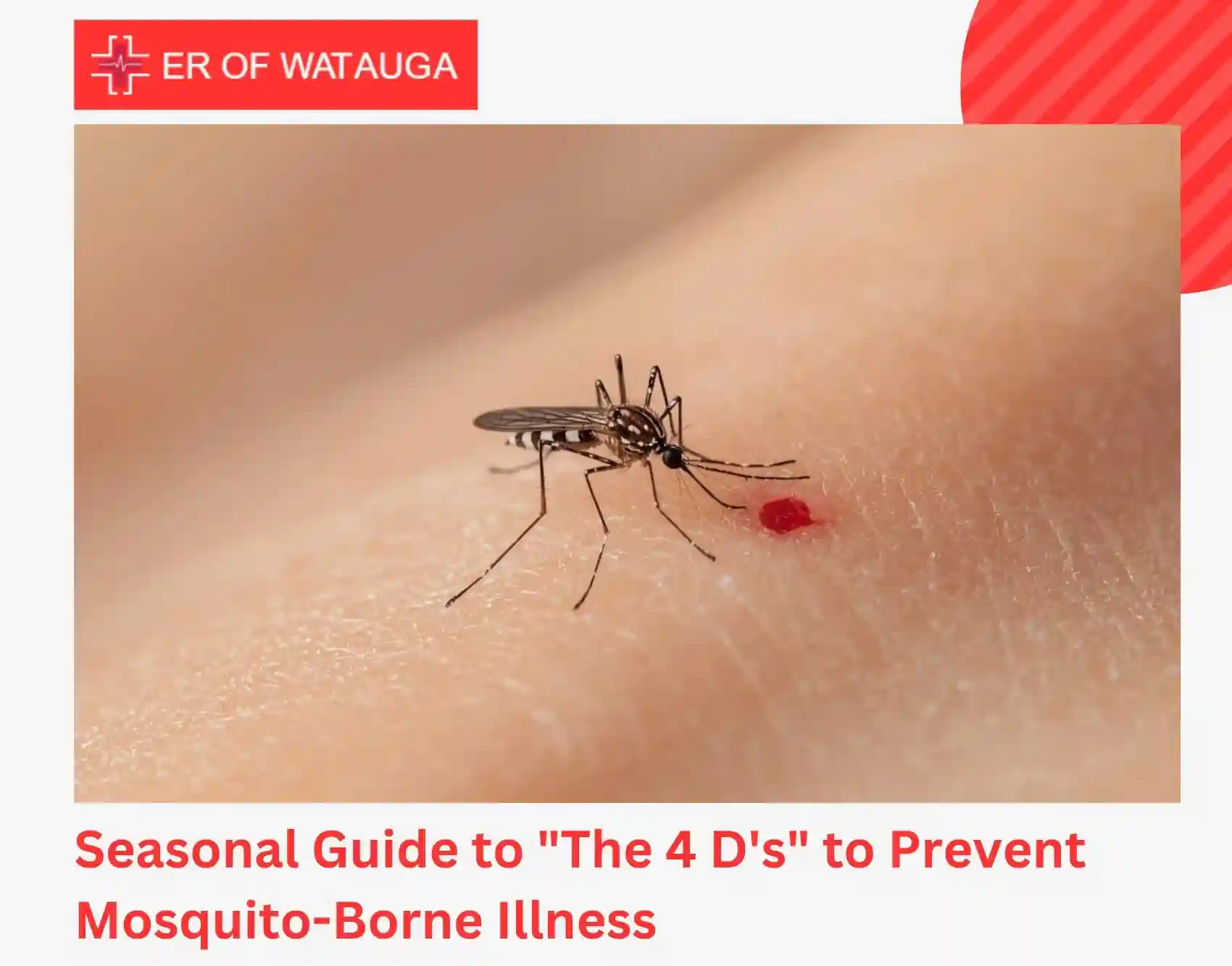
In Texas, mosquito-borne disease prevention comes down to four actions: Drain, Dress, Defend, and avoid Dusk/Dawn exposure. These four D’s target every stage of the mosquito threat, from eliminating breeding grounds to reducing your bite risk during peak activity hours.
And because Tarrant County’s warm, humid climate keeps mosquitoes active well into November and December, this isn’t a summer-only concern. Here’s how to apply each strategy season by season, and when a mosquito bite warrants a trip to the emergency room.
What Are the 4 D’s of Mosquito Disease Prevention?
The 4 D’s are a practical framework for mosquito disease prevention recommended by public health agencies across Texas:
- Drain standing water where mosquitoes breed.
- Dress in protective clothing that blocks bites.
- Defend with EPA-registered insect repellents.
- Dusk/Dawn — limit outdoor exposure during peak mosquito feeding hours.
Each D addresses a different link in the transmission chain. Draining removes the habitat. Dressing and defending create barriers between you and the bite. Timing your activity around dusk and dawn reduces encounters with the most dangerous species. Together, they form a layered approach to mosquito borne disease prevention that works far better than any single measure alone.
1. Drain — Eliminate Mosquito Breeding Grounds
Female mosquitoes lay eggs in standing water, and they don’t need much of it. A bottle cap’s worth of stagnant water is enough to support an entire breeding cycle. Draining that water is the single most effective step in mosquito borne disease prevention—reduce the breeding habitat, and you reduce the threat at its source.
Common Breeding Sites Around Your Home
Most breeding sites hide in plain sight. Clogged rain gutters, forgotten flower pot saucers, old tires, pet water bowls, birdbaths, and kiddie pools left out between uses all collect enough water for mosquitoes to reproduce. Trash cans without lids, wheelbarrows tipped upright, and even the corrugated surfaces of tarps or patio furniture covers trap small pools after rain.
Walk your property once a week. Empty, scrub, or overturn anything that holds water. For containers you can’t drain, such as rain barrels or ornamental ponds, use tightly fitted lids or mosquito dunks (BTI larvicide tablets) to prevent larvae from developing.
Seasonal Drainage Checklist for North Texas
Mosquito breeding pressure shifts with the seasons, and your drainage habits should shift with it:
- Spring: Heavy rains create temporary pools in low spots, construction debris, and neglected yard items. Check for standing water after every storm.
- Summer: Irrigation runoff and sprinkler overspray collect in saucers, drainage ditches, and foundation gaps. Change water in birdbaths and pet bowls every two to three days.
- Fall: Leaves clog gutters and downspouts, trapping water against your roofline. Clean gutters before the first cold snap; mosquitoes are still active and breeding.
- Winter: In the DFW area, mild winter temperatures keep mosquitoes alive longer than most residents expect. Don’t abandon your drainage routine just because temperatures dip. Forgotten buckets and tarps left out through winter become early-season breeding sites when temperatures rise again in February.
2. Dress — Create a Physical Barrier Against Bites
Clothing is your first line of defense when repellent isn’t enough or isn’t an option. As a mosquito disease prevention strategy, the right outfit doesn’t just reduce bites; it blocks them entirely.
What to Wear Outdoors During Mosquito Season
Opt for light-colored, loose-fitting long sleeves and long pants. Mosquitoes are drawn to dark colors because they retain heat and contrast against the horizon, making you easier to locate. Loose fabric is harder for mosquitoes to bite through than tight-fitting clothing pressed against skin.
For added protection, treat outer layers with permethrin; a synthetic insecticide that bonds to fabric and remains effective through several washes. Permethrin-treated clothing is especially useful for yard work, camping, or evening events where reapplying repellent is impractical.
Protecting Children and Infants
Babies under two months old can’t use chemical repellents, which makes clothing and physical barriers their primary protection. Use mosquito netting draped over strollers, car seats, and infant carriers whenever you’re outdoors. For older children, the same rules apply as adults: long sleeves, long pants, and light colors.
Dress children in socks and closed-toe shoes during dusk and dawn hours, and tuck pant legs into socks when playing in grassy or wooded areas. If your child develops a high fever, rash, or unusual lethargy after a mosquito bite, seek medical attention immediately; children are more vulnerable to severe reactions from vector-borne diseases.
Defend — Use EPA-Registered Repellents
Repellent is the most direct form of mosquito borne disease prevention. But not all products offer the same level of protection, and how you apply them matters as much as what you choose.
Choosing the Right Insect Repellent
The EPA registers repellents based on proven efficacy and safety. Look for products containing one of these active ingredients:
- DEET (10–30%): The most extensively studied repellent. Products with up to 30% DEET are safe for adults, pregnant women, and children over two months. Higher concentrations don’t repel better, they just last longer.
- Picaridin (20%): Odorless, non-greasy, and equally effective as DEET for most species.
- IR3535: Common in European formulations, effective against both mosquitoes and ticks.
- Oil of lemon eucalyptus (OLE): The only plant-based ingredient with EPA registration for mosquito protection. Not recommended for children under three.
Apply repellent to exposed skin and over clothing. Reapply after swimming, heavy sweating, or as directed on the label. Keep repellent away from eyes, mouth, and open wounds.
Home Defense Beyond Repellent
Repellent protects you outside. Inside, your home needs its own defensive layer. Install or repair window and door screens to keep mosquitoes from following you indoors. Use air conditioning or fans as moving air disrupts mosquitoes’ flight patterns and makes it harder for them to land.
For yards with persistent mosquito pressure, consider professional treatment or EPA-approved pesticide applications on vegetation around the home. Keep doors closed during peak hours, and use weather stripping to seal gaps around door frames.
4. Dusk and Dawn — Timing Your Outdoor Activity
The fourth D targets when you’re most at risk. Mosquito activity isn’t constant throughout the day, and adjusting your schedule around peak feeding hours is a simple but underused strategy for mosquito disease prevention.
Why Peak Mosquito Hours Matter
Culex mosquitoes, the primary carriers of West Nile virus in Texas, are most active from dusk to dawn. These are crepuscular feeders that thrive in low-light conditions, and their biting pressure peaks in the first two hours after sunset and the hour before sunrise.
That said, dusk and dawn aren’t the only risk windows. Aedes mosquitoes, which transmit dengue, Zika, and chikungunya, are aggressive daytime biters. They’re most active in the morning and late afternoon, and they prefer shaded areas near human habitation. This is why mosquito borne disease prevention requires a layered approach; timing alone won’t eliminate your risk.
Adjusting Your Routine by Season
In spring and fall, DFW’s mild evenings draw people outdoors right when Culex mosquitoes begin feeding. Shift evening walks, yard work, and outdoor dining to before sunset or after full dark when mosquito activity tapers slightly.
During summer, early morning exercise and late afternoon barbecues overlap with Aedes biting hours. Defend with repellent during these windows rather than skipping outdoor time entirely. In winter, mosquito pressure drops but doesn’t disappear. Warm spells in December and January can trigger brief activity surges, so don’t retire your repellent with the season.
Mosquito-Borne Diseases Common in Texas
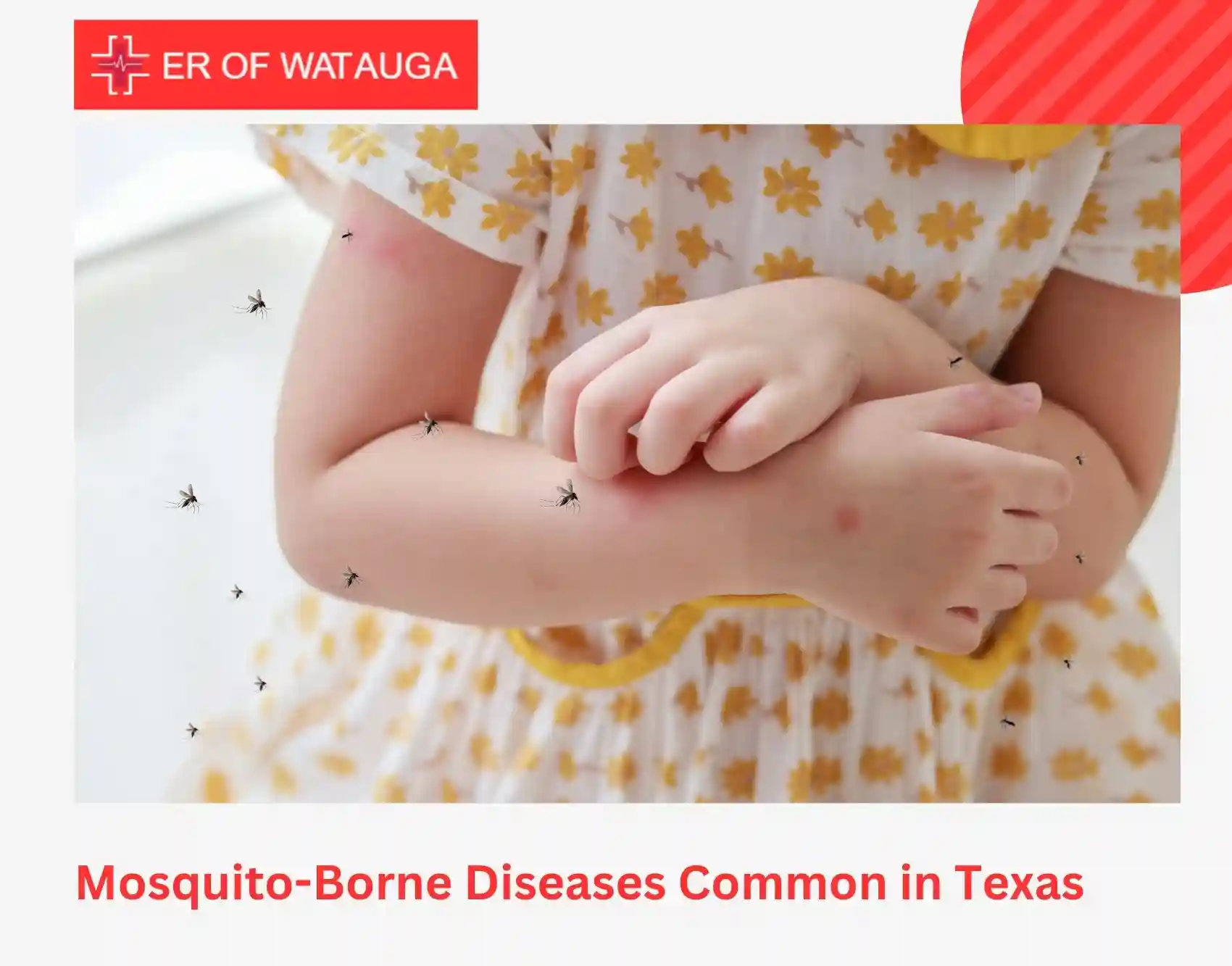
Understanding what diseases circulate locally adds urgency to every preventive step. Texas harbors several mosquito-borne illnesses, and the DFW metroplex is no exception. Effective mosquito borne disease prevention starts with knowing what you’re protecting against.
West Nile Virus
West Nile is the leading cause of mosquito-borne disease in the continental United States, and Texas consistently reports among the highest case counts. In 2024, the state recorded 455 cases and 56 deaths. Most people infected, roughly 80%, never develop symptoms. About one in five experience fever, headache, body aches, and fatigue. The severe form, West Nile neuroinvasive disease, affects fewer than 1% of those infected but can cause encephalitis, meningitis, paralysis, and death. Adults over 50 and immunocompromised individuals face the highest risk.
Dengue, Zika, and Chikungunya
These three diseases share a common vector: Aedes mosquitoes. Texas reported 241 dengue cases in 2024, including locally acquired infections in the southern part of the state. Zika, though less active in recent years, remains a concern for pregnant women because the virus can cause severe birth defects. Chikungunya causes debilitating joint pain that can persist for months or even years after the initial infection clears.
All three diseases lack specific antiviral treatments. Care is supportive; managing symptoms while the body clears the infection.
Eastern Equine Encephalitis (EEE)
EEE is rare but devastating. The fatality rate for symptomatic cases approaches 33%, and most survivors sustain permanent neurological damage. While cases in Texas are uncommon, the virus circulates in bird and mosquito populations across the Gulf Coast region; a reminder that even low-probability mosquito-borne diseases justify consistent prevention efforts.
Symptoms That Require Emergency Care
Most mosquito-borne illnesses resolve on their own with rest and fluids. But some cases escalate quickly, and recognizing the line between manageable symptoms and a medical emergency could save a life.
Mild vs. Severe Symptoms of Mosquito-Borne Illness
Mild symptoms of mosquito-borne illness typically include low-grade fever, headache, muscle and joint aches, fatigue, nausea, and rash. These often appear 3 to 15 days after a bite from an infected mosquito and usually resolve within a week or two.
Severe symptoms signal that the infection may be affecting the brain, spinal cord, or vascular system. Watch for:
- High, persistent fever that doesn’t respond medication
- Stiff neck, confusion, or disorientation
- Tremors, seizures, or sudden muscle weakness
- Paralysis or difficulty moving limbs
- Jaundice (yellowing of the eyes or skin)
- Bleeding from the nose or gums without obvious cause
- Blood in stool or vomit
- Severe or persistent vomiting, especially in children
Any of these symptoms, particularly following a known mosquito bite or during peak mosquito season, require immediate medical evaluation.
When to Visit ER of Watauga

Severe mosquito-borne illness doesn’t wait for an appointment, and neither should you. ER of Watauga is open 24/7 with the diagnostic and treatment capabilities these cases demand: full-service laboratory testing to identify viral infections, IV fluid administration for dehydration and symptom management, CT scan imaging for neurological symptoms like confusion or seizures, and dedicated pediatric care for children presenting with severe reactions.
If you or your child develops any severe symptoms after a mosquito bite, especially stiff neck, confusion, seizures, or bleeding, visit ER of Watauga or call (817) 945-5500 immediately. Mosquito disease prevention starts with the 4 D’s, but when prevention falls short, fast access to emergency care makes the difference.
FAQs
1. What is the most effective mosquito repellent?
Products containing 20–30% DEET or 20% picaridin offer the strongest, longest-lasting protection against mosquito bites. Both are safe for adults, pregnant women, and children over two months old when applied according to label directions.
2. Can mosquitoes bite through clothing?
Yes! Thin, tight-fitting fabrics won’t stop a determined mosquito. Loose-fitting clothes made from tightly woven material provide better protection. Treating clothing with permethrin adds another layer of defense.
3. How long after a mosquito bite do symptoms appear?
Symptoms of mosquito-borne illness typically develop 3 to 15 days after a bite from an infected mosquito, depending on the specific disease. West Nile symptoms tend to appear within 3 to 14 days; dengue within 4 to 10 days.
4. Are mosquitoes active in winter in Texas?
Yes. In the DFW area, mosquitoes remain active into November and December. Mild winter days, common in North Texas, can trigger feeding and breeding activity, so year-round mosquito borne disease prevention matters.
5. Do all mosquito bites carry disease?
No. Only a small percentage of mosquitoes are infected with a pathogen at any given time. However, there’s no way to identify an infected mosquito from its bite, which is why consistent prevention is the safest approach.


