

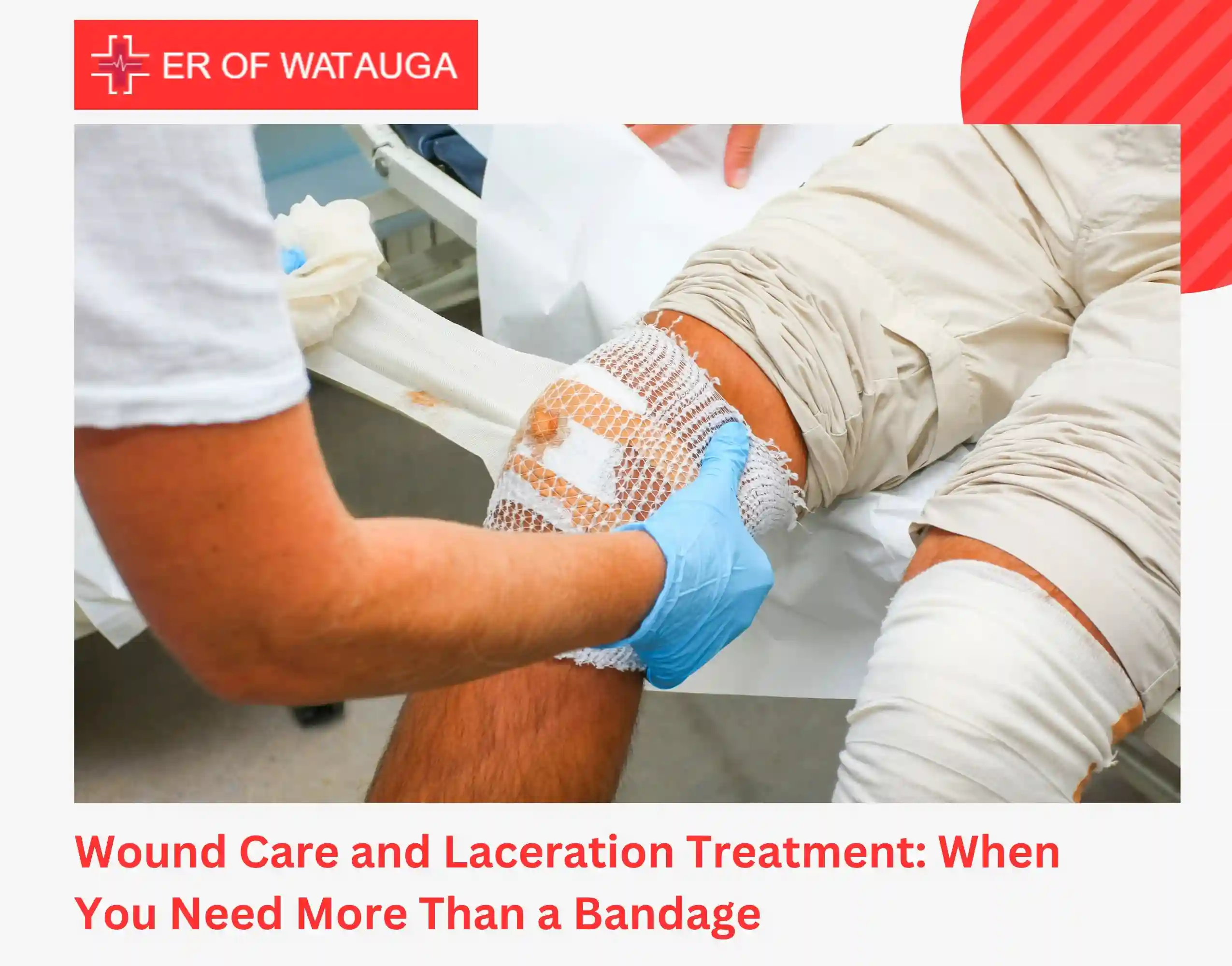
A deep cut, puncture, or laceration can happen in an instant — slicing vegetables, working in the yard, stepping on broken glass, or after a fall. While minor scrapes heal fine with a bandage, wounds that go through the skin, bleed heavily, or get contaminated need professional care to heal properly and prevent infection.
If you need wound care in Watauga, TX, ER of Watauga provides 24/7 emergency wound treatment — including laceration repair with stitches, staples, or skin adhesive, wound cleaning, tetanus shots, and infection prevention — all by board-certified emergency physicians, no appointment needed.
This guide explains what kinds of wounds need professional care, what to do before you arrive, how we treat wounds at our ER, and how to care for your wound at home afterward.
What Counts as a Wound That Needs Professional Care?
Not every cut needs an ER visit, but it’s surprising how often people try to treat wounds at home that really need stitches, antibiotics, or a tetanus shot. The result is often poor healing, infection, or a scar much larger than necessary.
Types of wounds we treat:
- Lacerations — cuts through the skin caused by sharp objects (knives, glass, metal). Often need stitches if deep or gaping.
- Puncture wounds — small but deep wounds from nails, needles, animal bites, splinters, or stepping on objects. High risk for infection.
- Abrasions — scrapes that remove the top layer of skin. Look mild but can need debridement if contaminated.
- Avulsions — wounds where skin or tissue is torn away. Always need professional evaluation.
- Incised wounds — clean, straight cuts from very sharp objects. Generally heal well but often need closure to avoid scarring.
- Animal and human bites — high infection risk, need cleaning, often antibiotics, and sometimes rabies prevention
- Burns with open skin — second- and third-degree burns that have broken the skin barrier
- Crush injuries — wounds with internal damage, even when skin damage looks minor
Each wound type heals differently, has different infection risks, and needs different treatment approaches — which is why proper evaluation matters.
Common Causes of Wounds We Treat

Most wounds we see at the ER happen during everyday activities at home, work, or play. The most common causes include:
- Kitchen and cooking accidents — cuts from knives, mandolines, can openers, and broken glass
- Home improvement projects — saw cuts, drill injuries, nail puncture wounds, broken glass while cleaning
- Yard work injuries — lawn mower debris, weed eater wounds, gardening tool cuts, fence wire injuries
- Workplace injuries — industrial accidents, construction wounds, restaurant cuts
- Sports and recreation — falls on pavement, cycling crashes, contact sport injuries
- Vehicle accidents — glass, metal, and impact injuries
- Animal bites — dog bites are the most common; cats, wildlife, and humans also seen
- Falls — especially in older adults and children, often involving head lacerations
Knowing how the injury happened helps our physicians identify infection risks, foreign body concerns, and the best closure approach.
Does Your Wound Need Stitches? Signs to Watch For
Stitches close wounds that won’t heal cleanly on their own — preventing infection, reducing scarring, and helping the wound seal properly. Here’s how to tell.
Signs Your Wound Likely Needs Stitches or Other Closure
- The cut is deeper than 1/4 inch (about the thickness of a pencil eraser)
- The wound is gaping open and the edges don’t come together easily
- Bleeding doesn’t stop after 10–15 minutes of firm pressure
- You can see fat, muscle, tendon, or bone
- The cut is on the face, hand, foot, or across a joint
- The wound is longer than 1/2 inch
- The wound was caused by a dirty or contaminated object
- The wound was caused by an animal or human bite
- Numbness or weakness near the wound (possible nerve damage)
- Pus, redness spreading from the wound, or fever (signs of infection)
Wounds That Usually Don’t Need Stitches
- Surface scratches that don’t bleed heavily
- Cuts shorter than 1/2 inch with edges that close on their own
- Wounds where bleeding stops within a few minutes
- Abrasions or scrapes (often need cleaning but rarely stitches)
Important: stitches must usually be placed within 6–12 hours of injury for best results. After that window, the risk of infection rises and closure may not be possible. When in doubt, come in for evaluation.
First Aid for Wounds: What to Do Before You Arrive
Proper first aid in the first few minutes can stop dangerous bleeding, reduce infection risk, and improve how the wound heals.
Step-by-Step First Aid for Most Wounds
- Stop the bleeding.
Apply firm, direct pressure with a clean cloth or gauze for 10–15 minutes without lifting to check. If blood soaks through, add another layer on top — don’t remove the first one. Elevate the wound above heart level if possible.
- Clean your hands.
Wash with soap and water, or use hand sanitizer if no water is available, before touching the wound to prevent introducing bacteria.
- Rinse the wound.
Run clean water over the wound for 1–2 minutes to flush out dirt and debris. Do not scrub. Skip hydrogen peroxide and alcohol — they damage tissue and slow healing.
- Cover the wound.
Apply a clean, dry dressing or bandage. If bleeding has stopped, a basic bandage is fine. If it’s still bleeding, maintain pressure with gauze on the way to the ER.
- Do not remove embedded objects.
Stabilize them in place and come to the ER. Removing them may worsen bleeding or cause further damage.
- Go to the ER.
If the wound meets any of the criteria for stitches above, head to ER of Watauga. Time matters — most wounds need closure within 6–12 hours.
ER vs. Urgent Care vs. Home Care: Where to Go
Knowing where to go saves time, money, and unnecessary stress. Here’s how to decide.
Go Directly to the ER If:
- Bleeding doesn’t stop after 15 minutes of firm pressure
- The wound is deep, gaping, or you can see fat or muscle
- The wound is on the face, hand, foot, or genitals
- The wound is from an animal or human bite
- There is a foreign object stuck in the wound
- The wound is contaminated with dirt, rust, or chemicals
- Numbness, tingling, or weakness near the wound
- You haven’t had a tetanus shot in the last 5–10 years
- Signs of infection (redness spreading, pus, fever, warmth)
- The wound resulted from a major accident or trauma
Why a Freestanding ER Beats Urgent Care for Wounds
Many urgent care clinics offer basic wound care but have limits — they can’t always handle deep or complex lacerations, animal bites, contaminated wounds, or facial injuries that need a careful cosmetic closure. They also have limited hours, and a wound that needs stitches can’t wait until morning.
At ER of Watauga, our board-certified emergency physicians close wounds of every complexity, 24/7. For a deeper comparison, see our guide on Freestanding ER vs Urgent Care.
How ER of Watauga Evaluates Your Wound
When you arrive, our team takes wound care seriously and works quickly. Our evaluation includes:
- Bleeding control — direct pressure, elevation, and tourniquets if needed for severe bleeding
- Wound history — how, when, and where the injury happened (this guides infection and tetanus decisions)
- Physical examination — checking depth, contamination, and what tissues are involved
- Function check — testing nearby tendons, nerves, and blood flow to make sure deeper structures are intact
- Digital X-ray imaging — to detect retained foreign bodies (glass, metal, gravel) or underlying fractures, using our on-site digital X-ray.
- Ultrasound — useful for detecting wood splinters or non-metal foreign bodies that X-rays may miss, available through our ultrasound service.
- Lab testing — when infection is suspected, our full-service laboratory provides rapid results.
- Tetanus immunization check — reviewing your last shot date and providing a booster if needed
Because everything is done in-house, most patients are evaluated, treated, and discharged within an hour or two.
Wound Care and Laceration Treatment Options at Our ER
Treatment depends on the type, location, depth, and contamination of the wound. Our physicians choose the approach that minimizes infection risk and scarring while restoring function.
Treatments we provide on-site:
- Thorough wound cleaning (irrigation) — flushing the wound with sterile saline under pressure to remove debris and bacteria. This single step is the most important factor in preventing infection.
- Local anesthesia — numbing the area so cleaning and closure are pain-free
- Debridement — gentle removal of damaged or contaminated tissue when needed
- Sutures (stitches) — the most common wound closure, ideal for deeper or complex lacerations. Various techniques and materials are chosen based on location and depth.
- Staples — fast, effective closure for scalp and certain extremity wounds
- Skin adhesive (medical glue) — for cleaner, smaller wounds where it gives a good cosmetic result without sutures
- Steri-strips — adhesive strips that hold smaller wounds together, sometimes combined with other closure methods
- Antibiotics — oral prescriptions for moderate infection risk; IV antibiotics for severe wounds, animal bites, or visible infection.
- Tetanus booster — recommended if your last shot was more than 5–10 years ago, depending on wound type
- Pain management — oral or IV pain medication for severe wounds, plus prescriptions to take home
- Bandaging and wound care instructions — every patient leaves with clear written instructions for home care
- Specialist referral — for wounds involving tendons, nerves, deep facial cuts, or complex bites, we coordinate same-day or next-day referral to a specialist
For most patients, the entire process — from arrival to discharge with stitches in place — takes less than two hours.
Wound Healing and Aftercare at Home
Good aftercare is the difference between a wound that heals beautifully and one that scars badly or gets infected. Here’s what to do after you leave the ER.
First 24–48 Hours
- Keep the wound dry — no swimming, baths, or soaking
- Leave the original dressing in place as long as your physician instructed
- Avoid bumping or stretching the wound
- Watch for bleeding, swelling, or worsening pain
After 48 Hours
- Gently clean the wound daily with mild soap and water (don’t scrub)
- Pat dry — never rub
- Apply antibiotic ointment if directed and a clean bandage
- Showering is generally okay; baths and soaking should wait until stitches come out
Stitch Removal and Follow-Up
- Face: 5–7 days
- Scalp: 7–10 days
- Trunk and arms: 7–10 days
- Legs: 10–14 days
- Joints and high-tension areas: 10–14 days
Skin adhesive falls off on its own in 5–10 days — don’t pick at it.
Return to the ER Immediately If:
- Redness spreading from the wound
- Increasing pain, warmth, or swelling
- Pus or yellow/green drainage
- Fever or chills
- Red streaks moving away from the wound (sign of spreading infection)
- The wound reopens or bleeds heavily
- Numbness or new weakness near the wound
Most wounds heal completely within 2–4 weeks, with full scar maturation taking 6–12 months. Protecting the area from sun exposure during the first year significantly reduces scar visibility.
Why Choose ER of Watauga for Wound Care

When you’re bleeding or worried about infection, you need fast care from someone experienced — not a waiting room. ER of Watauga combines hospital-grade capability with the speed of a small facility.
What sets us apart:
- Open 24/7, 365 days a year — wounds don’t wait for business hours
- Minutes-not-hours wait time — most wound patients are seen within minutes of arrival
- Cosmetic closure expertise — careful suturing techniques that minimize scarring, especially for facial wounds
- Board-certified emergency physicians — extensive experience with wounds of every kind, including complex pediatric cases
- Dedicated pediatric emergency care — gentle, child-friendly wound care 24/7
- On-site imaging and lab — X-ray, ultrasound, and lab results in minutes when needed
- 9-star Google rating across 950+ verified patient reviews
- No surprise billing — transparent costs, in-network with most major insurance
Cost, Insurance, and Billing
Wound care should be accessible. We accept most major insurance and offer flexible payment options for patients without coverage.
- Most major commercial insurance plans accepted (see our insurance coverage page)
- No surprise billing — you’ll never receive an unexpected bill
- Flexible payment plans through our Sunbit Payment Plan
- Letter of Protection accepted for accident-related wounds (auto accidents, workplace injuries, slip and falls)
If your wound is workplace-related or accident-related, our team can help with documentation needed for workers’ compensation or insurance claims.
How to Reach ER of Watauga

We’re a walk-in 24-hour emergency room. No appointments needed.
Address: 5401 Basswood Blvd, Fort Worth, TX 76137
Phone: (817) 945-5500
Hours: Open 24 hours, 7 days a week
Service Area: Watauga, Fort Worth, North Richland Hills, Haltom City, Keller, Hurst, Bedford, Saginaw, and surrounding cities
Apply pressure on the way in if bleeding is significant. For heavy bleeding that won’t stop or wounds from major accidents, call 911 — paramedics can begin control en route.
Frequently Asked Questions About Wound Care and Lacerations
How do I know if my cut needs stitches?
If the cut is deeper than 1/4 inch, longer than 1/2 inch, gaping open with edges that won’t come together, on the face or across a joint, or still bleeding after 10–15 minutes of pressure — it likely needs stitches. When in doubt, get evaluated. Stitches placed in the first 6–12 hours produce the best healing and least scarring.
Does it hurt to get stitches?
The wound itself is uncomfortable, but the suturing process is not. We use local anesthetic to numb the area completely before any closure. Most patients feel only the initial pinch of the numbing injection, then nothing during the actual repair.
How long do I have to get stitches?
Most wounds should be closed within 6–12 hours of injury. Some wounds (like clean cuts on the face) can be closed up to 24 hours later. After that window, the risk of infection becomes too high to safely close the wound, and it will need to heal open, often with a larger scar.
Do I need a tetanus shot for every cut?
Not for every cut, but you do need a booster if your last tetanus shot was more than 10 years ago — or more than 5 years ago for dirty, deep, or contaminated wounds. We check your records and update if needed.
How can I tell if my wound is getting infected?
Watch for: redness spreading away from the wound, increasing pain or swelling, warmth around the area, pus or yellow/green drainage, fever or chills, and red streaks moving away from the wound. Any of these signs means you should return to the ER right away.
Will my wound leave a scar?
Almost all wounds that break the full thickness of skin leave some scarring, but proper closure, careful aftercare, and sun protection during the first year significantly reduce visible scarring. Wounds repaired in the ER tend to heal with much smaller, less noticeable scars than wounds left to heal on their own.
Don’t Let a Wound Become a Bigger Problem
A wound that’s properly treated heals cleanly with minimal scarring. One that’s ignored or treated poorly can lead to infection, poor healing, or unnecessary scarring. If you have a cut, puncture, or laceration that meets any of the criteria above, walk in any time — we’re ready 24/7.
Open 24/7. Stitches, staples, and skin adhesive available immediately.
| 📞 Call: (817) 945-5500 📍 Visit: 5401 Basswood Blvd, Fort Worth, TX 76137 🕐 Hours: Open 24/7 |


