

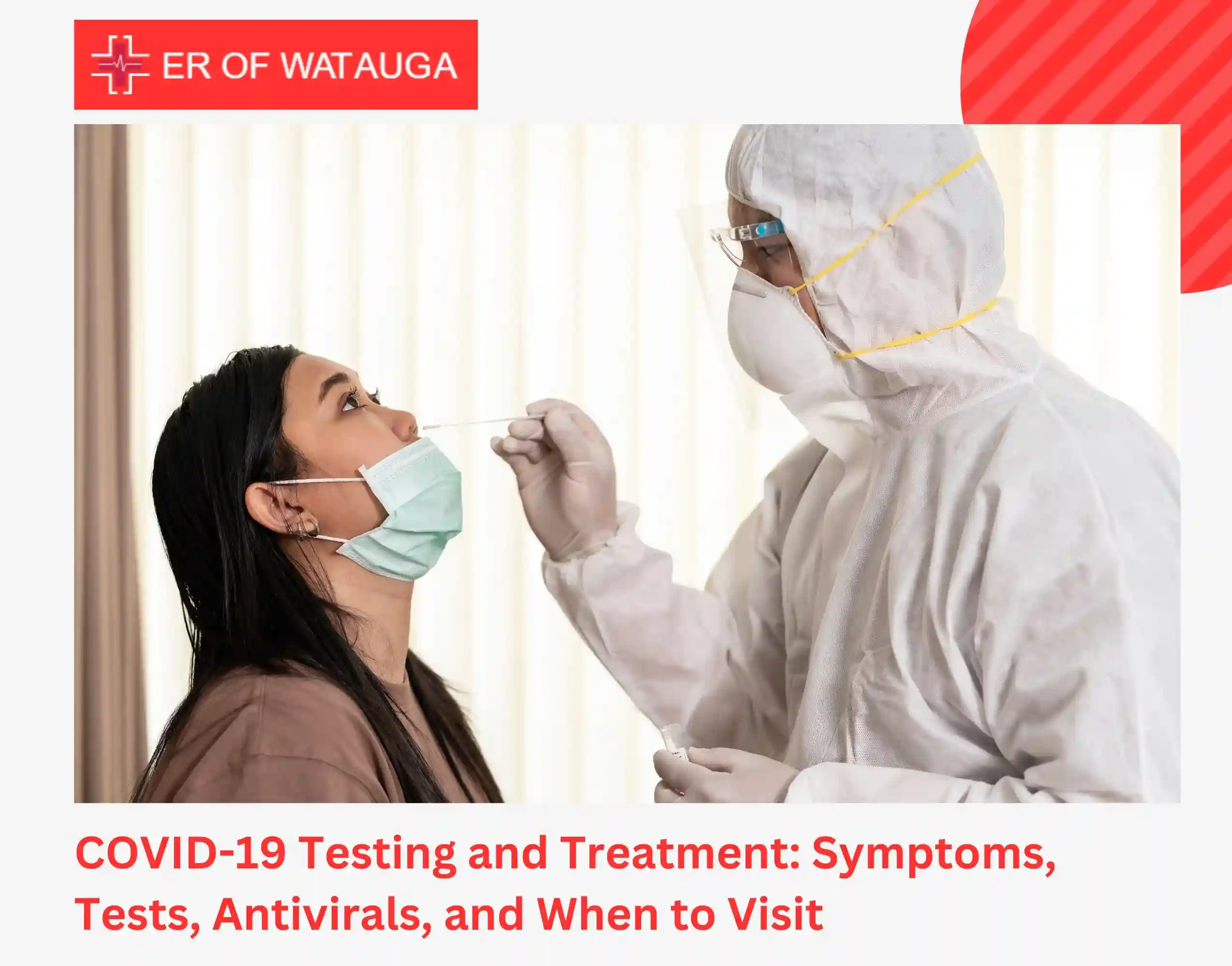
COVID-19 hasn’t gone away — it’s become part of the seasonal respiratory illness landscape we all live with. While most cases today are mild, COVID-19 can still cause serious illness in older adults, immunocompromised patients, and people with certain medical conditions. Knowing when to get tested, when to seek treatment, and when symptoms warrant an ER visit is the foundation of staying safe.
If you need COVID testing in Watauga, TX, ER of Watauga offers walk-in COVID-19 testing 24/7 — including rapid antigen testing, alongside treatment options for confirmed cases and full emergency care for serious symptoms. No appointment needed.
This guide explains current COVID-19 symptoms, the differences between test types, the antiviral treatments available in 2026, and when symptoms cross the line from manageable at home to needing emergency care.
What COVID-19 Looks Like in 2026
COVID-19 is caused by the SARS-CoV-2 virus, which has evolved into multiple variants since 2020. Today’s circulating strains tend to cause milder, more cold- and flu-like illness in most healthy people — but the virus continues to pose serious risks to specific groups.
Who remains at higher risk for severe illness:
- Adults age 65 and older — risk increases significantly with age
- Immunocompromised people — those on chemotherapy, transplant patients, people with primary immunodeficiencies
- People with chronic conditions — diabetes, heart disease, lung disease (including asthma and COPD), kidney disease, liver disease, obesity
- Pregnant or recently pregnant individuals
- People who are unvaccinated or have not received recent boosters
If you fall into any of these categories, early testing and early antiviral treatment matter most — the medications work best when started within the first few days of symptoms.
COVID-19 Symptoms to Watch For
Current COVID symptoms often resemble a bad cold or the flu — and the only reliable way to know whether it’s COVID, flu, RSV, or something else is to test.
Common Symptoms
- Fever or chills
- Cough — dry or productive
- Sore throat
- Congestion or runny nose
- Headache
- Fatigue or feeling unusually tired
- Muscle or body aches
- Nausea, vomiting, or diarrhea
- Loss of taste or smell (less common with newer variants but still occurs)
- Shortness of breath
Emergency Symptoms — Go to the ER Immediately
- Trouble breathing or shortness of breath at rest
- Persistent chest pain or pressure
- New confusion or difficulty staying alert
- Inability to wake up or stay awake
- Pale, gray, or blue-colored skin, lips, or nail beds
- Severe dehydration (no urine output, dizziness, dry mouth)
- Severe abdominal pain
- High fever that won’t break with medication
- Worsening symptoms 7–10 days after illness began (possible secondary pneumonia)
Symptoms typically appear 2 to 14 days after exposure. If you have any high-risk conditions, don’t wait — early evaluation and treatment significantly reduce the chance of severe illness.
When to Get Tested for COVID-19

Testing is the foundation of treatment decisions and prevents spreading the virus to others. Get tested if any of the following apply:
Reasons to get a COVID test:
- You have symptoms — even mild ones, especially if you’re high-risk or live with someone who is
- Known close exposure — you’ve been in close contact with someone who tested positive
- Before high-risk activities — visiting elderly family, immunocompromised friends, or attending a large gathering
- After travel — if you’ve been somewhere with elevated COVID activity
- Pre-procedure or pre-surgery — many medical procedures still require negative tests
- Return-to-work or return-to-school requirements
Timing matters: testing too early after exposure can give a false negative. If you’re tested within 1–2 days of exposure and the test is negative but you’re still symptomatic or worried, repeat the test 1–2 days later.
Types of COVID-19 Tests at ER of Watauga
Different tests serve different purposes. We provide rapid COVID-19 testing on-site, with results during your visit.
Rapid Antigen Test
This is the quick test you may have used at home — but performed under medical supervision for greater reliability.
- Results in 15–30 minutes
- Detects active infection by identifying viral proteins
- Most accurate when you’re symptomatic and within the first 5–7 days of symptoms
- Less sensitive than PCR, so a negative result with symptoms may need follow-up PCR
- Useful for fast decisions about treatment, work, or contact with high-risk people
PCR Test (Molecular Test)
The gold-standard test for COVID-19 detection, with the highest accuracy.
- Detects the virus’s genetic material (RNA)
- Can detect very low levels of the virus, including in early or late infection
- Results typically available in 1–3 days, depending on lab volume
- Often required for travel, surgery clearance, or work documentation
- Highly accurate even when symptoms are mild or you’ve recently been exposed
At ER of Watauga, rapid antigen testing is performed on-site. A molecular (PCR) test is the lab-based standard when confirmation is needed.
Combination Respiratory Panels
When your symptoms could be COVID, flu, RSV, or strep, we can test for multiple respiratory viruses at once. This is especially useful during winter months when several viruses circulate together.
COVID-19 Treatment Options in 2026
Treatment depends on the severity of your symptoms, your risk factors, and how soon you can start. The most important thing to know: antiviral treatment works best when started within the first 5 days of symptoms — and ideally within the first 1–3 days.
Supportive Care (Most Healthy Patients)
For mild COVID-19 in low-risk adults, the standard of care is rest, hydration, and symptom management.
- Rest and adequate sleep
- Plenty of fluids — water, broth, oral rehydration solutions
- Acetaminophen or ibuprofen for fever, aches, and headache (follow dosing guidelines)
- Throat lozenges and saline nasal sprays for symptom relief
- Cough suppressants or expectorants as needed
- Monitoring for any worsening symptoms — especially breathing difficulty
Oral Antivirals — For High-Risk Patients
Two oral antivirals are FDA-authorized for treating mild-to-moderate COVID-19 in patients at high risk for severe disease:
- Nirmatrelvir/ritonavir — the most commonly prescribed oral antiviral. Reduces the risk of hospitalization and death when started within 5 days of symptoms. Has important drug interactions, so a careful medication review is required before prescribing.
- Molnupiravir — an alternative oral antiviral for patients who can’t take Paxlovid due to drug interactions or contraindications. Generally considered slightly less effective than Paxlovid but still beneficial for high-risk patients.
Both medications require a prescription and a medical evaluation. The window matters: starting treatment in the first 1–3 days of symptoms provides the most benefit.
IV Antiviral
For high-risk outpatients who can’t take oral antivirals can be given as a 3-day outpatient IV infusion. We can administer IV antiviral treatment on-site through our IV treatment service when clinically appropriate.
Treatment of Severe COVID-19
If your COVID-19 has progressed to severe illness — significant breathing difficulty, low oxygen levels, or signs of pneumonia — emergency care includes:
- Oxygen therapy
- IV fluids for dehydration
- Anti-inflammatory and immunomodulating drugs in hospitalized patients
- Chest imaging and lab work to assess lung involvement
- Coordinated hospital transfer when inpatient care is needed
Our team evaluates COVID-19 patients quickly and starts treatment without waiting — minutes matter when oxygen levels are dropping.
When to Go to the ER for COVID-19

Most mild and moderate cases of COVID-19 can be managed at home with rest, fluids, and over-the-counter medications. But certain situations call for in-person evaluation — and some are true emergencies.
Come to ER of Watauga If You Have:
- Trouble breathing or worsening shortness of breath
- Persistent chest pain or pressure
- Symptoms that aren’t improving after 7–10 days
- Symptoms in a high-risk patient (older adult, immunocompromised, chronic illness)
- Inability to keep fluids down or signs of dehydration
- High fever (over 103°F) that won’t break with medication
- Need for prescription antiviral treatment within the 5-day treatment window
- Worsening symptoms after initially feeling better (a possible secondary infection)
- Pregnant or postpartum with COVID symptoms
Why a Freestanding ER for COVID Care
Many urgent care clinics offer basic COVID testing, but only an ER has the imaging, IV capability, oxygen support, and 24/7 access needed for serious COVID illness. We can also start antiviral treatment, monitor oxygen levels, and admit or transfer you immediately if needed — without sending you to another facility first.
Recovery, Isolation, and Prevention
How Long to Isolate
Current CDC guidance encourages people who test positive for COVID-19 to stay home until they have been fever-free for 24 hours without medication and their symptoms are improving. After returning to normal activities, taking additional precautions (masking, distancing from high-risk people) for several additional days is recommended to reduce spread.
Recovery Tips
- Rest fully — don’t return to strenuous exercise too soon
- Stay hydrated even after you’re feeling better
- Monitor for new or returning symptoms (especially shortness of breath)
- Follow up with your primary care provider if symptoms persist beyond 2–3 weeks (possible “long COVID”)
- Get back to vaccinations and boosters once you’ve recovered, per CDC guidance
Reducing Future Risk
- Stay current on COVID-19 vaccinations and boosters as recommended by the CDC
- Wash hands frequently
- Wear a well-fitting mask in crowded indoor settings during respiratory virus surges
- Stay home when sick
- Improve indoor ventilation when gathering with others
- Talk to your doctor about your individual risk profile and whether additional precautions apply
Why Choose ER of Watauga for COVID-19 Testing and Treatment

From simple testing to full emergency care, ER of Watauga gives you a complete COVID-19 response under one roof — without the long wait of a hospital ER or the limitations of a clinic.
What sets us apart:
- Open 24/7, 365 days a year — testing and treatment available at any hour
- Walk-in service — no appointment needed
- Same-visit rapid testing — antigen results in 15–30 minutes
- On-site lab and imaging — for chest X-ray, oxygen monitoring, and bloodwork if needed
- Board-certified emergency physicians — current with CDC and FDA guidance
- Antiviral evaluation and prescribing — we can assess eligibility and start treatment quickly
- Dedicated pediatric emergency care — child-friendly evaluation and testing for kids of all ages
- 9-star Google rating across 950+ verified patient reviews
- No surprise billing — transparent costs, in-network with most major insurance
For a deeper comparison of where to go for respiratory illness, see our guide on Freestanding ER vs Urgent Care.
Cost, Insurance, and Billing
We work with most major insurance plans for COVID-19 testing and treatment. Costs vary by plan and type of service, so our team will help you understand what to expect before non-emergency care begins.
- Most major commercial insurance plans accepted (see our insurance coverage page)
- No surprise billing — you’ll never receive an unexpected bill
- Flexible payment plans through our Sunbit Payment Plan
For antivirals, patient assistance programs are available for eligible uninsured or underinsured patients — our team can help you navigate these options.
How to Reach ER of Watauga
We’re a walk-in 24-hour emergency room. No appointments needed.
Address: 5401 Basswood Blvd, Fort Worth, TX 76137
Phone: (817) 945-5500
Hours: Open 24 hours, 7 days a week
Service Area: Watauga, Fort Worth, North Richland Hills, Haltom City, Keller, Hurst, Bedford, Saginaw, and surrounding cities
If possible, wear a well-fitting mask when entering to protect others. If your symptoms are severe — especially trouble breathing — call ahead or call 911 so our team is ready when you arrive.
Frequently Asked Questions About COVID-19 Testing and Treatment
How long does it take to get COVID-19 test results at ER of Watauga?
Rapid antigen test results are available in 15 to 30 minutes during your visit. If a molecular (PCR) test is recommended for confirmation, lab results typically take 1 to 3 days. We choose the right test based on your symptoms, urgency, and intended purpose for testing.
When is the best time to test for COVID-19 after exposure?
Testing too early can produce a false negative because there isn’t enough virus to detect yet. For PCR, testing 3 to 5 days after exposure offers the best accuracy. For rapid antigen tests, testing once symptoms appear gives more reliable results. If your first test is negative but symptoms persist, test again 1 to 2 days later.
Should I go to the ER or just test at home?
If your symptoms are mild and you’re not at high risk, a home test is often enough. Come to the ER if you’re high-risk and want fast evaluation and treatment, your symptoms are getting worse, you have any of the emergency warning signs listed above, or you need documentation for work, surgery, or travel.
Do I need to isolate if I test positive but feel fine?
A positive test means you can still spread the virus. Current CDC guidance recommends staying home until you’re fever-free for 24 hours without medication and your symptoms are improving. After resuming normal activities, taking precautions (masking, avoiding high-risk contacts) for several additional days helps reduce spread to others.
What if my child has COVID symptoms?
Most healthy children recover from COVID-19 with rest and fluids. Bring them to the ER if they have trouble breathing, can’t keep fluids down, have very high fever that won’t break, become unusually lethargic, or have any underlying medical conditions. We provide gentle, child-friendly evaluation and testing 24/7.
Get Tested or Treated Today — No Appointment Needed
Whether you need a quick test, antiviral treatment, or emergency evaluation, ER of Watauga is ready 24/7. Walk in any time — our team will guide you through testing, treatment options, and the right next steps for your situation.
Open 24/7. Walk-in testing and antiviral evaluation.
| 📞 Call: (817) 945-5500 📍 Visit: 5401 Basswood Blvd, Fort Worth, TX 76137 🕐 Hours: Open 24/7 |


