

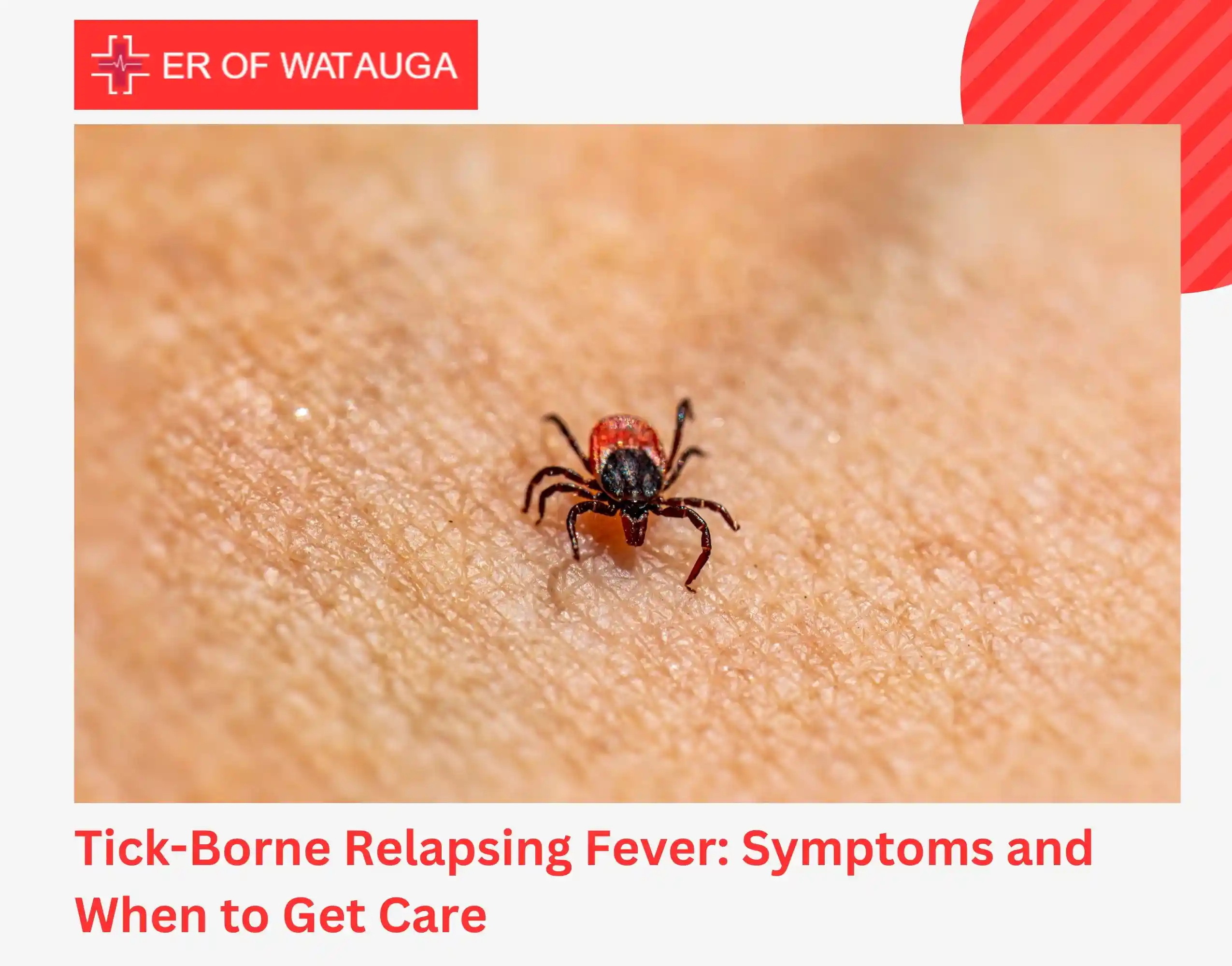
A fever that breaks, disappears for a week, then comes roaring back is not how most infections behave, and that pattern is the signature of tick-borne relapsing fever. It often follows a night in a rustic cabin, from a tick bite so brief and painless that most people never know they were bitten.
The good news is that it responds well to treatment once it is recognized. The challenge is recognizing it, because the cycle is easy to mistake for a virus that keeps relapsing on its own.
What Is Tick-Borne Relapsing Fever?
Tick-borne relapsing fever is a bacterial infection caused by Borrelia spirochetes, spread by soft-bodied ticks that pick up the bacteria from rodents. It belongs to the broader family of tick-borne diseases, but it works differently from the one most people know.
Lyme disease comes from hard ticks that attach and feed for days, while relapsing fever comes from soft ticks that feed briefly, which is why the two illnesses look and behave so differently.
In the United States, the disease shows up mostly in the West, but Texas has its own version. In Texas and Florida, relapsing fever is usually caused by Borrelia turicatae at lower elevations, tied to caves, rodent burrows, and rustic cabins.
Like other vector-borne illnesses in the state, including West Nile virus, it spreads through a bite rather than person to person, so you cannot catch it from someone who has it.
Why Does the Fever Keep Coming Back?

The recurring fever is the defining feature, and it follows a recognizable rhythm. Symptoms typically relapse in a pattern of fever lasting around 3 days, followed by around 7 days without fever, followed by fever again, and the cycle can repeat several times if the infection goes untreated.
Here is the cycle in plain terms:
- Fever phase: roughly 3 days of high fever and feeling awful
- Quiet phase: about 7 days feeling almost normal
- Relapse: the fever returns, and the pattern repeats, an average of 3 times but up to 10 in untreated cases
The reason behind the relapses is clever and a little unsettling. The bacteria change their outer surface proteins to escape the immune response, so each time your immune system catches up, the next wave looks different to it. That is why a fever that comes and goes on this kind of schedule deserves a closer look rather than a wait-and-see.
What Are the Symptoms of Tick-Borne Relapsing Fever?
The symptoms of tick-borne relapsing fever arrive suddenly with each febrile episode and feel like a severe flu. They usually appear 4 to 21 days after exposure, which is part of why the connection to a tick is so easy to miss.
Each episode tends to bring:
- Sudden high fever and shaking chills
- Headache
- Muscle and joint aches
- Nausea and vomiting
- Sweats as the fever breaks
- Sometimes a rash
Because that first episode looks so much like the flu, relapsing fever symptoms are often dismissed until the fever returns a second or third time. A pounding fever-related headache is common too, though it differs from the serious headache symptoms that point to other emergencies. The clue that sets this illness apart is not any single symptom but the cycle they travel in.
How You Get It: The Bite You Never Felt
Soft ticks behave nothing like the hard ticks people check for after a hike. Their bites are brief, usually lasting less than half an hour, painless, and most people are unaware they have been bitten, often because the tick feeds at night while they sleep. So a missing tick memory does not rule the illness out.
Exposure has a pattern of its own. In the United States, people most often become infected when they stay overnight in rodent-infested cabins, including the kind found in the Texas Hill Country and in mountain and wooded areas. Lowering the risk comes down to keeping rodents out of cabins, clearing nesting sites, and using insect repellent and treated clothing when staying somewhere rustic. If you have spent a night in an older cabin and a cyclic fever follows days later, that history is worth telling a clinician.
How Is Tick-Borne Relapsing Fever Diagnosed and Treated?

Diagnosis depends on timing. The bacteria are easiest to find when you are actively feverish, since diagnosis is made by detecting the spirochetes in blood specimens, best collected during a febrile episode. That is why getting seen while the fever is up, rather than during a quiet week, gives the clearest answer.
The treatment itself is straightforward and effective. Tick-borne relapsing fever is treated with a 7 to 10 day course of antibiotics, and most people recover fully. One wrinkle calls for medical supervision: a Jarisch-Herxheimer reaction, with chills, fever, and a drop in blood pressure, can occur within hours of the first antibiotic dose, so starting treatment where you can be monitored is safer than starting it alone.
At the ER, the focus is recognizing the pattern and confirming it fast. The team can draw a blood smear during a fever, start treatment under observation in case of that first-dose reaction, and give IV fluids if repeated fevers have left you dehydrated.
When Should You See a Doctor or Go to the ER?
Tick-borne relapsing fever is usually treatable rather than immediately life-threatening, so the right step depends on how sick you are and who you are.
See a doctor when you have an unexplained fever that has come and gone more than once, especially after staying somewhere rustic. Ask to be seen while the fever is up so a blood test has the best chance of catching it.
Go to the ER now when you have a dangerously high fever, confusion, severe weakness, a fast heartbeat, signs of dehydration, or a child has a febrile seizure. These call for prompt evaluation regardless of the cause.
Treat it as urgent during pregnancy. This is the exception that should not wait. Relapsing fever during pregnancy can cause pregnancy loss, premature birth, and severe infection in infants, so a pregnant person with a recurring fever should be evaluated right away.
Getting to the Bottom of a Recurring Fever at ER of Watauga

A fever that keeps returning is worth taking seriously, and figuring out why is exactly the kind of problem an emergency team is built to solve. The board-certified physicians at our emergency room in Watauga can evaluate a recurring fever, draw and read blood work while you are symptomatic, start treatment under observation, and give fluids if you need them.
Most cases resolve well once they are recognized and treated. If your fever has cycled more than once, or you are pregnant, come in and tell us about any recent time spent in a cabin or the outdoors.
Frequently Asked Questions
1. How is tick-borne relapsing fever different from Lyme disease?
Both come from ticks, but relapsing fever comes from soft ticks that bite briefly and painlessly, while Lyme comes from hard ticks that attach for days. Relapsing fever also causes the distinctive cycling fever that Lyme does not.
2. Is tick-borne relapsing fever contagious?
No. You cannot catch it from another person. It spreads only through the bite of an infected soft tick, so normal contact with someone who has it carries no risk.
3. How long does tick-borne relapsing fever last?
Each fever episode lasts about 3 days, separated by roughly 7 fever-free days. Untreated, the cycle can repeat several times over weeks. With antibiotics, most people recover quickly.
4. What does a soft tick bite look like?
Usually you see nothing. Soft tick bites are painless and brief, often at night, so most people never notice the bite or the tick, which is why exposure history matters more than finding a mark.
5. When should you see a doctor for a recurring fever?
See a doctor if a fever has returned more than once with no clear cause, especially after staying somewhere rustic. Try to be seen while feverish, and seek care right away if you are pregnant.


