

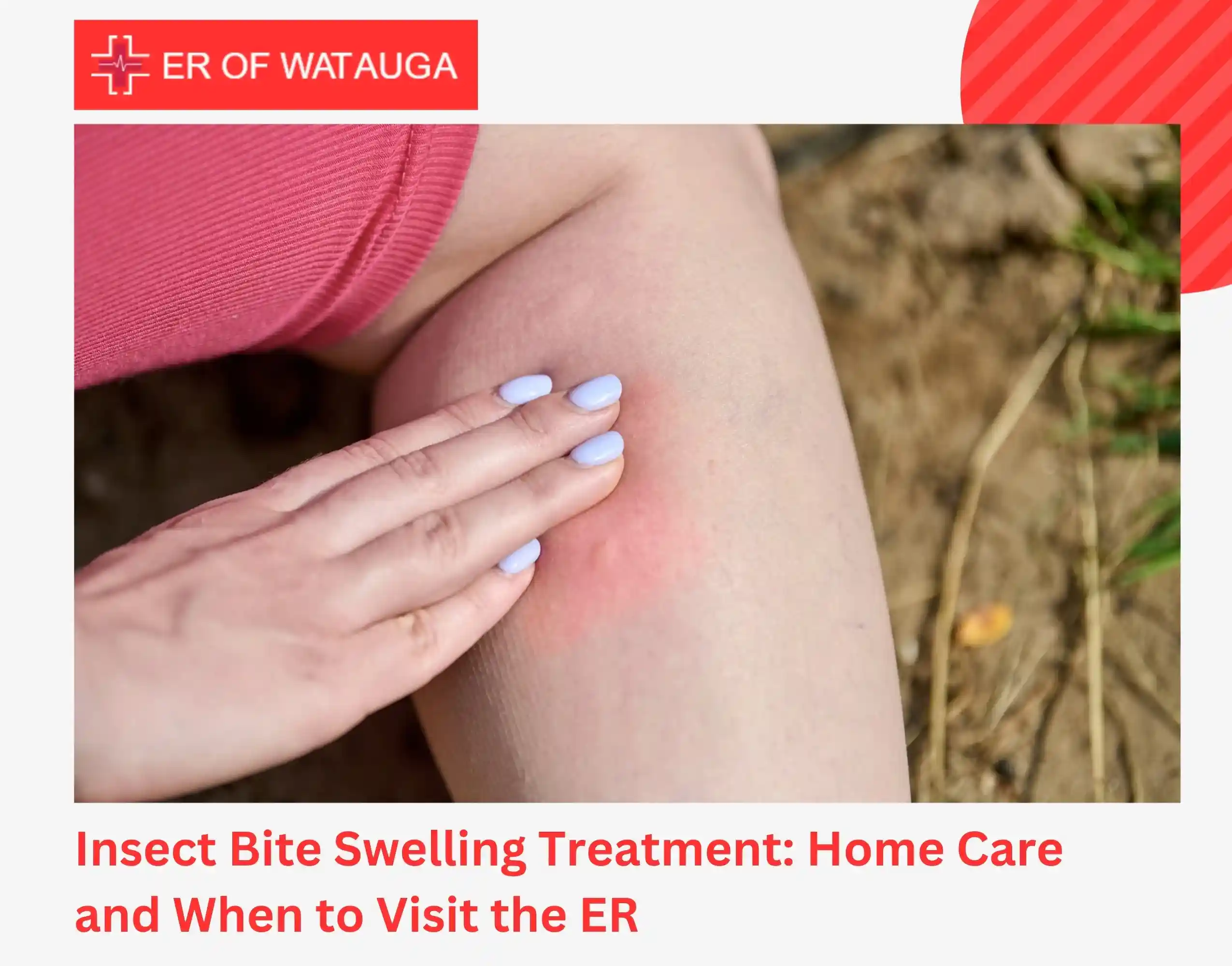
For most insect bites, swelling is the body’s normal histamine response, and standard insect bite swelling treatment at home works well: apply a cold compress for 10 to 20 minutes, take an oral antihistamine, and use 1% hydrocortisone cream on the bite.
But not all bug bite swelling is routine. Swelling that spreads rapidly, involves the face or throat, or comes with fever and red streaking can signal an allergic reaction or infection that needs emergency care. Here’s how to tell the difference and exactly what to do in each case.
Why Do Insect Bites Swell?
When an insect bites or stings, it injects saliva or venom into your skin. Your immune system recognizes these foreign proteins and releases histamine to the site, which triggers inflammation. That inflammation is what produces the redness, warmth, itching, and swelling you see around the bite.
The size of the swelling doesn’t always reflect the severity of the bite. A mosquito bite on the eyelid can produce dramatic puffiness simply because the tissue there is loose and thin. A swollen mosquito bite near the eye often looks alarming but resolves on its own within 24 to 48 hours. Meanwhile, a small, firm bump from a spider bite might be more medically significant despite looking mild on the surface.
What matters most is the trajectory. Normal bug bite swelling peaks within the first 24 hours and then gradually subsides. Swelling that continues expanding after 48 hours, spreads beyond the immediate bite area, or comes with systemic symptoms like fever or nausea tells a different story entirely.
How to Treat Insect Bite Swelling at Home
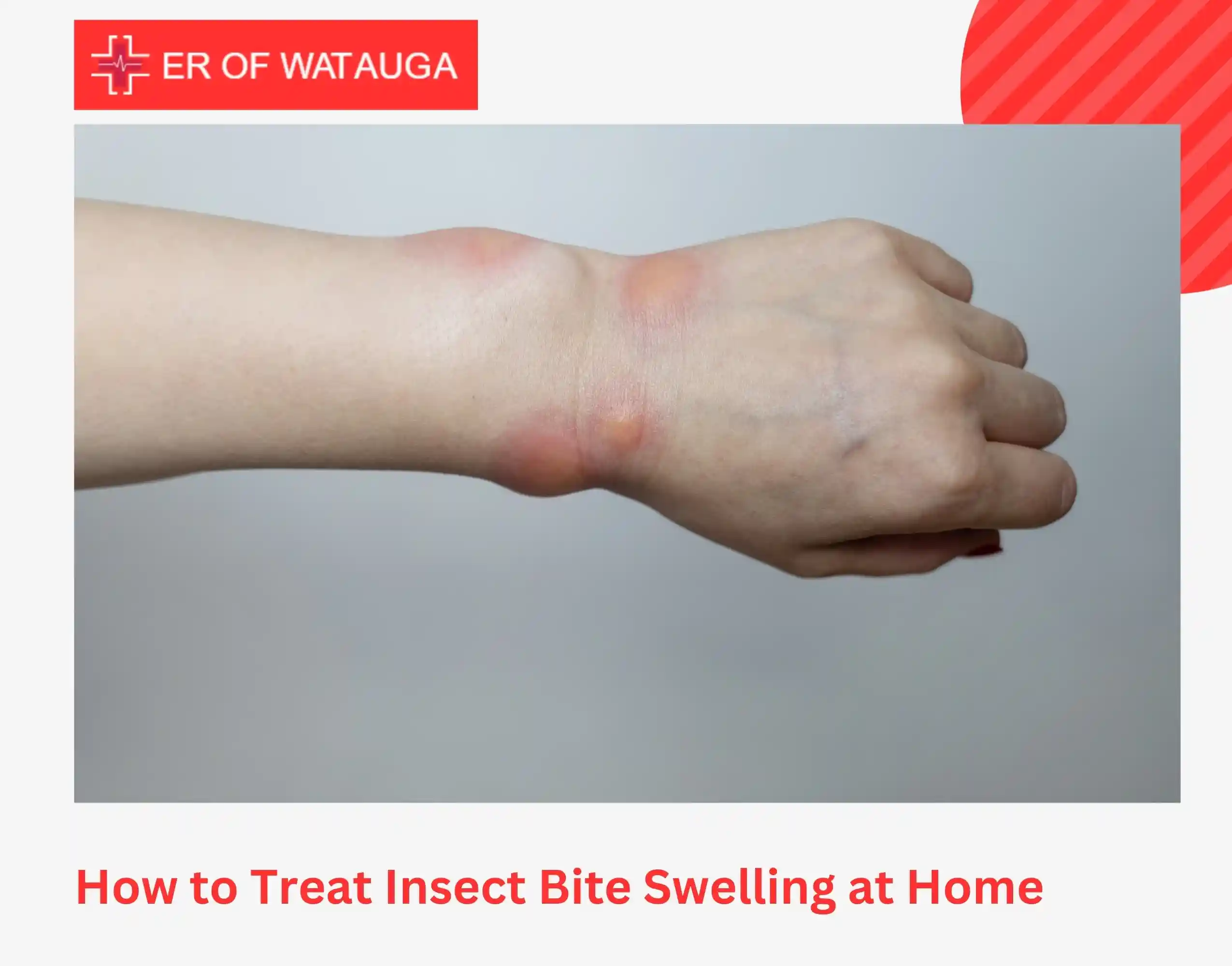
Most bites and stings respond well to simple first-aid measures. Start these steps as soon as you notice the bite for the best results.
Step 1: Clean and Cool the Bite
Wash the area gently with soap and water to remove any residual saliva, venom, or dirt. If there’s a stinger embedded in the skin (from a bee sting), scrape it out with a flat edge like a credit card; don’t squeeze it with tweezers, which can push more venom into the skin.
Apply a cold compress or ice pack wrapped in a cloth for 10 to 20 minutes. Cold constricts the blood vessels beneath the skin, slowing histamine release and reducing both swelling and pain. Repeat every few hours as needed during the first day. For a swollen mosquito bite or fire ant welt, this single step often provides significant relief.
Step 2: Apply Topical Treatment
Dab 1% hydrocortisone cream or calamine lotion on the bite to reduce itching and localized inflammation. Apply three to four times a day until the symptoms resolve. A baking soda paste (mix baking soda with a few drops of water) works as a substitute if you don’t have cream on hand.
For bites that blister, common with fire ant stings and some spider bites, leave the blister intact. It acts as a natural bandage protecting the skin underneath. Cover it with a loose adhesive bandage if it’s in an area prone to rubbing.
Step 3: Take Oral Medication
An oral antihistamine is the single most effective tool for insect bite swelling treatment beyond the initial cold compress. Non-drowsy options like cetirizine or loratadine reduce itching and swelling without sedation. Diphenhydramine is stronger but causes drowsiness, a better choice at bedtime or for children who can’t stop scratching.
For pain, ibuprofen or acetaminophen can help. Ibuprofen has the added benefit of being anti-inflammatory, making it slightly more effective than acetaminophen for bites with notable swelling.
Step 4: Prevent Scratching and Monitor
Scratching a bite breaks the skin and opens the door to bacterial infection, which is the leading cause of an insect bite turning from a minor nuisance into a medical problem. Keep fingernails trimmed short, especially on children. For kids who scratch in their sleep, consider covering the bite with a bandage overnight.
Watch the bite over the next 48 to 72 hours. Normal healing looks like this: peak swelling within 24 hours, gradual fading of redness over two to three days, and itching that diminishes within a week. Anything that deviates from this timeline, especially signs of an infected bug bite like expanding redness, warmth, or pus, warrants closer attention.
What Bug Bites Cause the Most Swelling?
Not all insect bites produce the same degree of swelling. Knowing which insects cause significant reactions helps you calibrate your response, and recognize when bug bite swelling exceeds what’s typical for a given insect.
- Mosquitoes: Most mosquito bites produce a small, itchy bump that fades within a day or two. But some people, especially young children and those with no prior exposure to local species, develop large local reactions where the swelling extends several inches from the bite. A swollen mosquito bite that’s large but limited to the bite area is uncomfortable but not dangerous. Mosquitoes in the DFW area can also carry diseases like West Nile virus, so prevention matters beyond just avoiding itchy welts.
- Fire ants: Extremely common in Texas. Fire ant stings produce immediate burning pain followed by a raised welt that develops into a white pustule within 6 to 24 hours. Multiple stings, which are typical since fire ants attack in groups, can produce significant swelling across a large area.
- Bees, wasps, and hornets: Stings inject venom that causes sharp pain and localized swelling. A normal reaction can include swelling up to four inches in diameter around the sting site. These insects are the most common cause of severe allergic reactions (anaphylaxis) among all biting and stinging insects.
- Spiders: Most spider bites in Texas cause mild swelling and redness. Brown recluse bites are the exception; they can produce a necrotic wound where tissue around the bite begins to break down over several days. Black widow bites cause muscle cramps, abdominal pain, and sweating more than visible swelling. Both warrant medical attention.
- Ticks: Tick bites typically cause minimal swelling at the bite site. However, a bulls-eye rash expanding outward from a tick bite is a hallmark sign of Lyme disease and requires prompt medical treatment.
Normal Swelling vs. Allergic Reaction vs. Infection
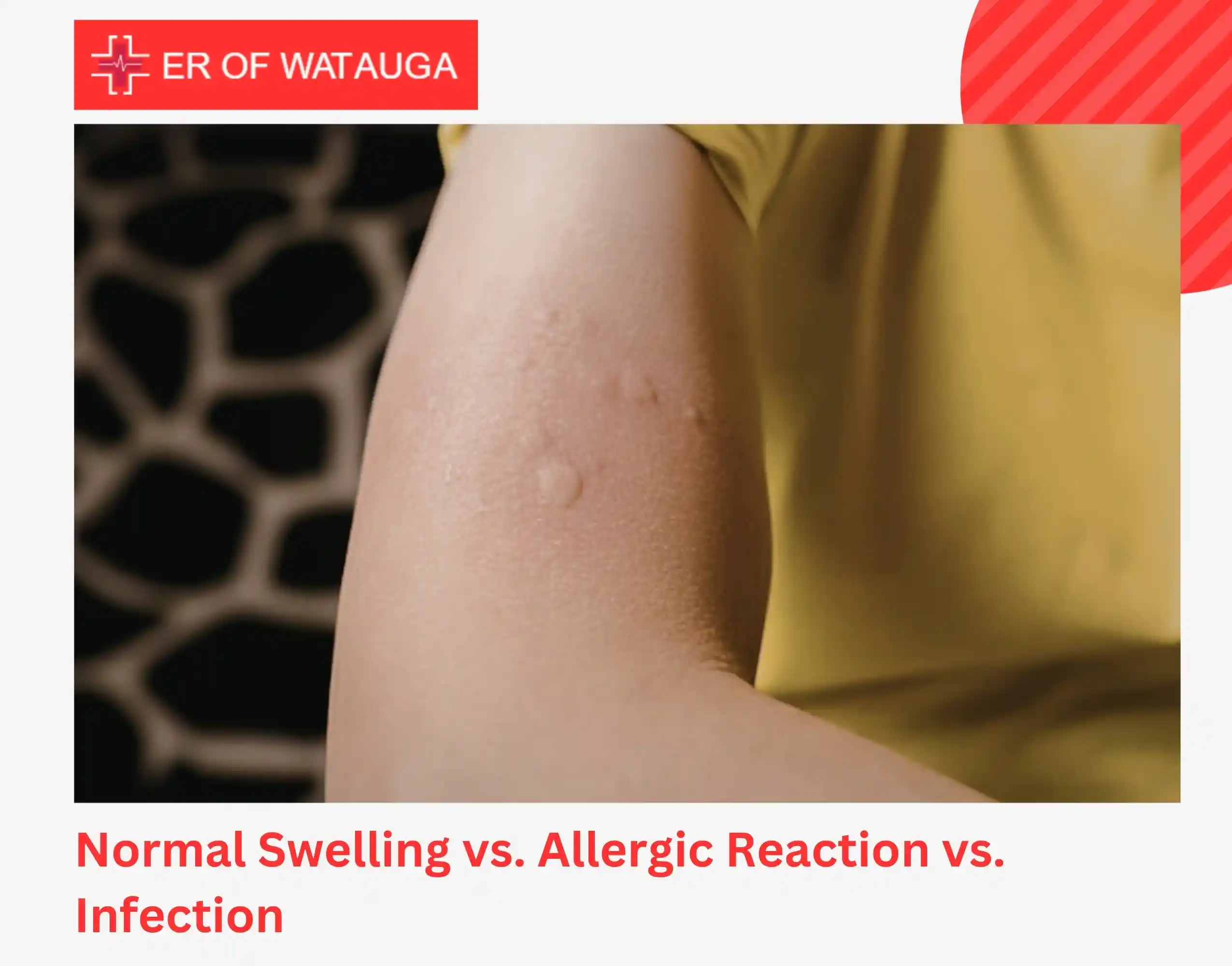
This is the critical distinction that determines whether you can handle insect bite swelling treatment at home or need professional care. Each type of swelling looks different and follows a different timeline.
Normal Reactive Swelling
Stays localized to the bite area (within a few inches). Peaks within 24 hours. Accompanied by itching or mild pain. No fever, no spreading redness, no systemic symptoms. Resolves within three to seven days with home care.
Large Local Allergic Reaction
Swelling extends well beyond the bite and peaks at 48 to 72 hours (slower than a normal reaction). Can be alarming in size but stays in the same limb or body region. No throat tightness, no difficulty breathing, no hives on distant parts of the body. Treat with antihistamines, ice, and elevation. This type of reaction doesn’t typically progress to anaphylaxis, but mention it to your doctor since future stings may cause similar or larger reactions.
Anaphylaxis (Systemic Allergic Reaction)
The most dangerous type of reaction; develops within minutes to two hours after the bite or sting. Symptoms occur far from the bite site: hives across the body, swelling of the lips, tongue, or throat, difficulty breathing or wheezing, dizziness, rapid pulse, nausea, vomiting, or loss of consciousness. This is a 911 emergency. Use an epinephrine auto-injector (EpiPen) immediately if available, then get to the nearest ER. Anaphylaxis is most commonly triggered by bee, wasp, hornet, and fire ant stings.
Infected Bug Bite
Develops two to three days after the initial bite — not immediately. Signs include increasing redness that spreads outward (draw a line around the red area with a pen to track it), warmth and tenderness worsening rather than improving, pus or cloudy fluid draining from the bite, red streaks extending from the bite toward the nearest lymph nodes, and fever. An infected bug bite requires antibiotic treatment. If red streaking is visible or fever develops, seek medical care promptly.
When to Go to the ER for an Insect Bite
Visit the ER immediately if you or your child experience any of the following after a bite or sting. These symptoms indicate that standard insect bite swelling treatment at home isn’t enough:
- Difficulty breathing, wheezing, or throat tightness
- Swelling of the face, lips, tongue, or throat
- Hives or rash spreading to areas away from the bite
- Dizziness, fainting, or rapid weak pulse
- A bite from a known brown recluse or black widow spider
- Red streaking extending from the bite with fever
- Severe swelling that doesn’t respond to antihistamines
- Signs of dehydration in a child with multiple bites
- A bite-site wound that’s expanding, darkening, or producing pus
At ER of Watauga, we treat insect bite reactions 24/7 with IV medications for allergic reactions and pain management, lab testing to identify bacterial infections, wound care, and pediatric-specific care for children with severe reactions. Not sure whether your bite warrants an ER trip or can wait for a doctor’s appointment? Read our guide on freestanding ER vs urgent care to make the right call.
How to Prevent Insect Bites in North Texas
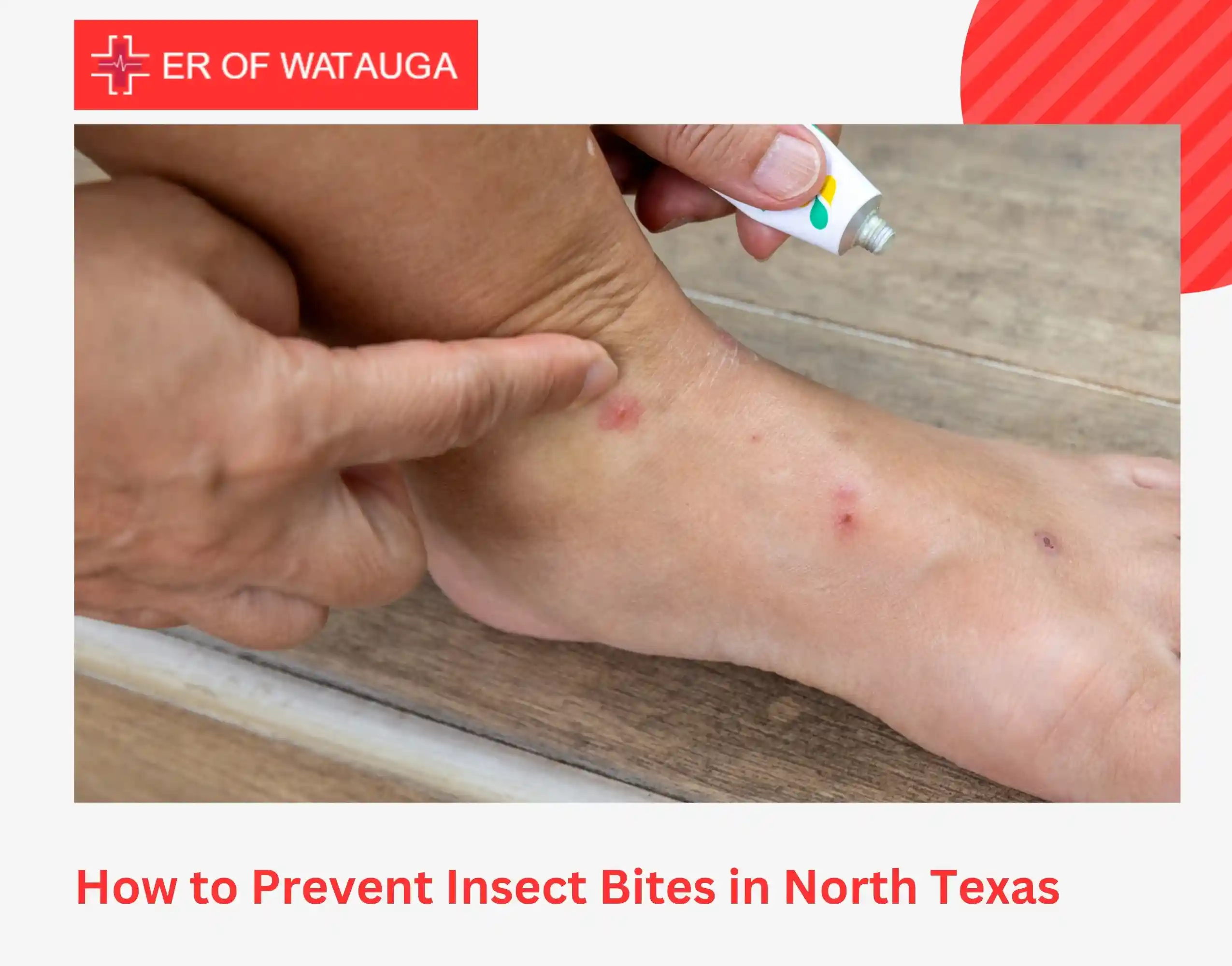
Prevention is the most reliable form of insect bite swelling treatment. The bite that never happens does not need treating. In North Texas, warm weather keeps biting insects active for most of the year, not just summer.
Use effective protection outdoors:
- Apply EPA-registered insect repellent
- Wear light-colored, loose-fitting clothing to cover exposed skin
- Be mindful of peak activity times: dusk to dawn for mosquitoes, daytime for fire ants and bees
Maintain your surroundings:
- Check your yard weekly for fire ant mounds
- Remove standing water where mosquitoes breed
Take precautions outdoors:
- Shake out shoes and clothing left outside when spending time outdoors
- Avoid floral fragrances that attract bees and wasps
Be prepared for allergic reactions:
- Carry an epinephrine auto-injector if you have a known severe allergy
- Ensure family members know how to use it
Protect infants and young children:
- Do not use DEET-based repellents on children under two months old
- Use mosquito netting over strollers and carriers for safe protection
Key Takeaway
Most cases respond well to simple insect bite swelling treatment at home, including ice, antihistamines, and topical creams. The key is recognizing normal swelling versus warning signs early so you can act quickly and prevent complications.
If swelling spreads, worsens after 48 hours, or comes with symptoms like fever or breathing difficulty, basic insect bite swelling treatment is no longer enough and medical care may be necessary.
ER of Watauga is a 24/7 freestanding emergency room at 5401 Basswood Blvd, Fort Worth, TX 76137. For severe insect bite reactions, allergic emergencies, or infected bites requiring immediate care, call (817) 945-5500 or walk in anytime.
Insect Bite Swelling FAQ
1. How do you make insect bite swelling go down fast?
Apply an ice pack wrapped in cloth for 10 to 20 minutes, take an oral antihistamine (cetirizine or diphenhydramine), and dab 1% hydrocortisone cream on the bite.
2. How long does bug bite swelling last?
Normal swelling from an insect bite peaks within 24 hours and fully resolves within three to seven days. Bites near the eyes or on the face may swell for 48 to 72 hours due to the loose tissue. If swelling continues expanding beyond 48 hours or is getting worse rather than better, it may indicate infection.
3. What bug bites cause huge swelling?
Bee, wasp, and hornet stings cause the most dramatic swelling, especially in people with large local allergic reactions. Fire ant stings, common across North Texas, produce painful welts that can swell significantly when multiple stings occur. A swollen mosquito bite can also look alarming, particularly in young children and near the eyes.
4. When should I worry about a swollen insect bite?
Worry if swelling spreads rapidly beyond the bite area, is paired with fever or red streaking, or involves the face, lips, or throat. Any breathing difficulty after a bite or sting is a medical emergency. An infected bug bite that shows expanding redness, warmth, and pus also needs professional treatment rather than home care.
5. Should I go to the ER or urgent care for an insect bite?
Go to the ER if you have signs of anaphylaxis (breathing difficulty, facial swelling, dizziness, rapid pulse), a suspected venomous spider bite, or an infection with fever and spreading redness. For mild reactions that aren’t improving after a few days, urgent care or your primary care provider is usually sufficient.


