


Sinus infection vs allergies produce symptoms so similar that even physicians sometimes need a closer look. The difference isn’t just academic. Allergies and sinus infections have different causes, different timelines, and require completely different treatment.
Getting that wrong means weeks of relief-seeking that goes nowhere. Here’s how to read your symptoms accurately and know when something more serious is happening.
What’s the Core Difference Between a Sinus Infection and Allergies?
Allergies are an immune system overreaction. Your body floods nasal passages with histamine in response to a trigger like pollen or pet dander. A sinus infection is an active infection where pathogens inflame the sinus lining. Same symptoms on the surface, completely different processes underneath.
With allergies, the immune system identifies ragweed, dust mites, mold spores as threats and launches a defense. Histamine causes swelling, mucus production, and that familiar itch. Reduce the histamine response or remove the trigger, and the symptoms ease.
Sinus infections work through a separate mechanism. The air-filled cavities behind your cheeks, forehead, and nose become blocked, typically following a cold or upper respiratory illness. Trapped fluid creates an environment where bacteria or viruses multiply. That process has nothing to do with histamine.
The sinus infection vs allergies distinction matters most when choosing treatment. Antihistamines address allergic inflammation and do nothing for active infection. Antibiotics treat bacterial sinusitis and are useless against allergies or viral sinusitis. Treating the wrong condition doesn’t just fail to help it delays the treatment that would actually work.
How Do Allergies vs. Sinus Infection Symptoms Compare?
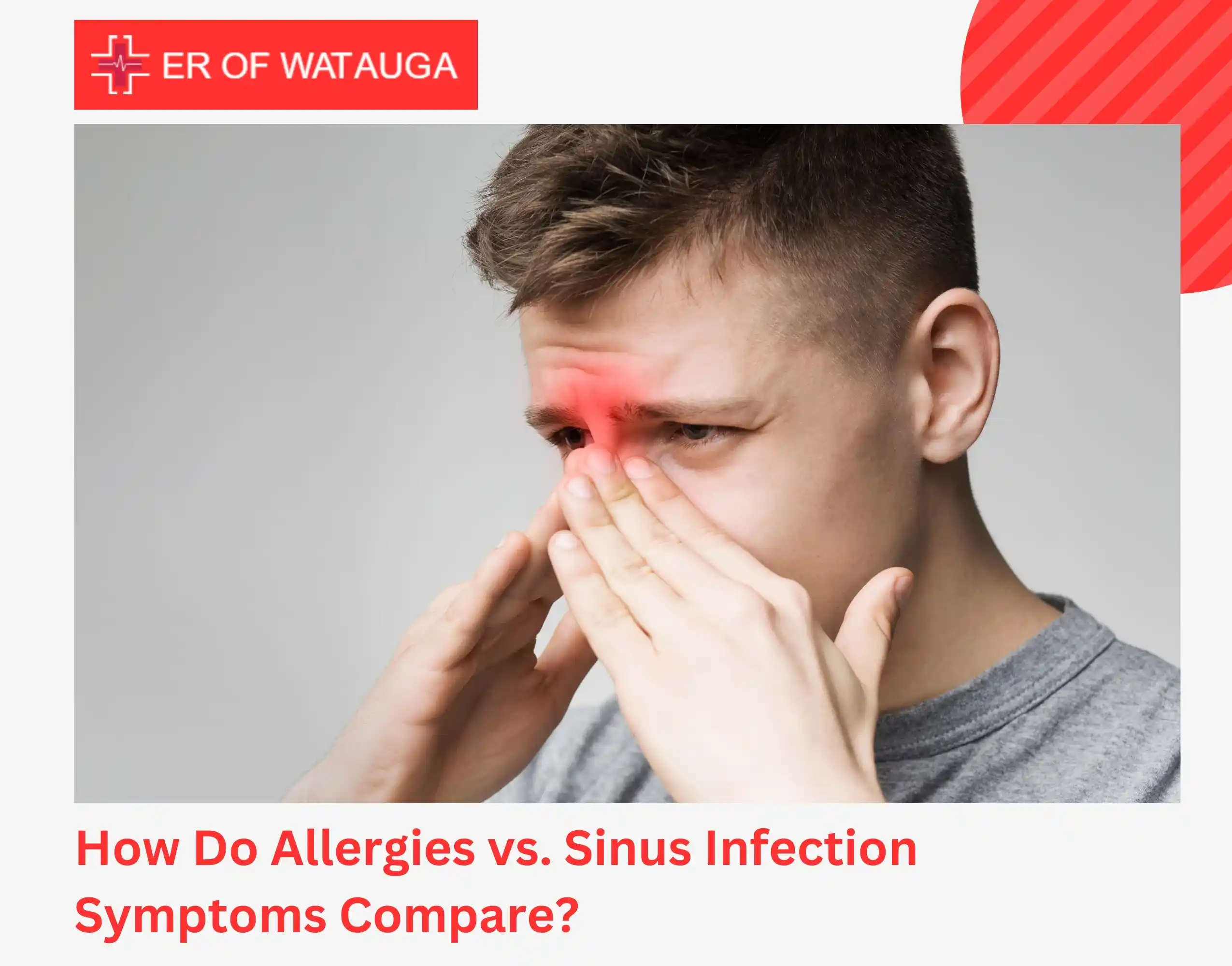
Both conditions produce congestion, a runny nose, and head pressure, but sinus infection vs allergies diverge sharply on a few key signs: mucus color, facial pain, and whether your eyes itch. Those three details alone steer most people toward the right diagnosis.
| Symptom | Allergies | Sinus Infection |
| Nasal congestion | Yes | Yes |
| Runny nose | Clear, watery | Thick, yellow or green |
| Facial pressure or pain | Mild | Often significant |
| Itchy, watery eyes | Common | Rare |
| Sneezing | Frequent | Occasional |
| Loss of smell | Rare | Common |
| Fever | No | Possible |
| Fatigue | Mild | Often pronounced |
| Triggered by specific exposure | Yes | No |
The single most reliable differentiator is eye itchiness. If your eyes itch, that’s almost always allergies. Sinus infections rarely produce that response. On the other side, thick discolored mucus, pain concentrated over your cheekbones or forehead, and partial loss of smell point firmly toward infection.
Symptom timing adds another layer. Allergy symptoms shift with exposure: better indoors, worse on high-pollen days, consistent across the season. Sinus infection symptoms build progressively and don’t improve when your environment changes. If you moved inside for three days and your symptoms didn’t budge, that’s a meaningful data point.
Can You Have a Sinus Infection Without Congestion?
Yes, and this is where a lot of people get misled. Some infections present primarily as facial pain, pressure behind the eyes, or a persistent dull headache, with minimal to no nasal discharge. The absence of a runny nose doesn’t rule out sinusitis.
This happens when a sinus cavity is completely blocked rather than draining. The pressure builds internally with nothing coming out, and it regularly gets dismissed as a tension headache or a dental problem, since the maxillary sinuses sit directly above the upper tooth roots.
Watch for these less obvious presentations:
- Aching or throbbing in the upper teeth with no dental cause
- Pain or pressure concentrated behind or around one eye
- Persistent throat irritation or coughing from post-nasal drip, without obvious nasal runoff
- Head pain that worsens when bending forward or transitioning from standing to lying down
Allergies rarely produce that kind of fixed, position-dependent facial pain. If the pressure doesn’t respond to antihistamines and changes with posture, sinus infection may be the explanation.
Can Allergies Cause a Sinus Infection?
Yes, allergies can cause a sinus infection. Prolonged allergic inflammation swells the nasal passages and blocks the sinus drainage pathways. Trapped mucus stagnates. That stagnant fluid becomes a breeding ground for bacteria or viruses, and an active sinus infection develops on top of the underlying allergic inflammation.
People with poorly controlled seasonal allergies are significantly more likely to develop recurrent sinusitis for exactly this reason. The allergies aren’t the infection, but they create the conditions for one.
Allergies turning into a sinus infection usually happens gradually, over days. These are the signs the shift has occurred:
- Mucus changes from clear and watery to thick, yellow, or green
- Facial pressure or pain develops, especially over the cheekbones or forehead
- Antihistamines and allergen avoidance stop providing relief
- A low-grade fever appears for the first time
- Symptoms persist past 10 days without meaningful improvement
Once those signs show up, the picture has changed. The underlying allergic inflammation may still be present, but an infection has layered on top. Managing the allergy alone won’t resolve the infection.
What Are Fungal Sinus Infection Symptoms?
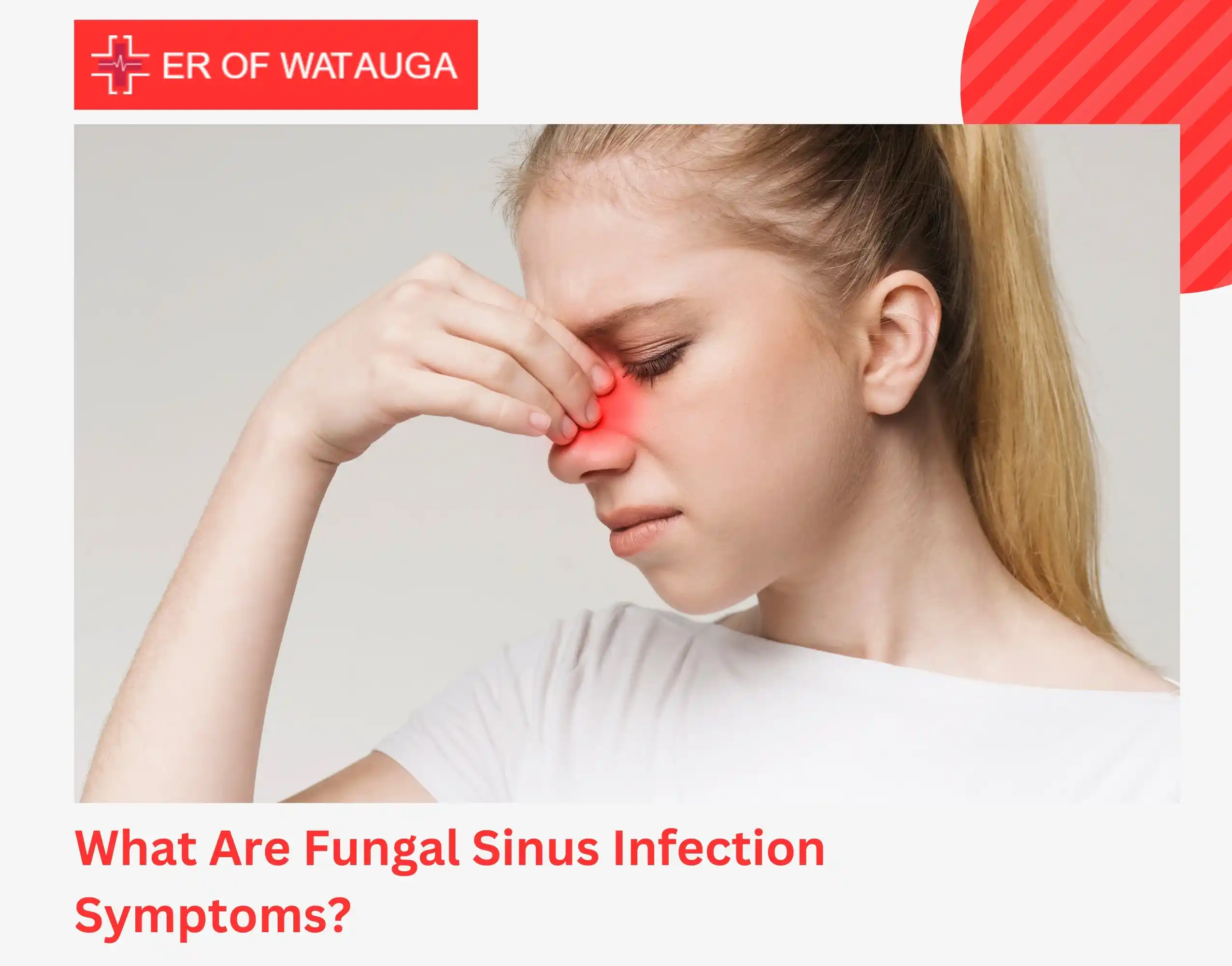
Most sinus infections are viral, with a portion caused by bacteria. Fungal sinus infections are rarer but significantly harder to treat, and fungal sinus infection symptoms differ from the standard presentation in ways that matter.
The hallmark fungal sinus infection symptoms include severe one-sided facial pain, unusually thick or dark nasal discharge, loss of smell, and a complete failure to improve with typical OTC sinus remedies.
Fungal sinusitis is more common in people with compromised immune systems, those on long-term steroid therapy, undergoing chemotherapy, living with uncontrolled diabetes, or with HIV. It’s uncommon in otherwise healthy people, but the allergic form does occur and can be mistaken for persistent allergic rhinitis.
Two broad categories exist. Allergic fungal sinusitis resembles severe allergic rhinitis with chronic congestion and thick mucus that recurs despite treatment. Invasive fungal sinusitis is rare but serious. It spreads beyond the sinus cavities into surrounding tissue and requires urgent medical intervention.
Fungal sinus infection symptoms that include swelling or redness around the eye socket, any change in vision, or rapidly worsening one-sided facial pain need emergency evaluation.
Can a Sinus Infection Cause Body Aches?
Yes, sinus infection can cause body aches. Your immune system working to fight off active sinusitis produces fatigue and diffuse muscle soreness, neither of which typically accompany seasonal allergies at meaningful intensity.
Allergy-related fatigue exists, but it traces to two sources: disrupted sleep from nighttime congestion, and the sedating effect of first-generation antihistamines. It doesn’t produce the full-body heaviness that comes with active infection. If the fatigue feels more like the flu than a bad night of sleep, that distinction matters.
When a sinus infection causes body aches alongside fever and facial pressure, it signals the infection is putting real demand on the immune system. That combination raises the probability of bacterial rather than viral sinusitis, and pushing through it with OTC decongestants alone rarely gets people where they need to go.
When Should You Go to the ER for Sinus Symptoms?
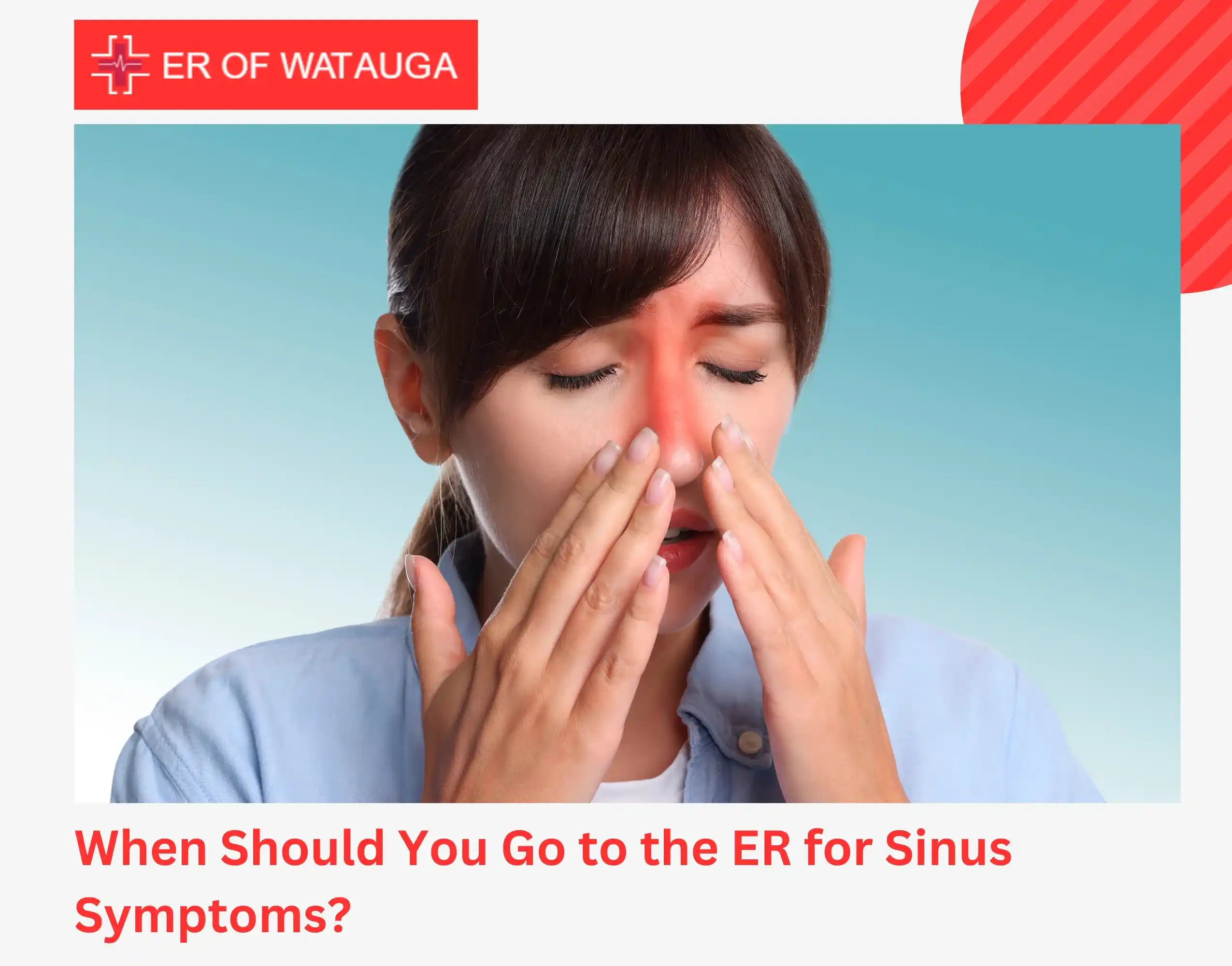
Most sinus infections resolve without emergency care. Go to the ER when you develop a high fever, a severe headache unlike your usual pattern, stiff neck, eye swelling, or any vision change. These are signs the infection may be spreading beyond the sinuses, and that progression moves fast.
The sinuses sit adjacent to the brain and orbital cavity. An infection that reaches either area stops being a nuisance and becomes a medical emergency.
Go to the ER immediately for:
- Fever above 103°F
- Swelling or redness around one or both eyes
- Double vision or any change in vision
- A sudden, severe headache unlike your normal pattern
- Stiff neck paired with fever
- Confusion or difficulty concentrating
- Symptoms that were improving, then rapidly deteriorated
- Suspected fungal sinus infection symptoms, particularly if immunocompromised
At ER of Watauga, on-site labs and imaging let us determine quickly whether you’re facing a bacterial sinus infection, a fungal case, or something else driving your symptoms. We are available 24/7 with no long wait times and no appointment needed.
Frequently Asked Questions
1. How long do allergy symptoms last compared to a sinus infection?
Allergy symptoms persist as long as you’re exposed to the trigger. The duration can range from days to months depending on the season. Viral sinus infections typically clear in 7–10 days. Bacterial sinusitis can linger beyond 10 days without targeted treatment.
2. Can a sinus infection or allergies cause a low-grade fever?
Allergies don’t cause fever. A low-grade fever alongside nasal symptoms is a meaningful sign of active infection. Fever combined with facial pain and thick discolored mucus makes bacterial sinusitis significantly more likely than allergies alone.
3. Does mucus color actually indicate which one you have?
Mostly, yes. Clear watery mucus points toward allergies. Thick yellow or green mucus suggests sinus infection, though color alone isn’t conclusive. Pair mucus color with symptom duration, fever, and facial pain for a more complete picture.
4. Are sinus infections contagious?
Viral sinus infections can be contagious as the underlying virus spreads through respiratory droplets. Allergies are not contagious. If someone in your household recently had a cold before your symptoms started, infection is the more likely cause than allergies.
5. Can a sinus infection cause body aches and fatigue together?
Yes, and the sinus infection vs allergies distinction is clearest here. Both can cause fatigue, but body aches paired with fatigue reflect active immune system demand, not just histamine. That combination points toward infection, not allergy.


