

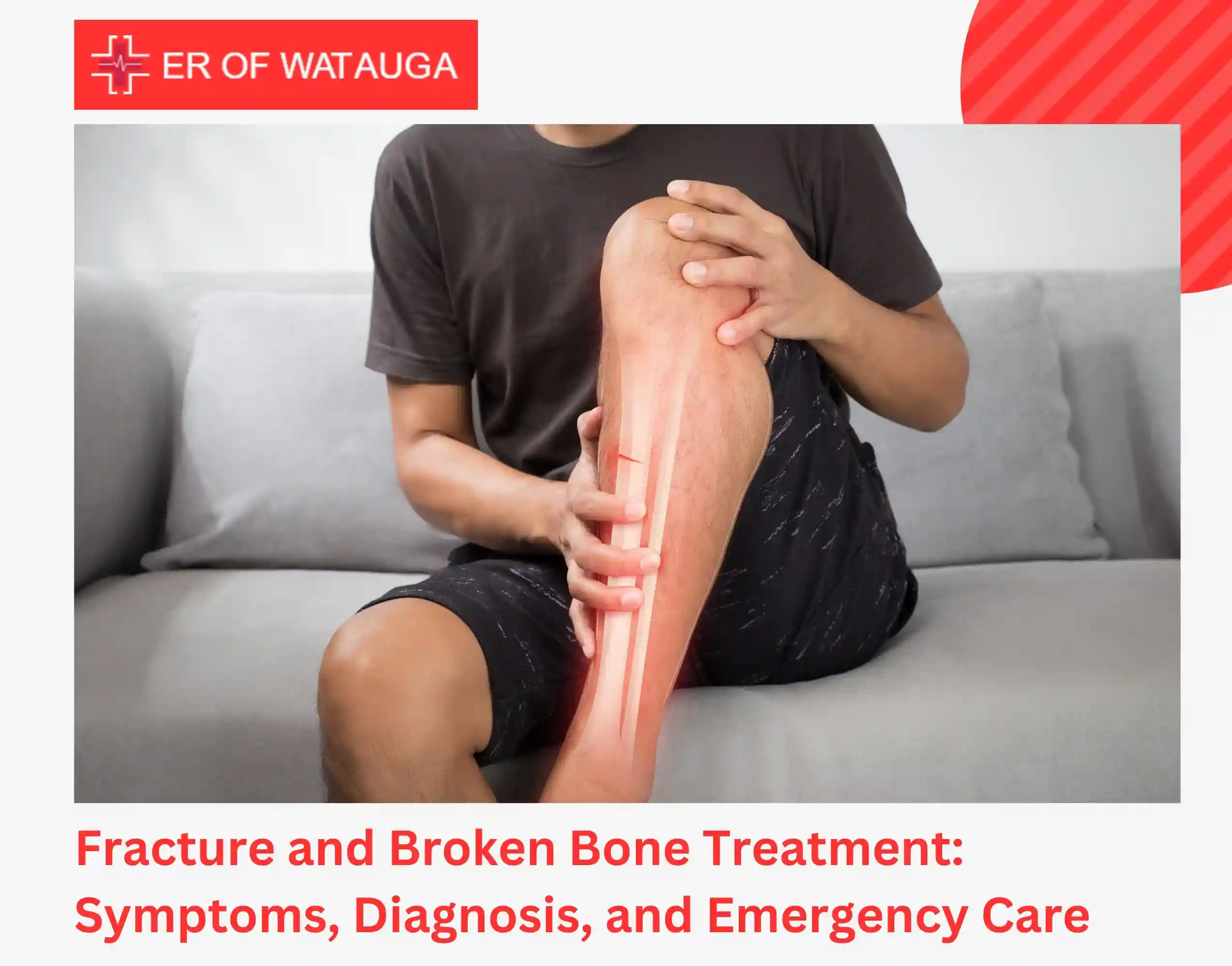
| ⚠️ WHEN TO CALL 911 INSTEAD OF DRIVING Call 911 immediately for open fractures (bone visible through skin), suspected spine or neck injuries, severe head trauma, multiple injuries, or if the injured person cannot be moved safely. For all other fractures, ER of Watauga is open 24/7 — call (817) 945-5500 or come straight in. |
A broken bone is one of the most painful and disruptive injuries a person can experience. Whether it’s a wrist that snapped during a fall, a child’s arm injured in sports, or a hip fracture from a slip — fast, accurate diagnosis and treatment make the difference between a smooth recovery and lasting complications.
If you need fracture treatment in Watauga, TX, ER of Watauga provides 24/7 emergency care with on-site digital X-ray, CT scanning, splinting and casting, and board-certified emergency physicians experienced in treating fractures of every type — for adults and children alike.
This guide explains what a fracture is, how to recognize one, when emergency care is needed, and exactly how we diagnose and treat broken bones.
What Is a Fracture?
A fracture is any break in a bone, ranging from a tiny hairline crack to a complete shatter. Despite the common belief that “fracture” means a hairline break and “broken” means worse — they are the same thing in medical terminology. A fracture is a broken bone.
The main types of fractures we treat:
- Closed (simple) fracture — the bone breaks but doesn’t pierce the skin
- Open (compound) fracture — the bone breaks through the skin, creating a wound. This is a true emergency.
- Displaced fracture — the bone breaks into two or more pieces that no longer line up
- Non-displaced fracture — the bone cracks but stays in alignment
- Hairline (stress) fracture — a tiny crack from repetitive force or overuse, common in athletes
- Comminuted fracture — the bone shatters into three or more pieces
- Greenstick fracture — the bone bends and partially breaks, most often seen in children whose bones are still flexible
- Spiral fracture — caused by a twisting force, common in sports injuries
The type, location, and severity of the fracture determine the treatment approach — which is why proper imaging is essential.
Common Causes of Fractures
Most fractures result from sudden trauma or repetitive stress. The most common causes we see in the ER include:
- Falls — the leading cause of fractures, especially in older adults (hip, wrist) and children (arm, collarbone)
- Sports injuries — football, basketball, soccer, gymnastics, cycling, and skateboarding accidents
- Motor vehicle accidents — high-force impacts that can cause multiple or severe fractures
- Workplace injuries — falls from height, machinery accidents, or heavy lifting
- Direct blows — being struck by an object or during physical altercation
- Overuse and stress — repeated impact (running, marching, jumping) causing tiny cracks over time
- Osteoporosis — weakened bones break easily, sometimes from minimal force
Knowing the mechanism of injury helps our physicians identify which bone is likely affected and what additional injuries to look for.
Fracture Symptoms and Warning Signs
Not every break is obvious. Some fractures look like sprains; others can feel surprisingly mild at first. Watch for these signs.
Common Signs of a Fracture
- Sudden, severe pain at the time of injury
- Pain that worsens when moving, touching, or putting weight on the area
- Visible deformity or unusual angle of a limb
- Swelling and rapid bruising around the injury
- Inability to move the affected limb or joint normally
- A grinding or snapping sound at the time of injury
- Numbness, tingling, or loss of feeling near the injury
- Bone protruding through the skin (open fracture — emergency)
Sprain vs. Fracture: How to Tell the Difference
This is one of the most common questions we hear. While only an X-ray can confirm a fracture, these clues can help you decide:
Likely a sprain if:
- Pain is moderate and improves with rest and ice
- Swelling is mild and the area looks normal in shape
- You can still move and bear some weight on the joint
- There was no snapping sound at the time of injury
Likely a fracture if:
- Pain is severe, sharp, and doesn’t improve with rest
- Visible deformity, bump, or unusual position
- You cannot bear weight or move the limb
- A snap, crack, or pop was heard or felt during injury
- Significant swelling and rapid bruising occur
When in doubt, get an X-ray. Untreated fractures can heal incorrectly, leading to chronic pain or permanent loss of function.
When to Go to the ER for a Suspected Fracture
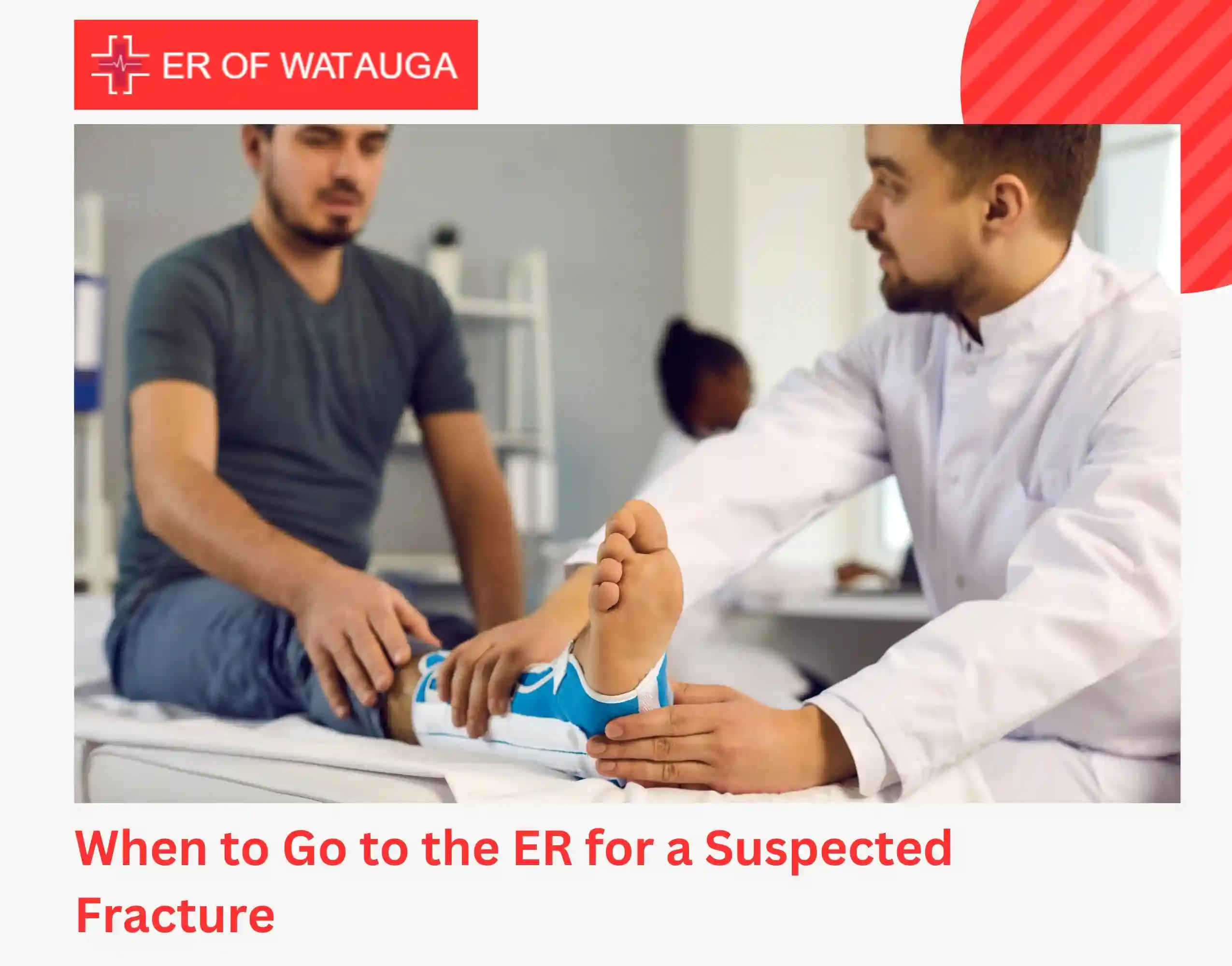
Most fractures need emergency care. But knowing where to go can save you time and money.
Go to the ER Immediately If:
- The bone is visible through the skin (open fracture)
- There is severe deformity or the limb looks visibly out of place
- There is heavy bleeding or a deep wound
- Numbness or color change in the limb (signs of nerve or blood vessel damage)
- Suspected fracture of the spine, neck, skull, hip, or pelvis — do not move the patient, call 911
- Severe swelling or a limb that feels cold to the touch
- Suspected fracture in a child or older adult
- Pain too severe to manage at home
Why a Freestanding ER Beats Urgent Care for Fractures
Many urgent care clinics can take a basic X-ray, but they often can’t perform full imaging, complex reductions, or advanced pain management. They may evaluate you, then send you to an ER anyway — costing you time and a second co-pay.
At ER of Watauga, we have everything in one visit: full imaging, reduction, splinting, IV pain control, and orthopedic referral when needed. For a deeper comparison, see our guide on Freestanding ER vs Urgent Care.
How ER of Watauga Diagnoses a Fracture
Accurate diagnosis is the foundation of good fracture care. Our process is fast, thorough, and built around getting you imaging and a treatment plan within minutes of arrival.
Our diagnostic process includes:
- Physical examination — checking range of motion, swelling, deformity, pulse, and nerve function
- Digital X-ray imaging — the gold standard for diagnosing fractures. Our on-site digital X-ray produces clear images in seconds for immediate review.
- CT scan — for complex fractures (skull, spine, pelvis, joint surfaces), our on-site CT scanner delivers detailed 3D imaging.
- Ultrasound — useful for assessing soft tissue damage and certain pediatric fractures. Available through our ultrasound service.
- Neurovascular check — verifying that nerves and blood vessels around the fracture are intact
- Pain assessment — so we can manage your pain quickly and appropriately
Because every test is performed in-house, you don’t have to travel between facilities or wait days for results — most patients have a confirmed diagnosis within an hour of arrival.
Fracture Treatment Options at Our ER
Treatment depends on the bone affected, the type of fracture, and the patient’s age and health. Our emergency physicians provide complete fracture care on-site for most injuries.
Through our musculoskeletal injury treatment service, we provide:
- Splinting — temporary immobilization with a custom splint to support healing while reducing swelling. Most fractures get a splint first, then a cast at follow-up once swelling subsides.
- Casting — rigid plaster or fiberglass cast to immobilize the bone for proper healing
- Closed reduction — manually realigning a displaced bone without surgery, using local or IV anesthesia for comfort
- Pain management — including oral and IV pain medication for severe injuries, plus prescriptions to take home
- Wound care — for open fractures, including cleaning, suturing, and antibiotics to prevent infection
- Crutches, boots, or slings — provided to help you move safely after discharge
- Orthopedic referral — when surgery or specialized follow-up is needed, we coordinate with a trusted orthopedic specialist
- Hospital transfer — for complex fractures requiring inpatient surgery, we stabilize you and arrange immediate transport
Most patients are treated and discharged the same visit with a clear care plan, follow-up instructions, and any necessary referrals already in place.
Recovery and Follow-Up Care
Recovery time depends on the bone, the severity of the fracture, and the patient’s age and health. Children typically heal in 3 to 6 weeks; adults often need 6 to 12 weeks; older adults or major fractures (hip, femur) may need months.
Tips for proper healing:
- Follow all splinting and casting instructions exactly
- Keep the cast or splint clean and dry
- Elevate the limb above heart level for the first 48 hours to reduce swelling
- Apply ice over the splint or cast as directed (use a barrier; never directly on skin)
- Take pain medication as prescribed and use ibuprofen or acetaminophen for additional comfort
- Avoid putting weight on the injured limb until cleared by a physician
- Eat a calcium- and protein-rich diet to support bone healing
- Don’t smoke — nicotine slows fracture healing significantly
- Attend all follow-up appointments to monitor healing progress
Contact us or your follow-up provider immediately if you experience increased pain, numbness, color changes in fingers or toes, fever, or a foul smell from the cast — these can signal complications that need prompt attention.
Why Choose ER of Watauga for Fracture Treatment
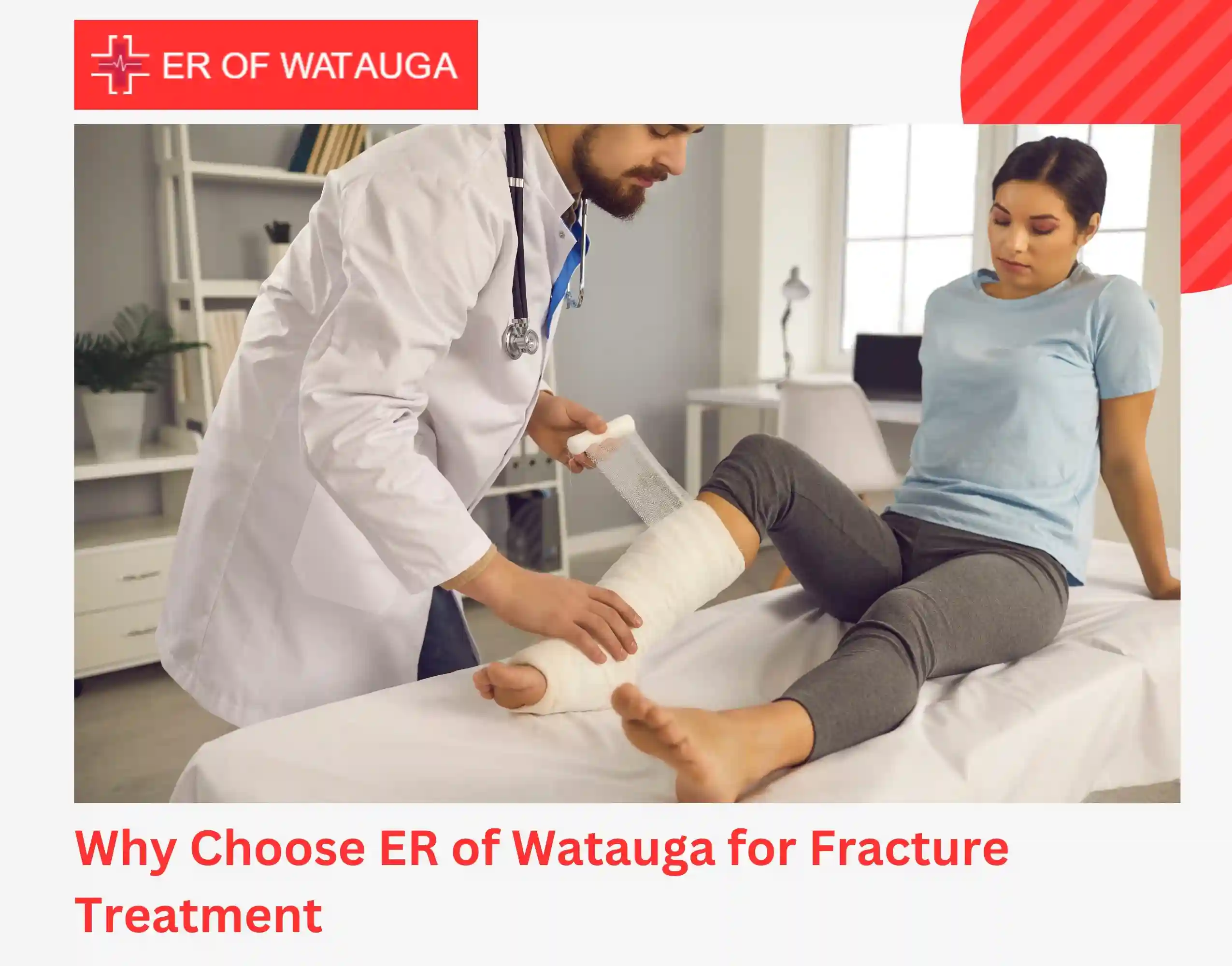
With a broken bone, you want fast imaging, expert care, and minimal waiting. ER of Watauga delivers all three — without the long waits and hidden fees of a hospital ER.
What sets us apart:
- Open 24/7, 365 days a year — including nights, weekends, and holidays
- Minutes-not-hours wait time — most fracture patients are X-rayed within minutes of arrival
- Full imaging on-site — digital X-ray, CT, and ultrasound all under one roof
- Board-certified emergency physicians — experienced in treating fractures for patients of every age
- Dedicated pediatric emergency care — gentle, child-friendly fracture treatment 24/7
- 9-star Google rating across 950+ verified patient reviews
- No surprise billing — transparent, in-network with most major insurance
- Orthopedic referral coordination — we connect you to follow-up care before you leave
Cost, Insurance, and Billing
We make emergency care accessible, with transparent pricing and flexible payment options.
- Most major commercial insurance plans accepted (see our insurance coverage page)
- No surprise billing — you’ll never receive an unexpected bill
- Flexible payment plans through our Sunbit Payment Plan
- Letter of Protection accepted for accident-related fractures (auto accidents, slip and falls, work injuries)
If your fracture resulted from an accident, our team can help coordinate documentation needed for insurance claims or legal proceedings.
How to Reach ER of Watauga
We’re a walk-in 24-hour emergency room. No appointments needed.
Address: 5401 Basswood Blvd, Fort Worth, TX 76137
Phone: (817) 945-5500
Hours: Open 24 hours, 7 days a week
Service Area: Watauga, Fort Worth, North Richland Hills, Haltom City, Keller, Hurst, Bedford, Saginaw, and surrounding cities
If the injury is severe, call ahead so our team can prepare. For open fractures, suspected spine injuries, or major trauma, call 911 — paramedics can immobilize and transport safely.
Frequently Asked Questions About Fracture Treatment
How can I tell if it’s broken or just sprained?
The only way to know for certain is an X-ray. That said, severe pain, visible deformity, inability to bear weight, a snap or pop at the time of injury, or rapid swelling all point toward a fracture. When in doubt, get imaging — untreated fractures can heal incorrectly.
How long does a broken bone take to heal?
Children typically heal in 3 to 6 weeks. Adults usually need 6 to 12 weeks. Older adults or those with severe fractures (hip, femur) may take several months. The exact timeline depends on the bone, the type of fracture, age, and overall health.
Will I need surgery for my fracture?
Most fractures heal with splinting or casting alone. Surgery is generally only required for open fractures, severely displaced fractures that can’t be realigned, fractures involving joint surfaces, or breaks in load-bearing bones like the hip or femur. Our ER physicians will tell you whether you need an orthopedic surgeon.
Can I walk on a broken foot or ankle?
Generally no — putting weight on a fractured foot or ankle can worsen the break and delay healing. We provide crutches, walking boots, or other devices as needed to keep weight off the injured limb until your doctor clears it.
Do children’s fractures heal differently than adults’?
Yes. Children’s bones are still growing and tend to heal faster and more completely than adult bones. They can also experience unique fracture types like greenstick fractures (partial breaks) and growth plate injuries that require careful monitoring to prevent long-term issues.
What should I do before getting to the ER if I think I have a fracture?
Keep the injured area still — don’t try to straighten it. Apply ice wrapped in cloth to reduce swelling. If there is bleeding, apply gentle pressure with a clean cloth. Do not eat or drink in case you need anesthesia for reduction or surgery. If the injury is severe or the bone is exposed, call 911.
Get Fast, Expert Fracture Treatment Today
A broken bone shouldn’t mean a long wait or an uncertain bill. Walk into ER of Watauga any time — day or night — for fast imaging, expert treatment, and a clear plan to get you back on your feet.
Open 24/7. No appointment needed.
| 📞 Call: (817) 945-5500 📍 Visit: 5401 Basswood Blvd, Fort Worth, TX 76137 🕐 Hours: Open 24/7 |
ER of Watauga — fast, compassionate emergency care for the families of Watauga, Fort Worth, and surrounding North Texas communities.


