


Most people who catch West Nile virus never know it, but the small share who get seriously ill can become dangerously sick fast. West Nile virus symptoms range from nothing at all to a brief fever to a rare brain infection that lands people in the hospital.
Texas knows this pattern well, leading the country with 455 cases and 56 related deaths in 2024¹. In North Texas, mosquito season runs into late fall, so knowing where the line falls matters.
What Is West Nile Virus and How Do You Get It?
West Nile virus is the leading cause of mosquito-borne disease in the United States. It spreads when a mosquito bites an infected bird and then bites a person. You cannot catch it from another person through normal contact, which makes a mosquito-borne illness like this very different from a stomach bug or the flu.
In North Texas, risk climbs through the summer and often lasts into November or later. The reassuring part is that about 80% of people exposed develop no symptoms at all. Roughly one in five get sick, and only a tiny fraction become severely ill.
Prevention still matters during mosquito season: use an EPA-registered repellent, wear long sleeves at dusk, and clear standing water around the home. The same mosquitoes can carry other viruses too, including Zika virus, which is why bite prevention pays off broadly.
What Are the Symptoms of West Nile Virus?
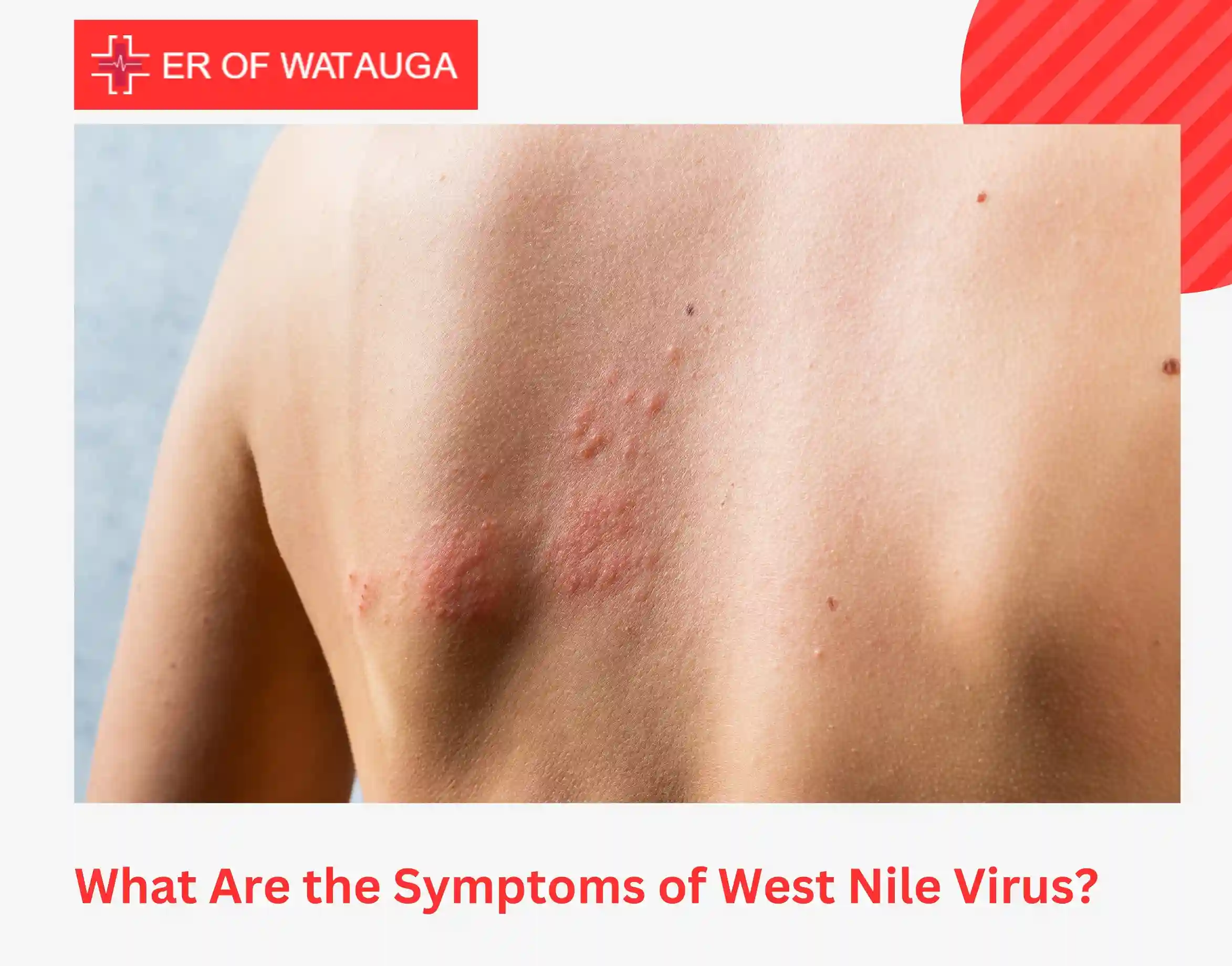
West Nile virus symptoms, when they appear, usually show up 2 to 14 days after a bite and resemble a bad flu. This milder form is called West Nile fever, and most people recover on their own within a week or so.
Common West Nile fever symptoms include:
- Fever and chills
- Headache
- Body aches and joint pain
- Fatigue and weakness
- Nausea, sometimes with vomiting or diarrhea
- A skin rash on the trunk
- Swollen lymph nodes
Because these flu-like symptoms are so general, West Nile fever is easy to mistake for an ordinary virus. Swollen lymph nodes and a rash are two clues that point more specifically toward West Nile, especially after recent mosquito exposure in the warmer months.
What Does the West Nile Virus Rash Look Like?
The West Nile virus rash is typically a pink to red pattern of flat or slightly raised spots on the trunk, the front or back of the torso, that can spread to the arms and legs. It is usually mild and fades on its own, and it appears in up to half of people who develop West Nile fever.
That rash is worth noticing. Because West Nile symptoms otherwise mimic the flu, the rash can be the detail that helps you and a provider suspect the virus and seek care sooner. A rash paired with fever and a recent mosquito bite in mosquito season is a reasonable reason to mention West Nile to a clinician.
When West Nile Turns Serious: Neurological Symptoms
In fewer than 1% of infections, the virus crosses into the nervous system and causes neuroinvasive disease, which can mean encephalitis (brain inflammation) or meningitis. This is the form that turns West Nile into an emergency, and the neurological symptoms are distinct from the mild version.
Seek care immediately for any of these:
- High fever with a severe serious headache
- Stiff neck
- Confusion or disorientation
- Tremors or muscle twitching
- Seizures
- Muscle weakness or sudden paralysis
- Vision loss
Some of these overlap with a stroke, so knowing the stroke warning signs helps you act fast either way. Neuroinvasive disease is serious: the overall fatality is roughly 10%, and significantly higher in older and immunocompromised patients. When the nervous system is involved, time matters.
Who Is Most at Risk for Severe West Nile?
Anyone bitten by an infected mosquito can get West Nile, but severe illness concentrates in older adults and people with weakened defenses. Age is the strongest factor: mortality from neuroinvasive disease is about 20% for people 70 and older, compared with around 2% for those under 50².
Higher-risk groups include adults over 50, people with a weakened immune system from conditions or medications, organ transplant recipients, and those undergoing certain cancer treatments. For these patients, mild-looking symptoms deserve closer attention, because the jump to severe disease is both more likely and more dangerous.
How Is West Nile Virus Treated?

There is no vaccine and no antiviral drug for West Nile virus, so West Nile virus treatment focuses on supporting the body while it clears the infection. Most people recover fully without specific treatment, managing the mild form at home with rest, fluids, and over-the-counter relief for fever and aches.
Severe cases are different. When symptoms are severe, hospital care may be needed, which can include intravenous fluids, pain control, close monitoring, and breathing support in the most serious situations.
At the ER, West Nile virus treatment starts with rapid assessment. When neurological symptoms appear, the priority is evaluating the brain and nervous system quickly, running labs, starting IV fluids, and stabilizing the patient. Neuroinvasive disease needs inpatient care, so a freestanding ER’s role is to assess fast, stabilize, and coordinate admission without delay.
When Should You Go to the ER for West Nile?
Go to the ER for West Nile virus symptoms that involve the brain or nervous system, because those signal the dangerous form of the disease. The mild version usually does not need emergency care, but the severe version cannot wait.
Manage at home when you have mild West Nile fever, fever, body aches, fatigue, or a mild rash, and you are an otherwise healthy adult keeping fluids down. Rest and time carry most people through.
Call your doctor when symptoms are dragging on, you are in a higher-risk group, or you want testing after a known mosquito exposure. A provider can confirm the diagnosis with a blood test.
Go to the ER now when you have a severe headache with a stiff neck, a high fever, confusion, tremors, seizure, muscle weakness, or sudden paralysis. These point to neuroinvasive disease, and they need immediate evaluation. The ER can assess neurological symptoms on site, run labs, and stabilize a patient far faster than waiting it out at home.
Fast Neurological Evaluation at ER of Watauga

When West Nile virus symptoms turn neurological, speed is what protects the brain. The board-certified physicians at our emergency room near me in Watauga evaluate neurological symptoms right away, run labs and imaging on site, start IV fluids, and stabilize severe cases while coordinating hospital admission.
Most West Nile infections stay mild and pass on their own, and we will tell you honestly when that is the case. When the warning signs point to the nervous system, come in without waiting.
Frequently Asked Questions
1. How long do West Nile virus symptoms last?
Mild West Nile fever usually lasts a few days to a week, though fatigue can linger for weeks. Severe neuroinvasive disease can require a long recovery, and some effects may be lasting.
2. Is West Nile virus contagious?
No, not through normal contact. West Nile spreads almost entirely through infected mosquito bites, not person to person. Rare exceptions involve blood transfusion, organ transplant, or transmission during pregnancy.
3. Can you get West Nile virus twice?
Most people who recover are believed to develop lifelong immunity. People with weakened immune systems may not mount a strong response, so reinfection is possible but uncommon.
4. How do you prevent West Nile virus?
Avoid mosquito bites. Use an EPA-registered repellent, wear long sleeves and pants at dawn and dusk, use screens, and empty standing water around your home where mosquitoes breed.
5. When is West Nile an emergency?
West Nile is an emergency when neurological symptoms appear: a high fever with a stiff neck, confusion, tremors, seizures, muscle weakness, or paralysis. These signal neuroinvasive disease and need immediate care.


