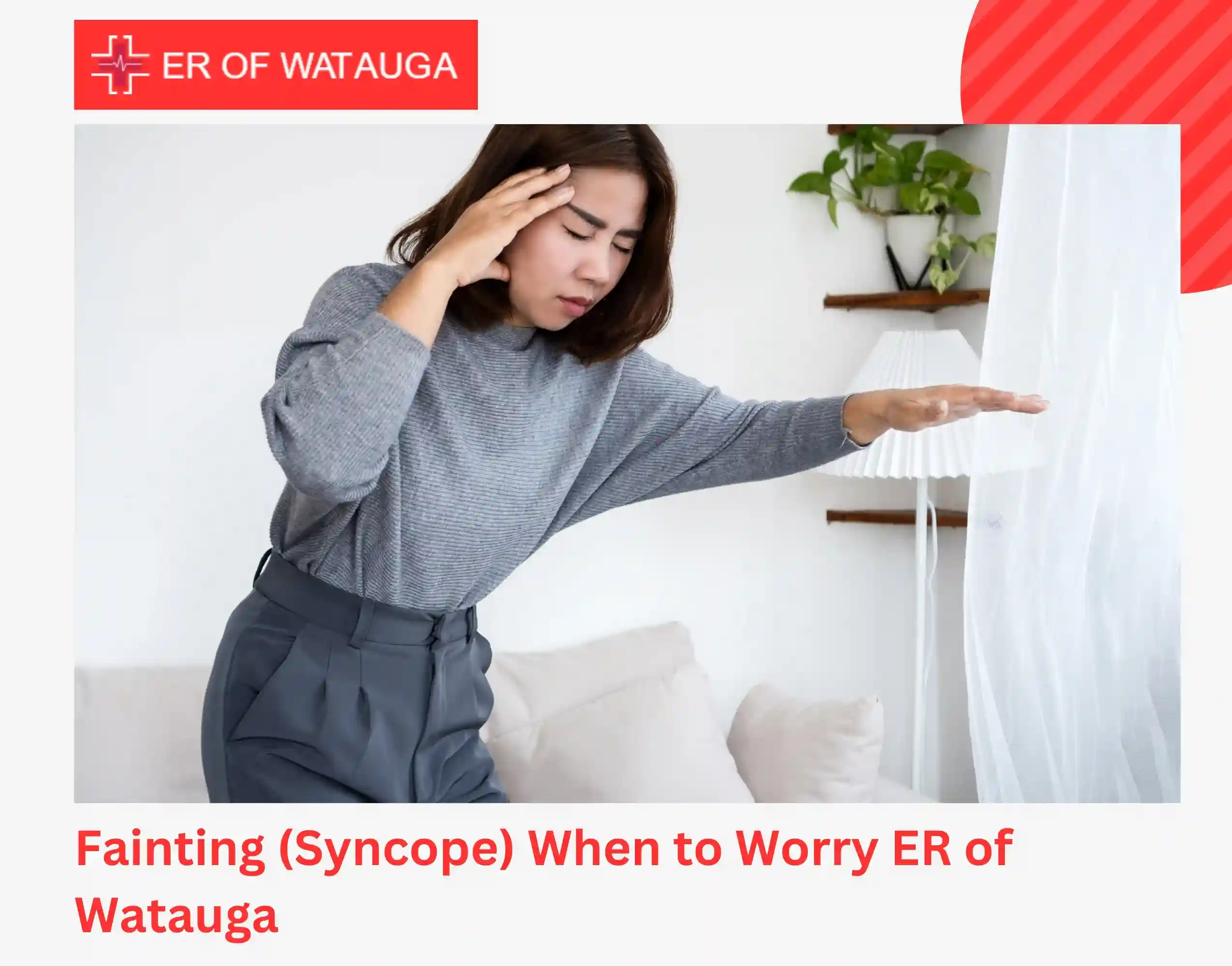
| WHEN FAINTING IS A MEDICAL EMERGENCY Call 911 or come to the ER immediately if fainting was accompanied by chest pain, shortness of breath, severe headache, prolonged loss of consciousness, seizure-like movements, confusion after waking, or an injury from the fall. ER of Watauga is open 24/7. Call (817) 945-5500 or walk in. |
Passing out can look identical whether the trigger was harmless or dangerous. That’s the problem with fainting syncope causes: a sudden drop in blood flow to the brain looks the same whether it came from standing too fast or a heart rhythm that just stopped for a few seconds. Knowing which category yours falls into is the difference between a story to laugh about and a warning you’re lucky you didn’t miss.
What Is Syncope?
Syncope is the medical term for fainting: a brief loss of consciousness caused by a temporary drop in blood flow to the brain. Most episodes last only a few seconds. The person usually recovers fully once they’re lying down and blood returns to the head.
A true fainting episode has three phases:
- Pre-syncope. The warning phase. Lightheadedness, tunnel vision, ringing ears, sweating, nausea, or feeling suddenly hot or cold. This phase can last a few seconds to a minute.
- Loss of consciousness. The person collapses. Muscles go limp. Eyes may roll back. Some brief twitching can occur, which is often mistaken for a seizure.
- Consciousness typically returns within 20 seconds of the person being flat. They may feel exhausted or shaky afterward but are mentally clear.
If any part of this pattern didn’t happen the way it’s described here, the event may not have been a simple faint. That’s a reason to get evaluated.
Common Fainting Syncope Causes
Fainting syncope causes fall into three broad groups: reflex, orthostatic, and cardiac. Reflex causes are the most common and least dangerous. Cardiac causes are the least common and most dangerous. Sorting one from the other is the whole reason to see a doctor after fainting.
Reflex (Vasovagal) Fainting
The most common type. A trigger causes a sudden drop in heart rate and blood pressure. Blood pools in the legs, the brain briefly loses supply, and the person passes out. Triggers include:
- Standing for long periods
- Sight of blood, injury, or medical procedures
- Sudden emotional stress, fear, or pain
- Hot, crowded environments
- Coughing hard, straining, or vomiting
- Skipping meals or dehydration
Orthostatic Fainting
Standing up too fast causes blood to pool in the legs before it can reach the brain. Common in older adults, dehydrated people, and anyone on medications that affect blood pressure.
Cardiac Fainting
The dangerous category. A heart rhythm problem, structural heart issue, or blocked artery briefly stops adequate blood flow to the brain. Cardiac fainting often happens without warning, sometimes during physical exertion, and can signal an underlying condition that could cause sudden death if untreated.
Syncope Symptoms Beyond the Faint Itself

Syncope symptoms include the loss of consciousness itself, but the surrounding signs are what tell doctors which type of fainting it was. Pay attention to what happened just before and just after, because those details often matter more than the faint itself.
Warning Signs Before Fainting
- Lightheadedness or feeling suddenly weak
- Blurred or tunnel vision
- Ringing or fullness in the ears
- Cold sweat or clammy skin
- Nausea or sudden hot flush
- Feeling of impending doom
- Racing, pounding, or fluttering heartbeat
Signs During and After
- Brief loss of consciousness lasting seconds to a minute
- Pale, gray, or bluish skin during the episode
- Brief muscle twitching (often mistaken for a seizure)
- Full mental clarity within a minute of waking
- Fatigue or shakiness afterward
- Memory of what happened before and after (but not during)
Syncope symptoms that don’t match this pattern, such as prolonged confusion, missing memory of surrounding events, or seizure movements lasting more than a few seconds, point toward a non-fainting cause and need emergency evaluation.
Causes of Fainting Spells: When It’s the Heart
Some causes of fainting spells are life-threatening even when the episode looks mild. Cardiac fainting syncope causes are the category that keeps emergency physicians alert, because these fainters look identical to the harmless kind at first but carry a much higher risk of sudden death if the underlying cause isn’t found.
Cardiac warning signs that turn a routine faint into an emergency:
- Fainting during physical exertion or exercise
- Fainting while lying flat or sitting down
- Chest pain, palpitations, or shortness of breath
- No warning signs at all before losing consciousness
- Known heart condition or pacemaker
- Family history of sudden cardiac death or unexplained fainting
- Recovery that took longer than a minute
- Fainting that repeats over days or weeks
Any single item on this list is a reason for same-day emergency evaluation. Cardiac causes of fainting spells are the reason a proper workup matters even when the person feels fine afterward.
When Is Fainting an Emergency?
When is fainting an emergency? Any time a cardiac cause is possible, any time the recovery wasn’t quick and complete, and any time the episode caused injury. Reflex fainting in a healthy young person after a known trigger usually isn’t. Almost everything else is.
| Usually Not an Emergency | Get to the ER Now |
| Young, healthy person | Any age with cardiac symptoms |
| Clear trigger (heat, blood, standing) | No warning, no trigger |
| Warning symptoms beforehand | Fainted during exercise or while lying down |
| Recovered in under a minute | Took longer than a minute to fully recover |
| No injury from falling | Injury from the fall, especially to the head |
| First episode with clear cause | Repeated episodes over days or weeks |
| No heart or family history | Personal or family history of heart problems |
If any right-column item applies, don’t wait. Come to ER of Watauga for evaluation. When is fainting an emergency depends less on how the episode looked and more on the pattern surrounding it.
If chest pain or heart palpitations accompanied the episode, our chest pain emergency guide covers the workup we perform to identify a cardiac cause.
Fainting vs. Seizure: How to Tell the Difference

Both cause loss of consciousness, and both can involve brief muscle twitching. The differences are in the timing, the recovery, and what happens with the eyes, tongue, and bladder. Getting this right matters because a first-time seizure is a different emergency than a first-time faint.
Signs It Was a Faint
Warning symptoms. Brief loss of consciousness under a minute. Recovery within 30 seconds of being flat. Clear thinking right after waking. Skin looks pale during the event. Twitching stops within seconds.
Signs It Was a Seizure
No warning, or a strange sensation instead. Loss of consciousness lasting a minute or more. Sustained rhythmic jerking of arms and legs. Tongue bite or bladder loss. Confusion or extreme sleepiness for minutes to hours afterward.
If any seizure signs are present, treat it as a seizure, not a faint. A first-time seizure needs an ER evaluation to identify the cause.
What ER of Watauga Does After a Fainting Episode
Post-syncope evaluation at ER of Watauga is designed to identify anything cardiac, neurological, or metabolic behind the episode. Our board-certified emergency physicians work through a systematic checklist to rule out the dangerous fainting syncope causes first, then explain what the findings mean.
A typical fainting workup includes:
- Detailed history of the episode, including what preceded and followed it
- Full physical exam including neurological and cardiac checks
- EKG to look for rhythm problems or evidence of past heart events
- Cardiac enzyme blood test to check for heart muscle stress
- Blood glucose, electrolytes, and complete blood count
- Blood pressure measurements in different positions (lying, sitting, standing)
- CT scan of the head when trauma from the fall or stroke is a concern
- Continuous cardiac monitoring during your visit
- Coordination with a cardiologist or neurologist when specialist follow-up is needed
For patients whose evaluation points toward a serious cardiac or neurological cause, we stabilize on-site and coordinate transfer to a partner hospital. For most fainting patients, evaluation is complete within a couple of hours, with clear results and a plan before discharge.
What to Do If Someone Faints in Front of You

The right response in the first minute can prevent injury and speed recovery. The wrong response, like sitting them up too fast or pouring water in their face, can prolong the episode or cause a second one.
Follow these steps:
- Lay the person flat.
Get them on their back. If they’re already down, leave them there.
- Raise the legs.
Lift their legs 8 to 12 inches on a pillow, backpack, or your knees. This returns blood to the brain.
- Loosen tight clothing.
Undo collars, belts, or ties around the neck and waist.
- Stay with them and time the episode.
Note the start of unconsciousness and full recovery. This information matters for the ER visit.
- Do not lift them upright.
Wait until they’ve been fully alert for at least a few minutes before helping them sit up slowly.
- Call 911 if:
They don’t wake up within a minute. There’s an injury from the fall. Breathing is abnormal. Chest pain or seizure activity is present.
- Bring them to the ER once stable.
For any fainting episode that meets the emergency criteria above, walk into ER of Watauga for a full evaluation. Better to confirm it was harmless than to miss something dangerous.
Frequently Asked Questions
Is fainting a sign of a heart attack?
Fainting can be a sign of a heart problem, though rarely a heart attack itself. When paired with chest pain, palpitations, or shortness of breath, fainting warrants immediate cardiac evaluation. Never dismiss a faint that came with those symptoms.
How long should I be worried after fainting?
If you fully recovered within a minute, felt normal afterward, and there was a clear trigger, worry ends there. If any red-flag symptoms appeared or you felt off for longer, get evaluated the same day.
Can dehydration cause fainting?
Yes. Dehydration is one of the most common causes of fainting, particularly when combined with heat, standing for long periods, or skipped meals. Rehydrating and lying down usually resolves it quickly.
Should I go to the ER after fainting only once?
A first fainting episode with a clear trigger and full recovery may not require the ER. First episodes without warning, during exercise, or with any cardiac symptoms should always be evaluated in the ER same-day.
What tests will the ER run after a fainting episode?
Standard workup includes an EKG, blood tests including cardiac enzymes, blood pressure in different positions, and a physical exam. A CT scan may be added if head injury or stroke is a concern.
Get a Post-Fainting Evaluation Now
If you or someone with you passed out and any of the emergency criteria in this guide apply, don’t wait. Walk into ER of Watauga for a full workup. Open 24/7, staffed by board-certified emergency physicians, and equipped with on-site EKG, cardiac enzymes, CT, and lab.
Open 24/7. No appointment needed.
| Call: (817) 945-5500 Visit: 5401 Basswood Blvd, Fort Worth, TX 76137 Hours: Open 24/7 |