| ⚠️ IF YOU ARE EXPERIENCING CHEST PAIN RIGHT NOW Call 911 immediately if chest pain is severe, lasts more than a few minutes, or is accompanied by shortness of breath, sweating, nausea, or pain spreading to the arm, jaw, or back. Do not drive yourself. For non-life-threatening chest pain, ER of Watauga is open 24/7 — call (817) 945-5500 or walk in. |
Chest pain is one of the most alarming symptoms a person can experience — and one of the most common reasons for emergency room visits in the United States. While not every chest pain is a heart attack, every case deserves to be taken seriously. The challenge is knowing the difference between a manageable cause and a true cardiac emergency.
If you are looking for chest pain emergency care in Watauga, TX, ER of Watauga provides 24/7 emergency evaluation with on-site EKG, cardiac enzyme testing, CT imaging, and board-certified emergency physicians ready to treat you within minutes.
This guide explains what chest pain is, the symptoms that demand emergency care, what causes it, and exactly how our team diagnoses and treats it.
What Is Chest Pain and Why It Matters
Chest pain is any discomfort, pressure, tightness, burning, or sharp sensation felt anywhere between the neck and upper abdomen. It can be brief or persistent, mild or crushing, and the way it feels often gives doctors clues about its cause.
How chest pain is generally categorized:
- Cardiac chest pain: caused by the heart or blood vessels (heart attack, angina, pericarditis, aortic dissection)
- Pulmonary chest pain: caused by the lungs (pulmonary embolism, pneumonia, pleurisy, collapsed lung)
- Gastrointestinal chest pain: caused by the digestive system (acid reflux, esophageal spasm, ulcers)
- Musculoskeletal chest pain: caused by muscles, ribs, or joints (costochondritis, strained muscles, injury)
- Anxiety-related chest pain: caused by panic attacks or severe stress
Symptoms That Demand Emergency Care
Certain symptoms accompanying chest pain are red flags that require immediate medical attention. Do not try to diagnose yourself or wait to see if it passes.
Heart Attack Warning Signs
- Pressure, squeezing, fullness, or pain in the center or left side of the chest
- Pain spreading to the shoulder, arm, neck, jaw, back, or upper abdomen
- Shortness of breath, with or without chest discomfort
- Cold sweat, nausea, or vomiting
- Lightheadedness, dizziness, or sudden weakness
- Unusual fatigue, especially in women
- A sense of impending doom or extreme anxiety
Women, older adults, and people with diabetes often experience atypical heart attack symptoms — such as fatigue, indigestion, or shortness of breath without obvious chest pain. Take any unusual chest, upper body, or breathing symptom seriously.
Other Life-Threatening Causes
Chest pain can also signal:
- Pulmonary embolism: sudden sharp chest pain with shortness of breath, often after travel or surgery
- Aortic dissection: sudden severe “tearing” pain in the chest or back
- Pneumothorax (collapsed lung): sudden sharp pain with breathing difficulty
- Pericarditis or myocarditis: sharp chest pain that worsens when lying flat or breathing in
- Severe pneumonia: chest pain with high fever and productive cough
Any of these can be fatal without rapid treatment. When in doubt, get emergency care.
When to Call 911 vs. When to Drive to the ER

This is the most important decision you’ll make during a chest pain event. Getting it right can save your life.
Call 911 Immediately If:
- Chest pain is severe, crushing, or feels like pressure
- Pain spreads to the arm, jaw, neck, or back
- You also have shortness of breath, sweating, nausea, or dizziness
- You feel faint or lose consciousness
- Symptoms last longer than 5 minutes or come and go in waves
- You have a history of heart disease, high blood pressure, diabetes, or stroke
- You are over 50, or have multiple risk factors for heart disease
Why 911 matters: paramedics can begin life-saving treatment in the ambulance, administering oxygen, aspirin, EKG monitoring, and IV access — minutes that can preserve heart muscle and prevent death.
It May Be Safe to Walk In or Be Driven If:
- Chest pain is mild and clearly linked to a non-cardiac cause (e.g., recent muscle strain, known acid reflux flare, recent rib injury)
- You are young, healthy, with no cardiac risk factors
- Pain is brief, sharp, and reproducible by pressing on the chest
- There are no other symptoms (no shortness of breath, sweating, dizziness)
Common Causes of Chest Pain We See in the ER
At ER of Watauga, we evaluate every type of chest pain. Some are dangerous and require aggressive treatment; others are uncomfortable but not life-threatening. Here are the most common causes we diagnose.
Cardiac Causes
- Heart attack (myocardial infarction): a blocked artery cuts off blood flow to the heart muscle
- Angina: chest pain from reduced blood flow to the heart, often during exertion
- Pericarditis: inflammation of the sac around the heart
- Aortic dissection: a tear in the body’s main artery, a true emergency
- Arrhythmia: irregular heart rhythm causing palpitations and chest discomfort
Non-Cardiac Causes
- Acid reflux (GERD): burning chest pain after eating, especially when lying down
- Costochondritis: inflammation of the cartilage between the ribs and the breastbone
- Pulmonary embolism: a blood clot in the lungs
- Pneumonia or bronchitis: chest pain with cough and fever
- Anxiety or panic attack: chest tightness with rapid breathing and racing heart
- Muscle strain: pain that worsens with movement or pressing
How ER of Watauga Diagnoses Chest Pain
When you arrive with chest pain, our team begins evaluation immediately. Speed matters; for cardiac events, every minute counts.
Our chest pain workup typically includes:
- EKG (electrocardiogram): a quick, painless test that detects heart attack and arrhythmias within minutes. Performed at our on-site EKG suite for immediate results.
- Cardiac enzyme testing (troponin): a blood test that detects heart muscle damage. Available through our cardiac enzyme test service.
- Chest X-ray: rules out lung problems, heart enlargement, and aortic issues. Captured with our digital X-ray for fast image review.
- CT scan: detects pulmonary embolism, aortic dissection, and other internal causes. Our on-site CT scanner delivers results in minutes.
- Full blood panel: checks D-dimer, electrolytes, kidney function, and clotting factors through our full-service laboratory.
- Bedside ultrasound: assesses heart function, fluid around the lungs, and abdominal causes when needed
- Continuous cardiac monitoring: tracks heart rhythm and oxygen levels throughout your visit
Because every test is done in-house, you don’t have to wait for outside facilities. Most diagnoses are completed within 30 to 60 minutes.
Chest Pain Treatment Options at Our ER
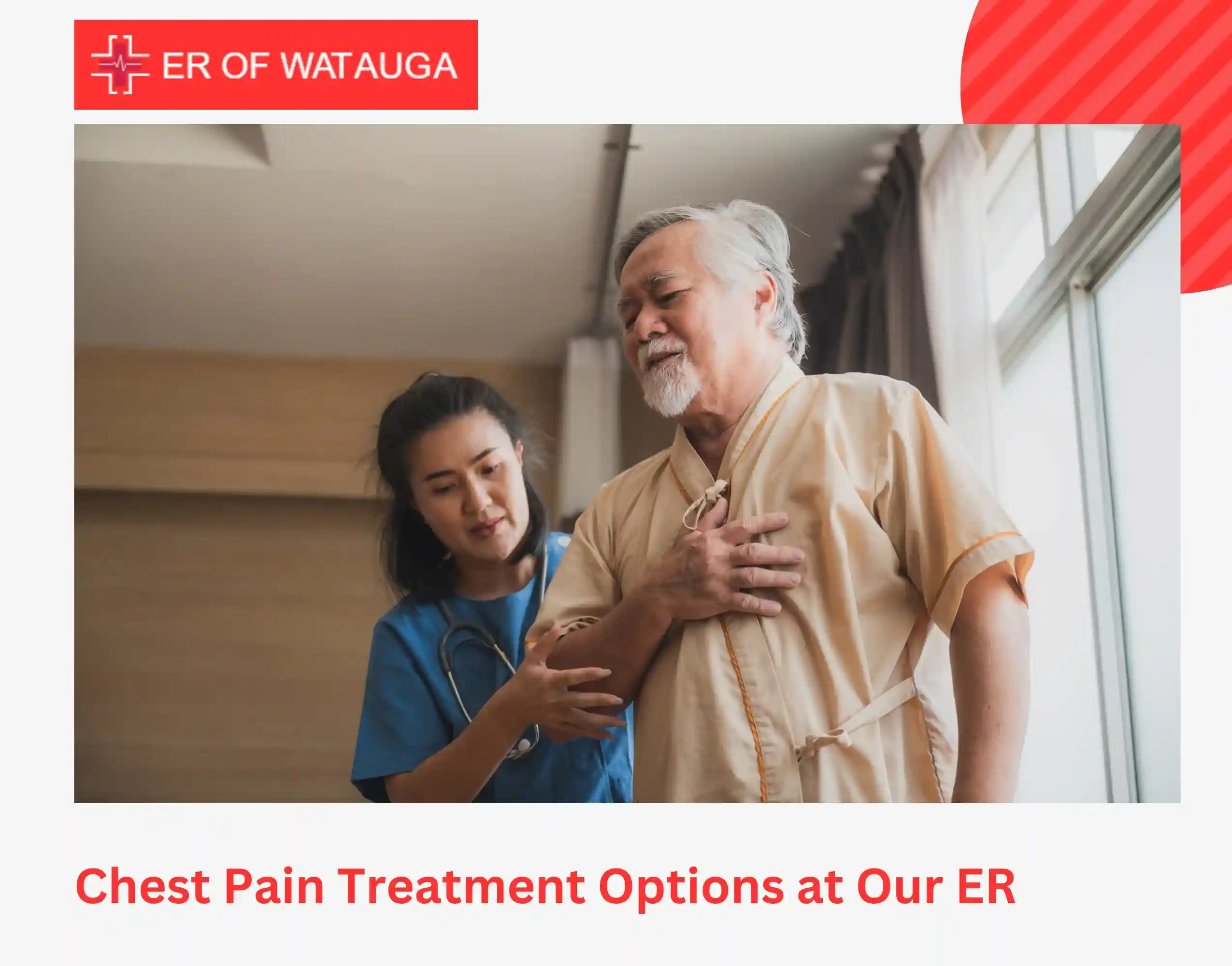
Treatment depends entirely on the cause. Our emergency physicians create a plan based on your test results, medical history, and severity of symptoms.
Treatments we provide on-site include:
- Aspirin and antiplatelet medications: given immediately if a heart attack is suspected
- Nitroglycerin: relaxes blood vessels and relieves angina-related chest pain
- Oxygen therapy: supports breathing and heart function
- IV medications and fluids: including pain control, blood pressure management, and clot-busting drugs when appropriate, delivered through our IV fluids and antibiotics service.
- Anticoagulants: for confirmed pulmonary embolism or unstable cardiac events
- Acid reflux treatment: antacids and protective medications when GERD is the cause
- Anti-inflammatory medication: for costochondritis, pericarditis, or musculoskeletal pain
- Stabilization and hospital transfer: when advanced cardiac intervention (cardiac catheterization, surgery) is needed, we stabilize you and coordinate immediate transfer to a partner hospital
For non-life-threatening causes, most patients are treated and discharged the same visit with a clear care plan, prescriptions, and follow-up instructions.
Why Choose ER of Watauga for Chest Pain Emergencies
With chest pain, where you go matters. A freestanding ER like ours combines hospital-level diagnostic capability with the speed of a small facility, meaning you’re seen, tested, and treated faster than at most hospital emergency rooms.
What sets us apart:
- Open 24/7, 365 days a year: chest pain doesn’t wait, and neither do we
- Minutes-not-hours wait time: most chest pain patients are evaluated within minutes of arrival
- Full cardiac workup on-site: EKG, troponin, CT, X-ray, ultrasound, and lab, all under one roof
- Board-certified emergency physicians: trained specifically in cardiac emergencies
- 9-star Google rating across 950+ verified patient reviews
- No surprise billin: transparent costs, in-network with most major insurance
- Seamless hospital transfer: when advanced procedures are needed, we coordinate immediate transport
Want to understand the difference between an ER and an emergency care for cardiac symptoms? See our guide on Freestanding ER vs Urgent Care.
Cost, Insurance, and Billing for Chest Pain Visits
We never want cost to be the reason someone delays emergency care. ER of Watauga accepts most major insurance and offers transparent payment options for every patient.
- Most major commercial insurance plans accepted (see our insurance coverage page)
- No surprise billing – you’ll never receive an unexpected bill
- Flexible payment plans through our Sunbit Payment Plan
Federal law (EMTALA) requires every emergency room to evaluate and stabilize patients with emergency conditions regardless of ability to pay. If you are experiencing chest pain, do not let financial concerns delay care.
How to Reach ER of Watauga

We’re a walk-in 24-hour emergency room. No appointments needed.
Address: 5401 Basswood Blvd, Fort Worth, TX 76137
Phone: (817) 945-5500
Hours: Open 24 hours, 7 days a week
Service Area: Watauga, Fort Worth, North Richland Hills, Haltom City, Keller, Hurst, Bedford, Saginaw, and surrounding cities
If chest pain is severe or you are alone, call 911 first. If you have someone with you and pain is mild, walking in or calling ahead so our team can prepare for your arrival is a good option.
Frequently Asked Questions About Chest Pain Emergency Care
How long does chest pain have to last before I should go to the ER?
There is no safe minimum duration. Severe chest pain lasting more than a few minutes — or any chest pain with shortness of breath, sweating, or pain spreading to the arm or jaw — should be treated as an emergency immediately. Don’t wait to see if it passes.
Can chest pain be something other than a heart attack?
Yes. The majority of ER visits for chest pain turn out to be non-cardiac causes — acid reflux, muscle strain, anxiety, costochondritis, or lung issues. However, only proper testing can confirm this. The risk of skipping evaluation is too high.
What’s the difference between angina and a heart attack?
Angina is chest pain caused by reduced blood flow to the heart — usually triggered by exertion and relieved by rest or nitroglycerin. A heart attack is caused by a blocked artery that damages heart muscle, and the pain typically doesn’t go away with rest. Both require medical evaluation.
How quickly will I be seen at ER of Watauga for chest pain?
Chest pain is treated as a top-priority emergency. Most patients are taken back, placed on cardiac monitoring, and given an EKG within minutes of arrival. Our average door-to-EKG time is significantly shorter than most hospital emergency rooms.
Can young people have heart attacks?
Yes. While risk increases with age, heart attacks can occur in people in their 20s, 30s, and 40s — especially with risk factors like smoking, high cholesterol, family history, drug use, or untreated high blood pressure. Don’t dismiss chest pain because of age.
What should I do while waiting for help?
If you have called 911, sit or lie down in a comfortable position, unlock the front door so paramedics can enter, chew an aspirin (325 mg) if you’re not allergic and a doctor hasn’t told you to avoid it, and try to stay calm. If you are alone, do not drive yourself.
Don’t Wait — Chest Pain Demands Immediate Action
Time is muscle when it comes to the heart. The faster you receive evaluation, the better your outcome. If you or someone you love is experiencing chest pain, call 911 for severe symptoms or come straight to ER of Watauga for evaluation.
We’re open 24/7, with full cardiac diagnostics ready right now.
| 🚨 Severe symptoms? Call 911 immediately. 📞 ER of Watauga: (817) 945-5500 📍 5401 Basswood Blvd, Fort Worth, TX 76137 🕐 Open 24/7 |
ER of Watauga — fast, expert emergency care for the families of Watauga, Fort Worth, and surrounding North Texas communities.