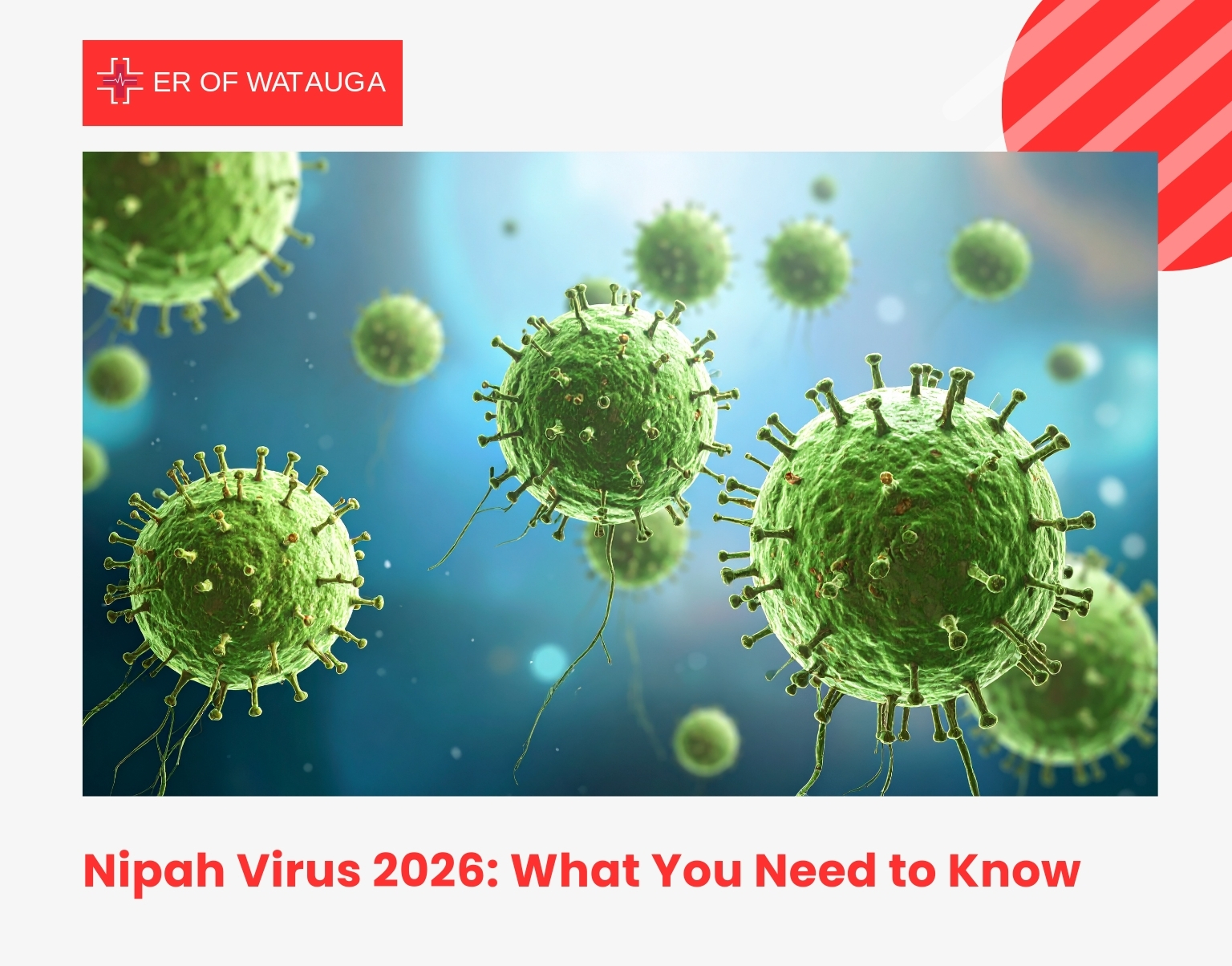
Nipah virus is a rare but potentially deadly illness that starts with flu-like symptoms and can lead to severe brain swelling or death. Recent cases in India in January 2026 highlight the need to stay informed, especially for travelers to South Asia. While Nipah has never reached the United States, understanding it can help you stay safe.
At the ER of Watauga, we treat urgent symptoms daily. If you feel unwell after traveling to outbreak areas, don’t wait; seek emergency care right away. Early action matters. This guide uses simple language and the latest info from CDC and WHO to explain Nipah clearly.
Where Is Nipah Virus Found
Nipah virus naturally lives in fruit bats (flying foxes) across parts of Asia, Australia, and Africa. Outbreaks in people happen mainly in South and Southeast Asia.
Key areas include:
- Bangladesh (most frequent outbreaks)
- India (Kerala, West Bengal, recent cases in January 2026)
- Malaysia and Singapore (major outbreak in 1998-1999)
- Occasional reports in other countries, like the Philippines
Fruit bats spread the virus widely, but human cases stay limited to regions with close animal-human contact. No cases have ever occurred in the United States.
How Does Nipah Virus Spread
Nipah spreads from animals to people and sometimes between people:
- Direct contact with infected bats or their saliva, urine, or droppings
- Eating contaminated food, like raw date palm sap or fruits bitten by bats
- Contact with infected pigs (common in past outbreaks)
- Close person-to-person contact through body fluids (respiratory droplets, saliva), especially in hospitals or homes caring for sick people
Is Nipah Virus Airborne?
Nipah is not considered fully airborne like measles or some viruses that spread over long distances through the air. It spreads mainly through respiratory droplets from coughing or sneezing during close contact. Limited evidence suggests possible short-range aerosol spread in some cases, but this is rare and not the main way it transmits.
Casual contact, like being in the same room without direct exposure, is unlikely to spread it.
How Contagious Is Nipah Virus?
Nipah is contagious but not highly so, like flu or COVID in everyday settings. Person-to-person spread happens, especially in healthcare or family care situations with poor protection. Outbreaks often involve hospital clusters. Casual contact or brief exposure rarely leads to infection. The virus spreads more when patients are very sick with high viral loads.
In the U.S., with no local cases, the risk of contagion is effectively zero.
What Are the Risk Factors for Nipah Virus?

Main risk factors include:
- Living in or traveling to outbreak areas (Bangladesh, India)
- Contact with fruit bats or bat-contaminated food
- Handling infected pigs or their secretions
- Close contact with infected people (e.g., caregivers, healthcare workers)
- Drinking raw date palm sap or eating unwashed fruits in endemic areas
What Does Nipah Virus Do to Humans?
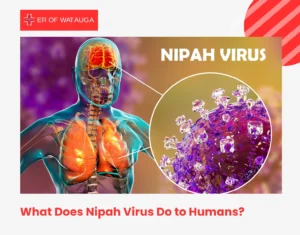
Nipah infects cells in the brain, lungs, and other organs. It causes inflammation and damage, leading to brain swelling (encephalitis) and breathing problems. The virus attacks the nervous system and respiratory tract, which can result in severe illness or death if untreated. Some people have mild cases, but severe ones progress quickly.
Nipah Virus Symptoms
Symptoms appear 4-14 days after exposure (rarely up to 45 days) and start as a flu-like illness before becoming serious.
Stage |
Common Symptoms |
Details |
| Early | Fever, headache, muscle pain, sore throat, cough, vomiting | Feels like a bad flu; can include dizziness or fatigue. |
| Respiratory | Difficulty breathing, chest pain | May lead to pneumonia. |
| Severe | Confusion, seizures, drowsiness, coma | Encephalitis (brain inflammation) develops fast—seek emergency care. |
What Are the Complications of Nipah Virus?

Severe complications include:
- Encephalitis (brain swelling)
- Respiratory failure or pneumonia
- Seizures and coma
- Death (case fatality rate 40-75%)
How Is Nipah Virus Diagnosed?
Diagnosis uses lab tests:
- RT-PCR (detects virus genetic material) from throat swabs, blood, urine, or cerebrospinal fluid
- Antibody tests (serology) to check for an immune response
Early testing is key in suspected cases. Doctors consider travel history and symptoms.
Nipah Virus Risk in the USA
Risk in the U.S. remains very low; no local cases ever reported. The virus isn’t in American animals or food. Travelers returning from affected areas should watch for symptoms and get checked if needed.
When to Seek Emergency Care

If you have fever, headache, confusion, breathing issues, or seizures, especially after travel to South Asia, go to the ER right away. Nipah worsens fast. At ER of Watauga, we’re open 24/7 with tests and supportive care to help manage symptoms and complications.
How to Prevent Nipah Virus
- Avoid raw date palm sap and bat-bitten fruits
- Wash and peel fruits thoroughly
- Don’t touch bats or sick pigs
- Use gloves and masks in high-risk settings
- Practice hand hygiene
FAQs
Is the Nipah virus in the United States?
No cases have ever been reported here.
How long do symptoms take to appear?
Usually 4–14 days, sometimes longer.
Can Nipah spread easily like the flu?
No, it requires close contact—less contagious in daily life.
What is the death rate?
40–75%, depending on care and outbreak.
How is it treated?
Supportive care only, no specific antiviral.
Should I worry if I have flu symptoms after travel?
Yes, get checked at the ER for safety, early care helps.