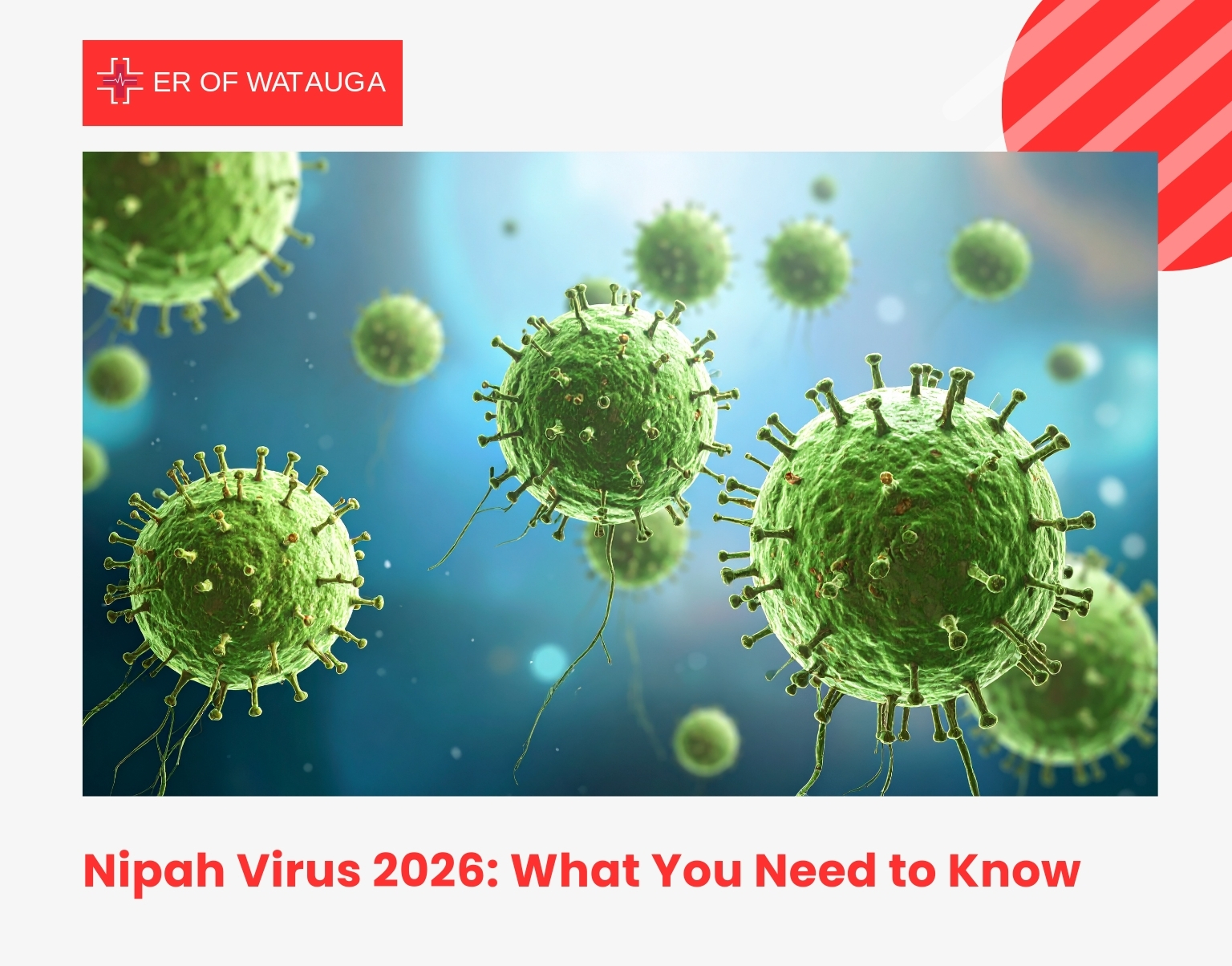
A virus with no approved treatment and a nipah fatality rate between 40% and 75% can turn a headache into a life-threatening brain emergency within days.
Nipah virus triggers one of the deadliest forms of viral encephalitis known to medicine, and with a confirmed outbreak in South Asia as recently as January 2026, this pathogen remains an active global concern.
Because deterioration happens fast and there is no targeted antiviral, critical care for viral encephalitis in the emergency room is the single biggest factor separating survival from death.
What Is Viral Encephalitis?

Viral encephalitis is inflammation of the brain caused by a viral infection. Unlike meningitis, which targets the protective membranes around the brain, encephalitis attacks the brain tissue itself. The swelling disrupts normal neurological function and can cause seizures, altered consciousness, permanent brain damage, and death, if left unchecked.
Herpes simplex virus is the most common cause of viral encephalitis in the U.S. and Europe, but several other pathogens can trigger it, including West Nile virus, enteroviruses, and Zika virus. Among all of these, Nipah virus produces some of the most severe and rapidly fatal outcomes.
high fever, severe headache, confusion or disorientation, seizures, sudden personality or behavioral changes, and difficulty speaking or maintaining consciousness. When these symptoms follow what initially appears to be a routine flu-like illness, encephalitis should be suspected immediately.
Why Nipah Virus Is Exceptionally Dangerous
Nipah virus is a zoonotic virus transmitted from animals (primarily fruit bats) to humans. Human-to-human transmission has also been documented, especially in healthcare and household settings.
What makes Nipah uniquely lethal includes:
- Rapid invasion of the central nervous system
- Severe viral encephalitis
- High rates of respiratory distress and failure
- Lack of targeted antiviral therapy
- Frequent long-term neurological complications in survivors
Once the brain becomes inflamed, deterioration can occur within hours to days.
Understanding the 40%–75% Nipah Fatality Rate
The nipah fatality rate is not a fixed number. It shifts depending on the outbreak setting, the speed of diagnosis, and the quality of available critical care. Data compiled by the WHO and CDC places the nipah fatality rate between 40% and 75% across documented outbreaks.
Several factors push mortality higher:
- Delayed recognition: Early symptoms mimic common viral infections, so patients and providers often lose precious hours before suspecting encephalitis.
- Rapid neurological decline: Once encephalitis sets in, the window from altered consciousness to coma can be as short as 24 to 48 hours.2
- Cerebral edema: Severe brain swelling is a leading cause of death, often resistant to standard interventions.
- Respiratory failure: Many patients develop acute respiratory distress alongside neurological symptoms, complicating management.
- Multi-organ involvement: In severe cases, the virus triggers a systemic inflammatory response that affects multiple organ systems.
Survivors are not unscathed either. Roughly one in five people who recover from Nipah infection experience long-term neurological complications, including persistent seizures, cognitive impairment, memory loss, and personality changes. Reactivation of latent Nipah virus months or even years after the initial infection has also been documented, with fatal outcomes.
Recognizing Early Nipah Infection Symptoms
One of the most dangerous aspects of Nipah infection is how ordinary it looks in the beginning. The initial phase, typically starting 3 to 14 days after exposure, presents with fever, headache, muscle pain, vomiting, and sore throat. At this stage, it is virtually indistinguishable from influenza or other common viral illnesses.
The transition from “ordinary sick” to a neurological emergency can happen suddenly. Red-flag symptoms that demand immediate emergency evaluation include:
- Sudden confusion or disorientation
- New-onset seizures
- Difficulty speaking or walking
- Sudden behavioral changes
- Extreme drowsiness or unresponsiveness
- Breathing difficulty
These symptoms overlap with other serious conditions like stroke and bacterial meningitis. The overlap is precisely why emergency evaluation is the only safe response. Laboratory testing, including RT-PCR from throat swabs, is required to confirm Nipah specifically.
How Emergency Rooms Deliver Critical Care for Viral Encephalitis

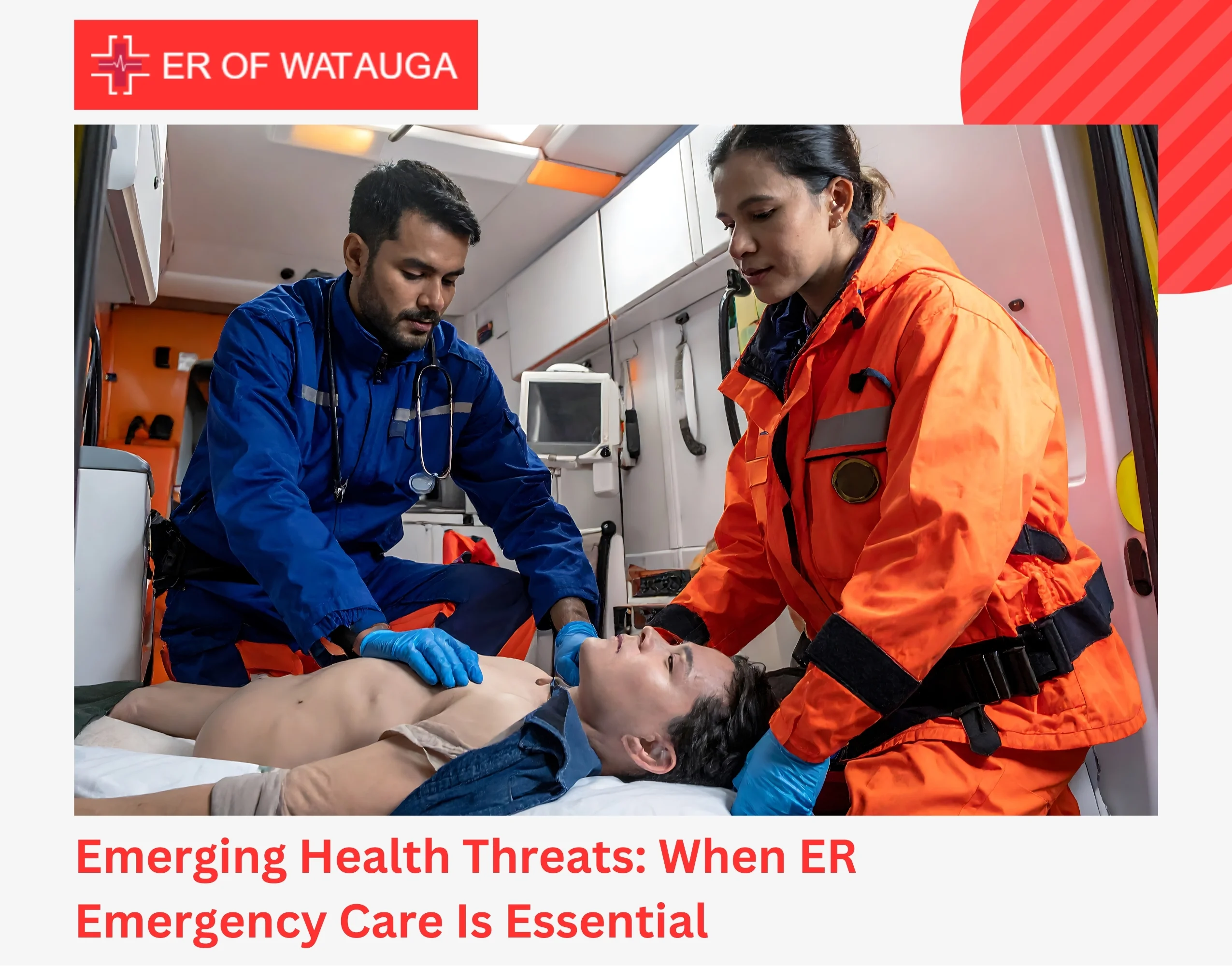
The ER is the frontline of critical care for viral encephalitis. When a patient arrives with suspected encephalitis, the priorities are stabilization, preventing further brain injury, and buying time for the body to fight the infection. With no specific antiviral available for Nipah, every aspect of ER management becomes the treatment.
1. Rapid Neurological Assessment
Patients with suspected encephalitis undergo immediate evaluation of:
- Level of consciousness
- Pupillary responses
- Motor deficits
- Seizure activity
- Signs of raised intracranial pressure
This guides urgent, time-sensitive treatment decisions.
2. Airway and Respiratory Support
Nipah virus commonly causes respiratory distress and altered mental status.
Our ER provides:
- Advanced airway management
- Supplemental oxygen
- Mechanical ventilation when required
3. Aggressive Seizure Management
Seizures are common in viral encephalitis and can worsen brain injury.
Treatment includes:
- IV anti-seizure medications
- Continuous monitoring
- Rapid escalation for refractory seizures
4. Management of Brain Swelling
Cerebral edema is a leading cause of death in encephalitis³.
ER management may include:
- Osmotic therapy
- Controlled ventilation
- Head elevation
- Blood pressure optimization
These interventions aim to prevent brain herniation.
5. Infection Control and Isolation
Because Nipah virus can spread person-to-person, strict infection control is mandatory.
Our ER follows:
- Isolation protocols
- Personal protective equipment (PPE) standards
- Controlled exposure procedures
6. Rapid Transfer to ICU-Level Care
Once stabilized, patients are transferred for:
- Continuous neurological monitoring
- Advanced imaging (MRI is the gold standard for encephalitis)
- Multidisciplinary critical care
The ER plays a vital role in bridging patients safely to definitive ICU management.
Why There Is No “Wait and See” With Suspected Nipah

Viral encephalitis is not a condition that resolves on its own. Unlike a typical viral infection where rest and fluids are sufficient, brain inflammation is a progressive emergency. Every hour without intervention allows swelling to worsen, neurons to die, and the window for meaningful recovery to narrow.
The data supports this urgency. Studies on encephalitis outcomes consistently show that delayed hospital presentation correlates with higher mortality and worse neurological outcomes in survivors.
For Nipah specifically, the progression from altered consciousness to coma can unfold in as little as 24 to 48 hours. Critical care for viral encephalitis must begin in the Emergency Room, not after transfer, and not after observation. The ER is where the interventions that prevent irreversible brain injury happen first.
Key Takeaway
Nipah virus causes one of the most lethal forms of viral encephalitis known, with a fatality rate that has reached 75% in some outbreaks. Survival depends on immediate emergency evaluation, aggressive neurological stabilization, and advanced critical care.
If someone develops sudden confusion, seizures, or loss of consciousness following a viral illness, emergency care is not optional. It is the intervention.
FAQs About Critical Care for Viral Encephalitis
1. Can Nipah virus spread in the United States?
No Nipah outbreak has been reported in the U.S. to date. The virus is endemic to South and Southeast Asia, particularly Bangladesh and India. However, global travel means imported cases remain a possibility, which is why the CDC classifies Nipah as a priority pathogen for preparedness.
2. Is there a vaccine for Nipah virus?
Not yet. As of early 2026, several vaccine candidates are in clinical development, including Oxford University’s ChAdOx1 NipahB, which is undergoing first-in-human trials. No vaccine has received regulatory approval.
3. How is viral encephalitis different from meningitis?
Meningitis inflames the membranes surrounding the brain and spinal cord, while encephalitis inflames the brain tissue itself. Both are serious, but encephalitis more directly disrupts neurological function, causing seizures, personality changes, and altered consciousness.
4. What should I do if someone suddenly becomes confused after having flu-like symptoms?
Call 911 or go to the nearest emergency room immediately. Sudden confusion, seizures, or loss of consciousness following a viral illness are red flags for encephalitis and require urgent evaluation. Do not wait to see if symptoms improve on their own.
5. Do survivors of Nipah encephalitis fully recover?
Many do, but roughly 20% of survivors experience lasting neurological effects including seizures, memory problems, cognitive impairment, and personality changes. In rare cases, the virus can reactivate months or years after the initial infection.