Respiratory syncytial virus (RSV) is a very common respiratory virus that nearly all children catch by age 2. In toddlers and babies, RSV often behaves differently than in adults. Adults often experience RSV as a mild, week-long “cold”, but in young children it can last longer and run deeper into the lungs, causing bronchiolitis or pneumonia.
Babies under 1 year are at highest risk of RSV because their tiny airways and weaker immune systems can let RSV cause severe breathing problems.
Let’s break down how long RSV lasts in toddlers, babies and the adults caring for them, what each stage looks like, and when breathing changes mean it’s time for the ER.
How Long Does RSV Last in Babies?
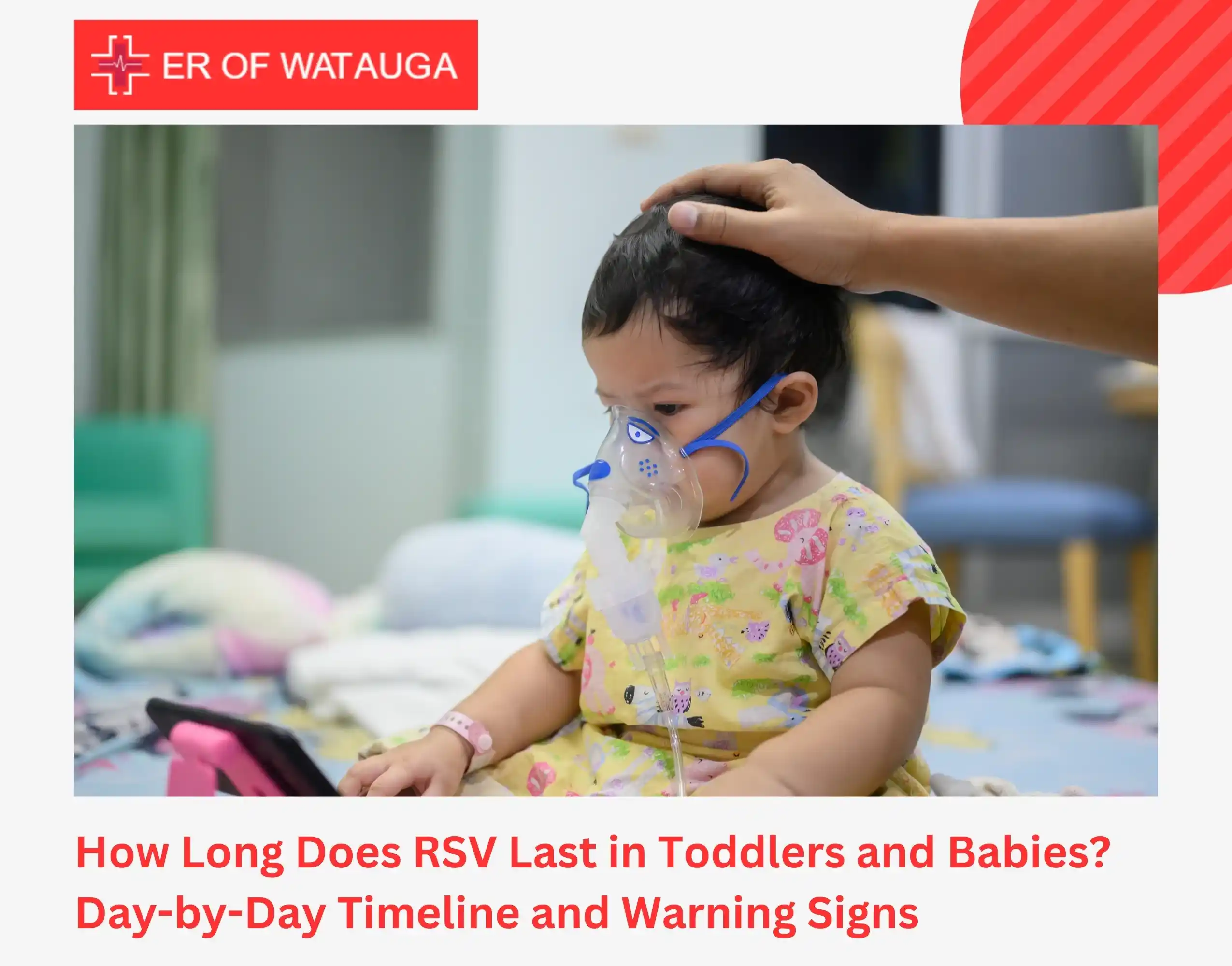
In babies under 1 year, RSV follows a 10 to 14 day course, though some infants remain symptomatic for up to 3 weeks. The illness hits babies harder because their airways are narrower—even mild swelling can restrict airflow significantly—and their immune systems have not built up antibody defenses yet.
RSV in babies can also be deceptive. Newborns and infants under 6 months may skip the classic cold symptoms entirely. Instead, the first signs might be irritability, poor feeding, low energy, and subtle changes in breathing. If you’re watching for a runny nose and cough and not seeing them, do not assume it is not RSV.
Infants who develop bronchiolitis face the longest recovery window. The acute phase resolves within 1 to 2 weeks, but intermittent wheezing and mild breathing difficulty can recur for weeks afterward, especially during feeding or crying.
How Long Does RSV Last in Toddlers?
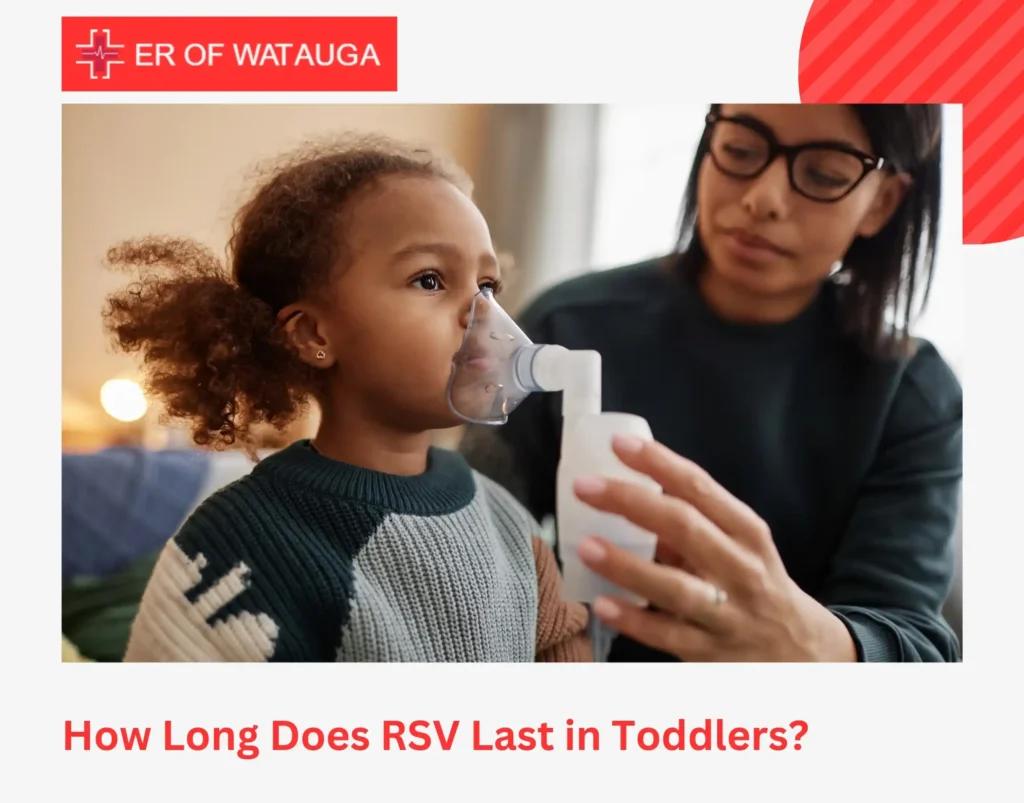
Most toddlers ages 1 to 3, RSV typically runs its course in 7 to 10 days. Most experience it as a rough cold: runny nose, coughing, sneezing, low-grade fever, and a drop in appetite. Symptoms build over the first 2 to 3 days, peak around days 3 through 5, then gradually ease.
The cough hangs on longest. Even after your toddler returns to normal energy and eating, a dry or wet cough can linger for 2 to 3 weeks. This does not mean the infection is still active. It reflects the time the airways need to fully recover from the inflammation RSV triggered.
Toddlers born premature or living with congenital heart disease, chronic lung conditions, or weakened immune systems face a longer recovery. For these children, RSV can stretch to 2 to 3 weeks and carries a higher risk of complications that may require medical intervention.
How Long Does RSV Last in Adults? What It Means for Your Household
If the whole house is sick, you are not imagining it. RSV rarely stops at one family member. A toddler brings it home from daycare, and within 4 to 6 days, siblings and parents start showing symptoms. So how long does RSV last adults? Most recover in 1 to 2 weeks, with symptoms peaking around days 4 and 5. For healthy adults, it feels like a stubborn cold: congestion, sore throat, dry cough, fatigue.
Here is what matters for your baby: adults become contagious 1 to 2 days before symptoms appear. And even once you start feeling better, you remain contagious for 3 to 8 days. If you are managing your own symptoms while caring for a sick baby, wash hands before every feed and every diaper change—not to protect yourself, but to stop reinfecting the child you are trying to help recover.
Adults over 60 and those with chronic lung or heart conditions face a harder course. If older family members help with childcare, that is worth knowing: up to 180,000 older adults are hospitalized for RSV-related complications annually in the U.S. RSV vaccination is now available for adults 75 and older (or 50+ with qualifying conditions) and can reduce the chance of severe illness.
RSV Duration: Toddlers vs. Babies at a Glance
| Babies (under 12 months) | Toddlers (1-3 years) | Adults | |
| Typical Duration | 10-14 days (up to 21) | 7-10 days | 5-14 days |
| Worst Days | Days 3-5 | Days 3-5 | Days 4-5 |
| Common Symptoms | Feeding difficulty, breathing changes, possible apnea | Runny nose, cough, mild fever, reduced appetite | Congestion, sore throat, dry cough, fatigue |
| Lingering Cough | Up to 3–4 weeks | Up to 2–3 weeks | Up to 4 weeks (older adults) |
| Contagious Period | Up to 4 weeks | 3-8 days | 3-8 days (contagious before symptoms start) |
| Hospitalization Risk | 2–3 per 100 infants under 3 months | Low (unless high-risk) | High for 60+ with chronic conditions |
RSV Day-by-Day Timeline: What to Expect Each Stage
If your child was just diagnosed or you are in the thick of it, this breakdown tells you what is coming and when it should get better.
Days 1–2: It Looks Like a Cold
Runny nose, sneezing, light cough in toddlers. In babies, you might only notice fussiness and slightly reduced feeding. A low-grade fever (under 101°F) may appear. At this stage, there is no practical way to tell RSV from a common cold without a test.
Days 3–5: The RSV Worst Days
This is where RSV stops looking like a cold. The RSV worst days fall between days 3 and 5, as the virus reaches the lower airways. Coughing intensifies. Wheezing may develop. Toddlers breathe faster than normal and may refuse food and drinks. Babies can develop visible chest retractions, where the skin pulls in between the ribs or below the ribcage with each breath.
This is the window where most ER visits happen. If your child’s breathing changes during these days, do not wait for a scheduled appointment. Rapid breathing, flared nostrils, grunting sounds, or any blue or gray discoloration around the lips or fingernails requires immediate emergency evaluation.
Days 6–8: The Turning Point
For most toddlers and many babies, symptoms start to ease after day 5. Fever breaks. Appetite slowly returns. Breathing gets easier, though a wet or dry cough persists. Nasal congestion can remain heavy and interfere with sleep and feeding, particularly for babies who breathe primarily through their noses. Keep the saline-and-suction routine going.
Days 9–14+: Recovery Phase (But the Cough Lingers)
Energy and appetite normalize. Congestion clears. The cough is the last holdout and may linger 2 to 3 more weeks, even after the active infection resolves. If your child seems well but still coughs occasionally, that is a normal part of airway healing. However, if the cough worsens again after improving or a new fever develops, contact your pediatrician. A rebound could signal a secondary bacterial infection.
RSV Symptoms in Babies vs. a Common Cold: How to Tell the Difference
If your child was not tested and you are trying to figure out whether this is RSV or a stubborn cold, the answer usually becomes clear around day 3. A cold should be improving by then. RSV gets worse.
Signs that point to RSV:
- Wheezing or whistling on exhale
- Breathing that gets harder over days instead of easing
- Visible chest retractions
- Feeding refusal or taking less than half of normal volume
- Unusual lethargy—limp, hard to rouse, disengaged
- Pauses in breathing (apnea), especially in premature infants
A nasal swab can confirm RSV. But do not wait for test results if breathing problems are present. Difficulty breathing is an emergency regardless of which virus is causing it.
How to Care for a Child With RSV at Home
No antiviral drug treats RSV. Antibiotics are ineffective because RSV is a virus, not a bacterial infection. Recovery depends entirely on supportive care while your child’s immune system clears the virus.
Hydration
Offer breastfed babies shorter, more frequent feeds. If congestion makes latching difficult, try saline drops and gentle suctioning before feeding. Toddlers should drink water, diluted juice, or an electrolyte solution in small, frequent sips. Watch closely for signs of dehydration: fewer than 4 wet diapers in 24 hours, no tears when crying, dry mouth, or a sunken soft spot (fontanelle) in infants.
Nasal Congestion Relief
Saline nasal drops followed by gentle bulb-syringe suctioning can dramatically improve breathing and feeding, especially for babies who cannot yet breathe through their mouths. A cool-mist humidifier in the room loosens mucus overnight. Avoid warm-mist humidifiers around young children due to burn risk.
Fever and Pain Management
Acetaminophen is safe for babies 3 months and older. Ibuprofen can be used for children 6 months and older. Never give aspirin to children. Avoid over-the-counter cough and cold medicines for children under 4 — they are not effective for RSV and can cause harmful side effects.
Breathing Monitoring
Count your child’s breaths per minute during rest. Normal resting respiratory rates by age: under 12 months, 30 to 60 breaths per minute; ages 1 to 3, 24 to 40 breaths per minute. Rates consistently above these ranges warrant a call to your pediatrician or a trip to the emergency room.
When to Take Your Child to the ER for RSV
Most children recover from RSV with home care alone. But certain signs mean your child needs more than you can provide at home.
RSV Symptoms in Babies that Require Emergency Care:
- Labored breathing: fast, shallow breaths with chest retractions or nasal flaring
- Color changes: blue or gray tint on lips, tongue, fingernails
- Breathing pauses: gaps of 10+ seconds between breaths, especially in infants
- Dehydration: no wet diaper in 8+ hours, sunken fontanelle, or no tears
- Extreme lethargy: limp, unresponsive, or hard to wake
- Worsening after improvement: symptoms that had been getting better suddenly deteriorate
Babies under 1 with a fever of 100.4°F or higher should always be seen in an emergency setting, regardless of how well they appear. Young infants can deteriorate rapidly, and fever at this age requires prompt evaluation.
How Long Is RSV Contagious?
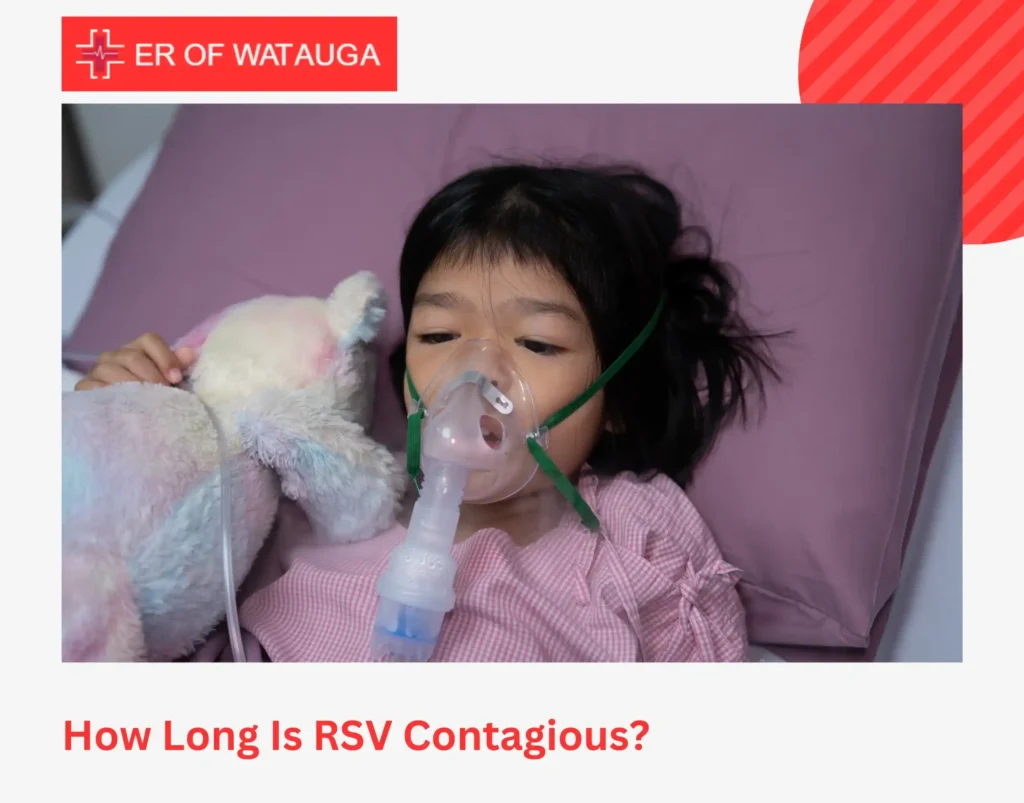
Children with RSV are contagious for 3 to 8 days, starting 1 to 2 days before symptoms appear. Adults follow the same pattern. That pre-symptomatic window is why RSV spreads through households so fast. By the time you recognize your child is sick, they may have already passed the virus to siblings, classmates, or caregivers.
Babies and immunocompromised children can shed the virus for up to 4 weeks, even after they look recovered. If you have a newborn at home alongside a recovering toddler, this extended contagious period is critical to keep in mind.
Most pediatricians clear children for daycare return once they have been fever-free for 24 hours (without medication) and symptoms are manageable. There is no universal rule, so confirm with your provider.
Reducing Your Child’s RSV Risk
RSV is difficult to avoid entirely, but you can lower the chance of infection and reduce severity if your child does get sick.
RSV Immunization Options
Two options are now available, according to CDC recommendations. Nirsevimab (brand name Beyfortus) is a single-dose antibody injection for babies under 8 months entering their first RSV season, and for certain high-risk children up to 19 months. Alternatively, the maternal RSV vaccine (Abrysvo) can be given during pregnancy at 32 to 36 weeks to pass protective antibodies to the baby before birth. Most infants need only one of these, not both. Discuss with your pediatrician which option fits your family.
Everyday Prevention
Wash hands before touching your baby. Keep sick family members at a distance from infants. Disinfect high-touch surfaces (doorknobs, toys, countertops) regularly — RSV survives on hard surfaces for up to 6 hours. During peak season, limit your baby’s exposure to crowded indoor spaces, especially in the first 6 months of life when the risk of severe illness is highest.
Can Children Get RSV More Than Once?
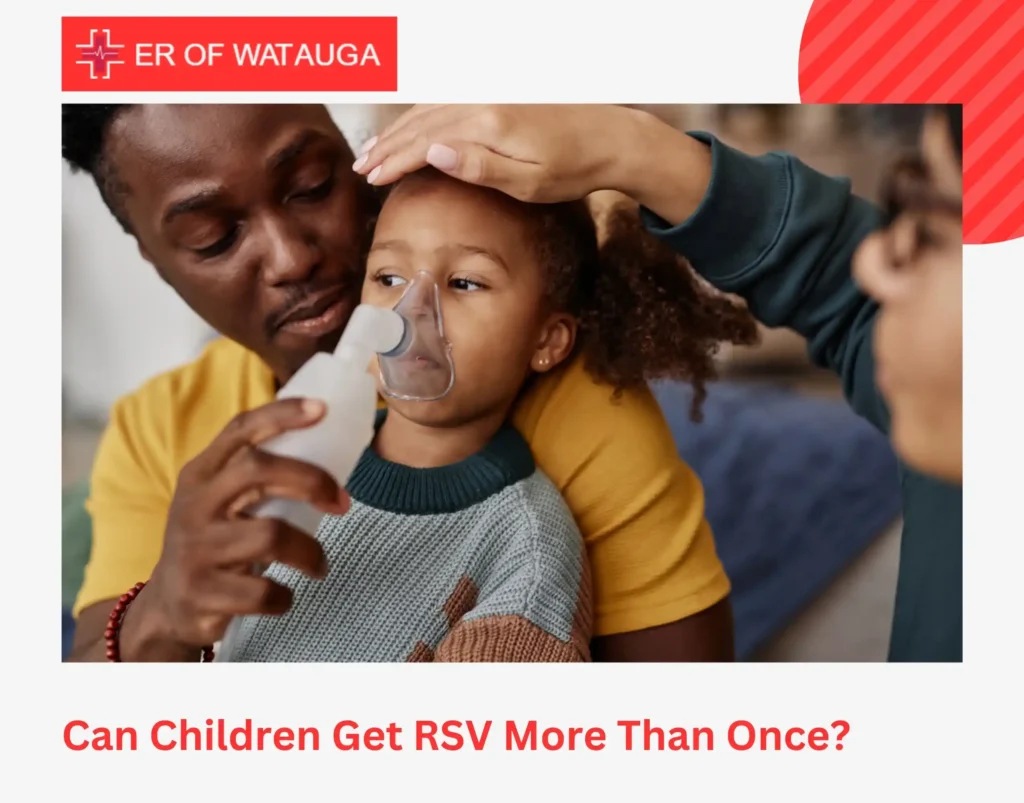
Yes. RSV infection does not produce lasting immunity. Children can catch it multiple times, even twice in the same season. The reassuring side: repeat infections are almost always milder than the first. The initial RSV encounter, particularly in babies under , is nearly always the worst.
Researchers have also identified a link between severe RSV bronchiolitis in infancy and a higher likelihood of childhood asthma diagnoses later. Not every child who has RSV will develop asthma, but if your child had a severe case, it’s worth monitoring respiratory health with your pediatrician going forward.
Key Takeaway
RSV follows a predictable pattern: mild start, worst days between 3 and 5, gradual improvement, lingering cough. Babies need about two weeks and carry the highest complication risk. Toddlers get through it in roughly a week. Adults clear it fastest but can unknowingly keep the virus circulating at home.
The critical skill for parents is recognizing when breathing crosses from “congested” to “labored.” Chest retractions, color changes, feeding refusal, or breathing pauses mean your child needs emergency care now.
If your child’s breathing worsens, ER of Watauga offers 24/7 pediatric emergency care with on-site X-rays, labs, and IV hydration — no wait.
Frequently Asked Questions
1. What are the worst days of RSV in babies and toddlers?
Days 3 through 5. The virus reaches the lower airways during this window, and coughing, wheezing, and breathing difficulty peak. Most children start improving after day 5, though babies may take longer to fully recover than toddlers.
2. How do I know if my baby has RSV or just a cold?
A cold starts improving by day 3 or 4, while RSV gets worse. Wheezing, rapid breathing, and difficulty feeding signal RSV. A nasal swab test can confirm the diagnosis.
3. Should I take my baby to the ER for RSV?
Come to the ER immediately if your baby shows labored breathing, chest retractions, blue or gray discoloration, feeding refusal, no wet diapers in 8+ hours, or is unusually limp. Any baby under 3 months with a fever of 100.4°F or higher needs emergency evaluation regardless of other symptoms.
4. How long does the cough last after RSV?
The cough commonly lasts 2 to 3 weeks after other symptoms resolve. A lingering cough that is gradually fading is normal. A cough that worsens again or comes with new fever could signal a secondary bacterial infection.
5. Can I pass RSV back to my baby while we are both sick?
Yes. Adults are contagious for 3 to 8 days and can spread the virus before symptoms start. Even while recovering, you can reintroduce the virus to your baby through close contact. Strict handwashing before feeds and diaper changes is essential.
6. When can my child go back to daycare after RSV?
Once fever-free for 24 hours without medication and symptoms are manageable. Babies and immunocompromised children can shed the virus for up to 4 weeks, so check with your provider for clearance.
7. Does RSV need antibiotics?
No. RSV is viral, and antibiotics only treat bacterial infections. There is no approved antiviral medication for RSV either. Treatment focuses on supportive care: hydration, nasal suctioning, fever management, and monitoring breathing.